

Real Estate Editing AI vs Human: Which Delivers Better Results?
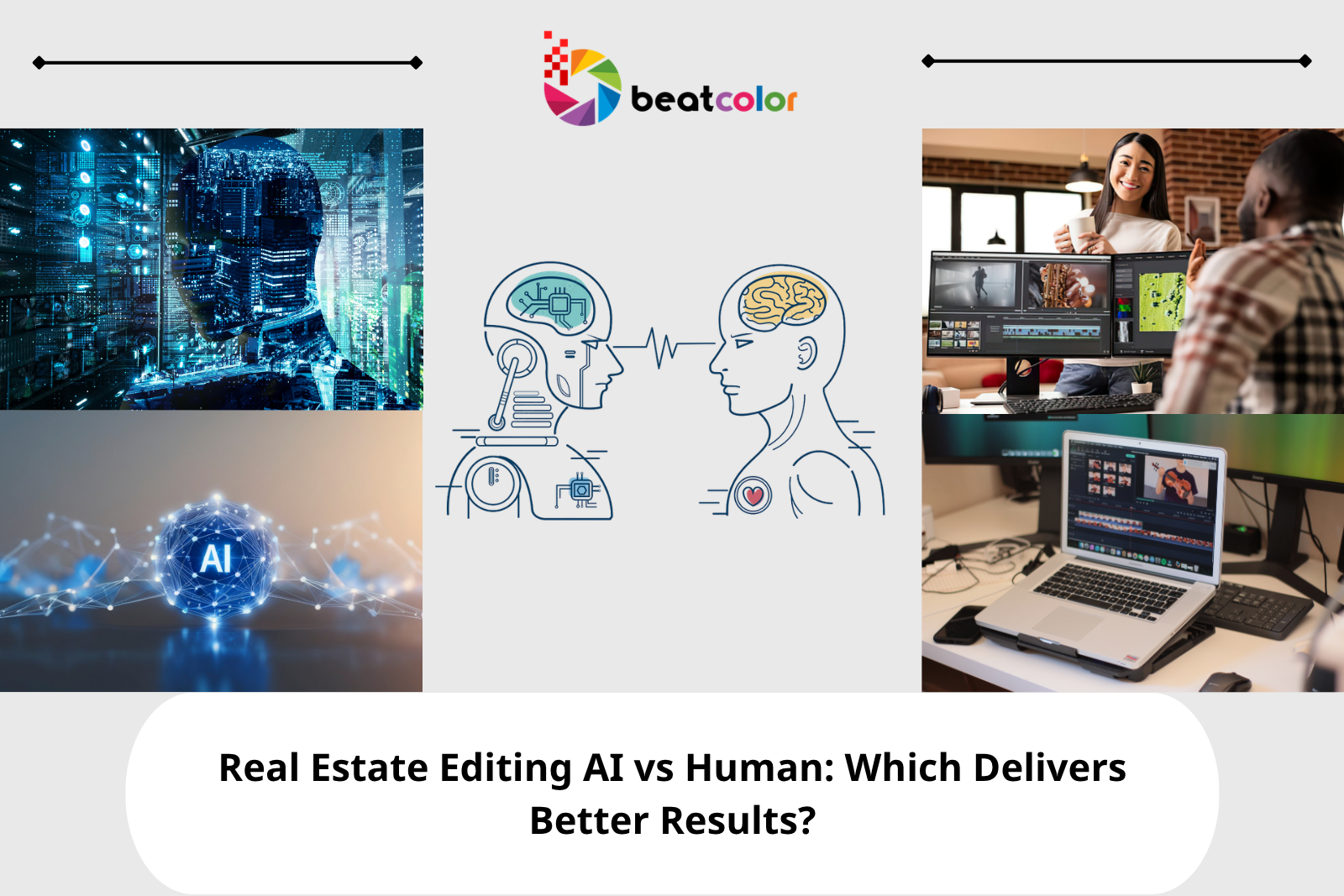
Real estate photography has become the single biggest factor in whether a property listing gets clicked, viewed, and ultimately sold. But a great photo is rarely a straight-out-of-camera shot. It goes through real estate editing first — color correction, sky replacement, HDR blending, lawn enhancement, virtual staging, and more. The question agents and photographers keep asking is simple: should that editing be done by artificial intelligence or by a human retoucher? The honest answer is that both have a role to play, but they are not interchangeable. This article breaks down where each option shines, where it falls short, and why human editors still hold a clear edge in several critical areas.
What Real Estate Editing Actually Involves
Real estate editing covers a wide range of tasks that turn a raw photo into a listing-ready image:
- Exposure and white balance correction
- HDR (High Dynamic Range) blending for balanced interiors and windows
- Sky replacement on overcast or blown-out days
- Removing clutter, cords, trash cans, or reflections
- Lawn and landscaping enhancement
- Virtual staging and twilight conversions
- Perspective and lens distortion correction
Each one of these steps affects how a buyer perceives a property, which is why the editing method matters just as much as the photography itself.
Where AI Real Estate Editing Excels
AI-powered editing tools have improved dramatically over the last few years, and for good reason — they solve real, practical problems for photographers and agencies handling high volume.
Speed at scale. AI can batch-process hundreds of images in minutes. For a photography company shooting ten listings a day, this turnaround is hard to match with manual work alone.
Consistency on repetitive tasks. Simple sky replacements, basic color correction, and lens distortion fixes are highly standardized tasks. AI models handle these predictably once trained on enough data.
Cost efficiency for basic edits. Because AI removes most of the labor from simple corrections, per-image costs drop significantly, which matters for agents editing dozens of photos per property.
24/7 availability. AI tools don’t have business hours. A photographer can upload a shoot at midnight and have edited images ready before sunrise.
These strengths make AI editing genuinely useful, particularly for entry-level or high-volume listings where budgets are tight and timelines are short.
Where Human Real Estate Editing Still Wins
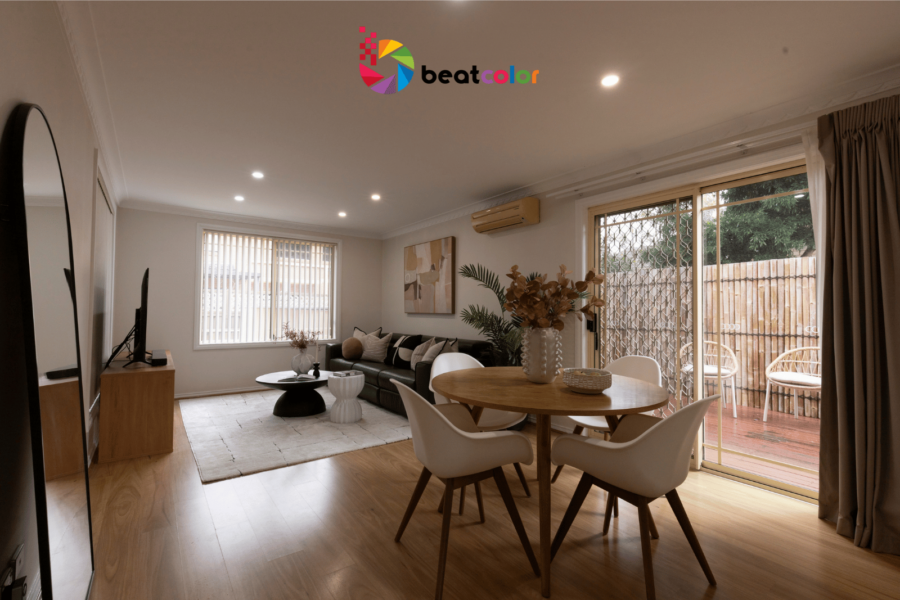

Despite AI’s speed advantage, human editors consistently outperform automated tools in situations that require judgment, context, and craftsmanship. This is where the gap becomes most obvious.
1. Understanding Lighting Intent, Not Just Correcting It
AI adjusts exposure based on pixel data and statistical patterns. A human editor looks at a room and asks: What time of day does this space feel best in? Should the warmth of the wood floor be emphasized, or should the cool tone of the marble countertop take priority? Humans interpret lighting as a storytelling tool, not just a technical value to normalize.
2. Contextual Judgment on Removing or Keeping Objects
Deciding whether to remove a piece of furniture, a shadow, or a reflection isn’t purely visual — it’s judgment-based. A human editor understands what a buyer wants to see versus what might raise questions (for example, keeping a fireplace visible because it adds value, while removing a distracting extension cord). AI often applies uniform rules and can misjudge which elements matter.
3. Nuanced Sky and Color Matching
AI sky replacement tools frequently produce skies that look technically clean but contextually wrong — mismatched light direction, unnatural reflections in windows, or colors that clash with the season shown in the landscaping. Human editors match sky tone, light direction, and shadow behavior with far more precision because they can visually cross-reference multiple elements in the frame simultaneously.
4. Virtual Staging With Design Sensibility
Placing furniture into an empty room isn’t just about inserting 3D assets — it’s about scale, style coherence, and creating a mood that matches the target buyer demographic. A human stager considers the neighborhood, price point, and architectural style, adjusting choices accordingly. AI staging tools tend to default to generic templates that don’t always reflect the property’s actual character.
5. Handling Complex or Unusual Properties
Older homes, luxury estates, unconventional layouts, or properties with mixed lighting sources (fireplace + window + lamp, for instance) require editing decisions that don’t follow a predictable pattern. Human editors adapt case by case; AI models trained mostly on typical suburban listings can struggle with atypical spaces.
6. Final Quality Control and Emotional Appeal
Perhaps the biggest differentiator is that experienced human editors understand what makes a photo emotionally compelling — not just technically correct. They know how to guide the eye toward a focal point, how much saturation feels premium versus artificial, and when an image is “good enough” versus genuinely listing-ready. This kind of aesthetic judgment remains difficult for AI to replicate consistently.
The Real-World Verdict: A Hybrid Approach Wins
Rather than this framing as a competition, most professional photography studios today use a hybrid workflow:
- AI handles the first pass — basic corrections, batch sky replacement, initial HDR merges.
- Human editors handle the final pass — fine-tuning lighting mood, verifying object removal decisions, refining virtual staging, and applying quality control before delivery.
This combination captures AI’s speed benefits while preserving the visual judgment and craftsmanship that make listings stand out. Agents selling standard, high-volume listings may lean more heavily on AI-first editing. Agents marketing luxury or unique properties, where every image needs to justify a premium price point, typically still rely on skilled human editors to get the final result right.
Conclusion
AI has undeniably transformed the speed and cost structure of real estate editing, and it’s here to stay as an efficiency tool. But when it comes to interpreting light, making contextual judgment calls, and creating images that genuinely sell a lifestyle rather than just a room, human editors continue to deliver results that automated tools can’t fully replicate. For agents and photographers who want both efficiency and quality, the smartest strategy isn’t choosing AI or human editing — it’s knowing when to use each.
Read more:
AI Real Estate Photo Editing: Benefits, Risks and Limitations
Complete Real Estate Image Enhancement Guide
Before and After Real Estate Photo Editing: Real Examples