
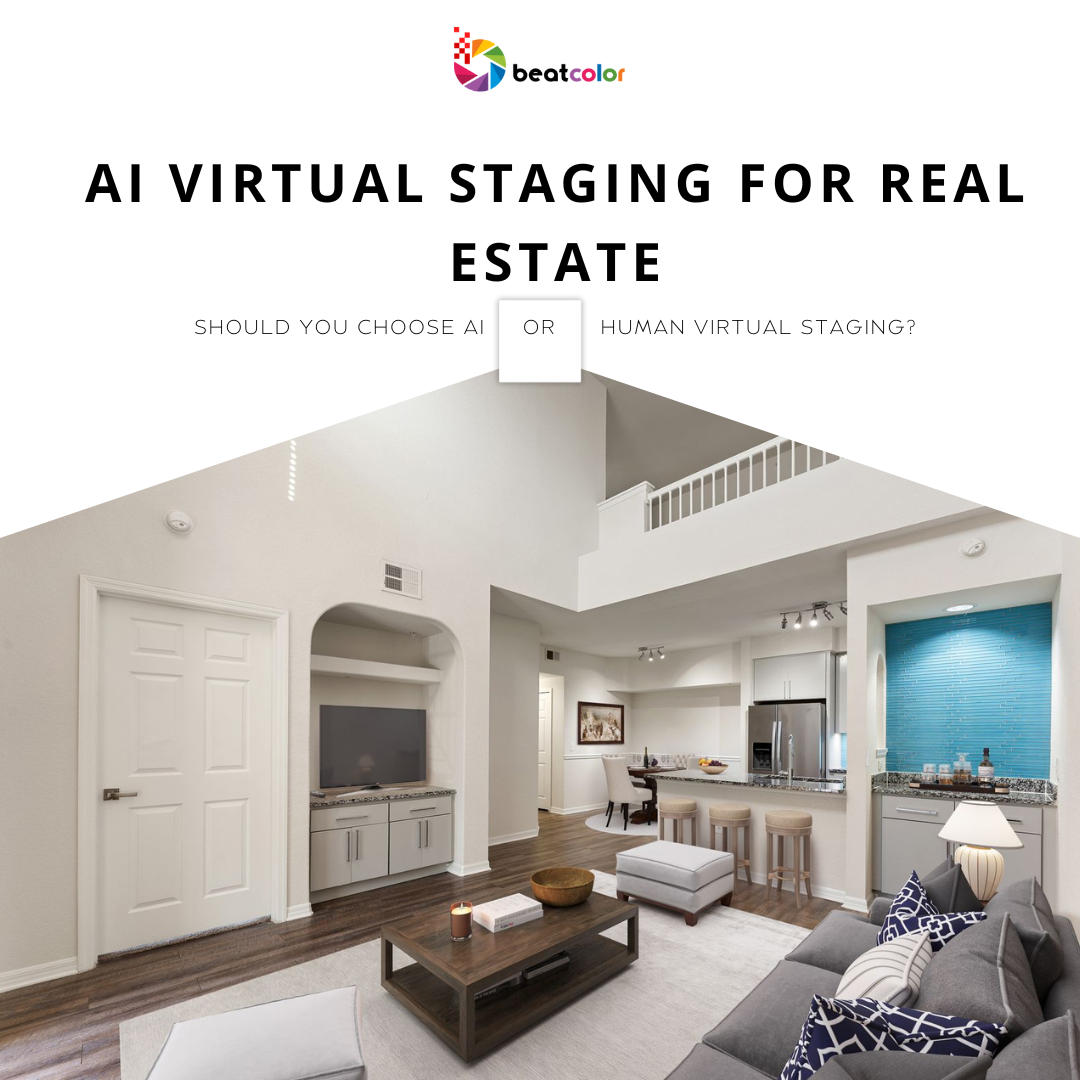
AI Virtual Staging for Real Estate: Should You Choose AI or Human Virtual Staging?
Real estate marketing has become highly visual and increasingly competitive. Most buyers now form opinions within seconds of viewing listing photos. Because of this shift, virtual staging has moved from optional to essential. Today, the main question is not whether to stage, but how.
AI virtual staging for real estate is growing rapidly across global markets. At the same time, human virtual staging still holds a strong reputation. Each approach offers unique benefits, risks, and performance outcomes. Understanding these differences helps agents make smarter marketing decisions.
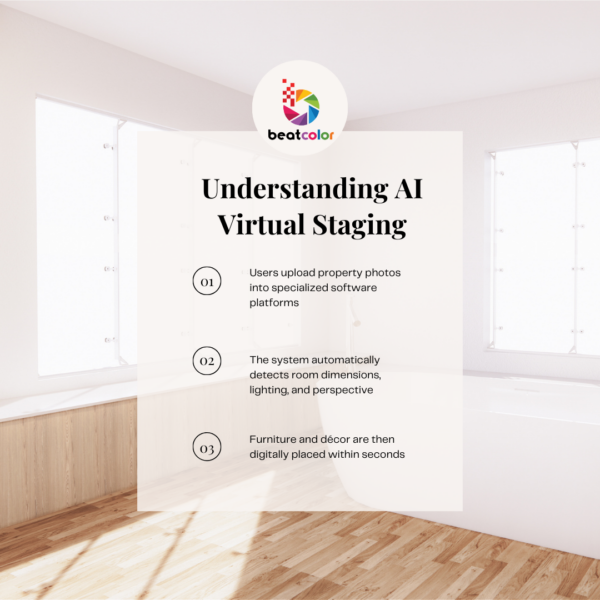
Understanding AI Virtual Staging
AI virtual staging relies on artificial intelligence and image recognition technology. Users upload property photos into specialized software platforms. The system automatically detects room dimensions, lighting, and perspective. Furniture and décor are then digitally placed within seconds.
Modern AI staging tools use deep learning models trained on millions of interiors. As a result, image realism has improved significantly since 2023. Many platforms now support multiple styles, color themes, and room types. Updates released in 2024 further enhanced texture accuracy and shadow realism.
How Human Virtual Staging Works
Human virtual staging depends on trained designers and photo editors. Professionals manually insert furniture using advanced editing software. They adjust scale, lighting, and alignment with high precision. This process emphasizes artistic judgment and spatial storytelling.
Designers often collaborate with agents to match buyer demographics. They also adapt staging to regional preferences and property value tiers. Because of this, results often feel tailored and emotionally engaging. However, production timelines are longer by comparison.

Cost Differences in 2025
Cost remains a major decision factor for agents and brokers. AI virtual staging for real estate is significantly more affordable. Most AI tools operate on subscriptions or pay-per-image pricing. Prices commonly range from cents to a few dollars per image.
Human virtual staging costs are notably higher. Professional services usually charge per image or per room. Pricing often reflects designer experience and revision requests. As portfolios grow, expenses increase quickly.
Therefore, AI staging supports scalability for high-volume listings. Human staging suits selective projects with higher margins. Budget allocation often determines the preferred approach.
Speed and Workflow Efficiency
Speed plays a critical role in competitive housing markets. AI staging delivers completed images within minutes. This enables faster listing launches and earlier buyer exposure. Rapid turnaround supports agile marketing strategies.
Human virtual staging requires manual labor and review cycles. Delivery timelines often range from one to three days. Revisions extend project duration further. Time sensitivity can become a limitation during peak seasons.
Thus, AI staging aligns well with fast-paced market environments. Human staging fits slower, premium listing cycles.
Buyer Engagement and Performance
Visual presentation directly affects buyer behavior online. Staged listings consistently outperform empty properties. They attract more clicks, saves, and showing requests. This trend remains consistent across property categories.
AI-staged images perform strongly in mid-range residential listings. They deliver clean, modern visuals that appeal to broad audiences. Human-staged images often excel in luxury and design-focused properties. Buyers there value curated aesthetics and subtle details.
Engagement differences depend more on execution than technology alone. Poor staging reduces trust, regardless of method. Quality remains the ultimate performance driver.
Realism and Accuracy Considerations
Realism has improved dramatically in AI staging since 2024. Advanced algorithms now simulate natural light and depth. However, imperfections still appear in complex architectural spaces. Irregular layouts can challenge automated placement.
Human editors identify and correct these inconsistencies manually. They adapt staging to unusual angles or structural features. This reduces visual errors and buyer skepticism. Accuracy matters when expectations are high.
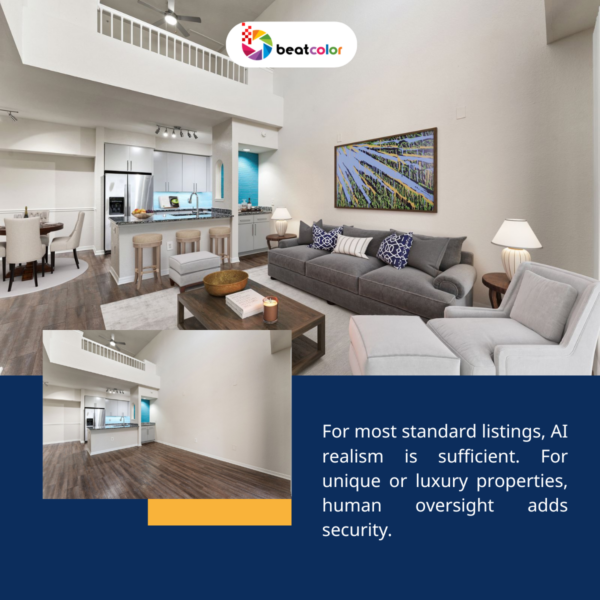
For most standard listings, AI realism is sufficient. For unique or luxury properties, human oversight adds security.
Customization and Brand Alignment
Brand consistency matters for agencies and brokerages. Human staging supports detailed customization and storytelling Designers can match brand palettes and signature styles. They also integrate lifestyle elements strategically.
AI tools offer growing customization options. Users can select themes, furniture types, and room functions. However, creative flexibility remains partially limited. Templates guide most outputs.
Still, recent AI updates allow rapid visual experimentation. Multiple designs can be generated and tested efficiently. This supports data-driven marketing approaches.
Ethical Disclosure and Transparency
Transparency is essential in modern real estate marketing. Buyers expect honest representation of spaces. Virtual staging must always be disclosed clearly. This applies to both AI and human staging.
Misleading images risk damaging credibility and trust. Accurate proportions and realistic layouts reduce complaints. Ethical staging protects long-term brand reputation. Compliance benefits everyone involved.
Choosing the Right Solution
AI virtual staging for real estate suits efficiency-driven professionals. It supports speed, scalability, and cost control. This approach works well for standard residential listings. High inventory agents benefit most. Human virtual staging remains valuable for premium properties. Luxury listings demand artistic judgment and refinement. Design-focused buyers expect curated visuals. Here, human expertise justifies the investment.
Many professionals now adopt a hybrid approach. AI handles volume listings efficiently. Human staging supports select flagship properties. This balance maximizes return on investment.
Final Perspective
AI virtual staging is no longer experimental technology. It is a practical tool reshaping real estate marketing workflows. Human staging continues to offer depth and creative nuance. Both methods serve important roles.
Choosing wisely depends on property type, budget, and strategy. Understanding strengths ensures better marketing outcomes. In modern real estate, adaptability defines success.
Read more:
How 3D Real Estate Rendering Boosts Property Marketing
Virtual Staging Real Estate: Redefining Property Marketing in a Digital Market
Virtual Furniture Replacement: A Strategic Shift in Property Presentation