
3D Virtual Tour for Real Estate: A Smarter Way to Market Properties

3D virtual tour for real estate has become an essential tool in today’s digital property market, as buyers increasingly expect immersive and informative online experiences before visiting a home in person. The real estate industry has undergone a major transformation in recent years, and traditional listing photos alone are no longer enough to meet modern buyer expectations.
At the same time, competition among property listings continues to intensify across online platforms. So, agents and developers must present properties clearly while also building emotional connection and trust. In this blog, we’ll share what a 3D virtual tour for real estate is, how it works, why it matters, and how to use it effectively to attract serious buyers and improve overall marketing performance.
I. What Is a 3D Virtual Tour for Real Estate?
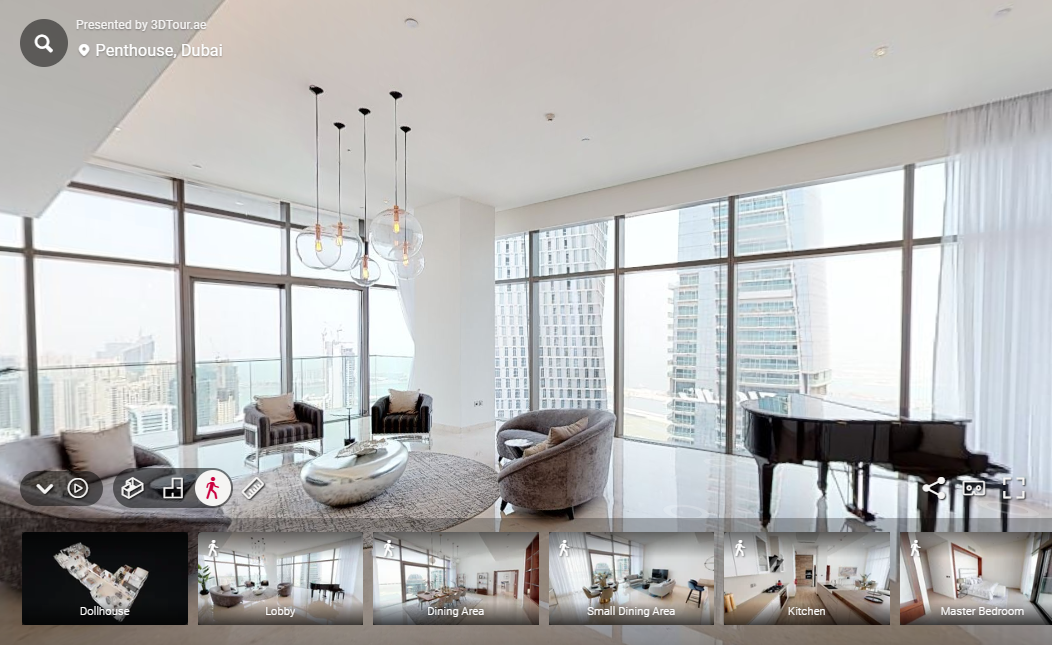
A 3D virtual tour for real estate is an interactive digital experience that allows potential buyers to explore a property remotely. Unlike traditional photos, a three-dimensional property tour enables users to move freely between rooms, rotate perspectives, and understand spatial relationships in a realistic way.
1. How 3D Virtual Property Tours Work
First, a property is captured using specialized cameras or 3D scanning technology. These tools collect multiple images and depth data from different angles. Then, software processes this information into a seamless, navigable 3D model. As a result, viewers can virtually walk through the property using a mouse, touchscreen, or mobile device.
Because this process captures real dimensions and depth, buyers gain a clearer understanding of layout, room size, and flow. This level of detail reduces uncertainty and helps buyers feel more confident.
2. Difference Between 3D Tours and Traditional Photography
Traditional real estate photography focuses on showcasing highlights, such as wide living rooms or bright kitchens. However, photos often leave questions unanswered. A virtual home walkthrough solves this problem by showing how spaces connect and how the property feels as a whole. So, instead of guessing, buyers can explore at their own pace.
For a general explanation of virtual tours as a concept, you can refer to:
https://en.wikipedia.org/wiki/Virtual_tour
II. Why 3D Virtual Tours Matter in Modern Real Estate Marketing
As property searches increasingly start online, immersive content plays a critical role in capturing attention. And this is where virtual real estate tours provide clear value.
1. Increased Buyer Engagement
Listings that include a 3D virtual tour for real estate typically keep visitors on the page longer. Because users can interact with the space, they naturally spend more time exploring. And longer engagement often leads to higher inquiry rates.
2. Convenience for Today’s Buyers
Modern buyers value flexibility. A 3D real estate walkthrough allows them to view properties anytime, whether during a lunch break or late at night. This is especially useful for busy professionals and remote buyers. So, they can narrow down options before committing to in-person showings.
3. Transparency and Trust
When buyers can explore a property thoroughly, trust increases. A virtual tour shows the space as it truly is, reducing surprises later. Because of this transparency, negotiations tend to be smoother and more efficient.
III. Key Benefits of Using 3D Virtual Tours for Real Estate Professionals
Beyond buyer experience, virtual property tours offer strategic advantages for agents, brokers, and developers. These benefits directly impact efficiency, brand perception, and sales outcomes.
Before looking at specific advantages, it’s important to understand that a 3D virtual tour for real estate is not just a visual feature. It is a communication tool that filters leads, saves time, and elevates presentation quality across all marketing channels.
1. Better Listing Performance and Visibility
Properties with 3D virtual tours often stand out on listing platforms. They attract more clicks, longer views, and higher engagement. Because of this improved visibility, listings gain a competitive edge without requiring additional advertising spend.
2. Higher-Quality Leads and Faster Sales
A virtual real estate tour helps pre-qualify buyers. Viewers who book showings after exploring a 3D tour are usually more serious and better informed. So, agents spend less time on unqualified leads and more time closing deals, which can shorten the sales cycle.
3. Stronger Professional and Brand Image
Using immersive real estate experiences positions professionals as modern, detail-oriented, and trustworthy. Many teams also combine virtual tours with consistent visual enhancement and post-processing workflows similar to those discussed on https://beatcolor.com to ensure a polished and cohesive presentation across listings.
IV. Best Practices for Using 3D Virtual Tours Effectively
While the technology itself is powerful, results depend on how it is used. A well-executed 3D virtual tour for real estate requires preparation, balance, and integration with other marketing elements. Before diving into technical details, it’s important to remember that the goal is clarity, not exaggeration. The virtual tour should support decision-making, not overwhelm or mislead potential buyers.
1. Prepare the Property Before Scanning
Cleanliness, organization, and lighting are essential. Because everything is visible in a 3D environment, clutter or poor lighting can negatively affect perception. Preparing the space properly ensures a professional result.
2. Keep Visuals Natural and Realistic
Over-editing can make a property feel artificial. So, lighting, colors, and contrast should remain balanced and true to life. Authentic visuals help build trust and prevent disappointment during physical visits.
3. Combine 3D Tours with Supporting Content
A 3D virtual tour works best when paired with high-quality photos, floor plans, and clear property descriptions. Together, these elements create a complete and compelling listing experience.
4. Optimize for SEO and User Experience
Embedding a virtual tour can improve dwell time and reduce bounce rates. Because users stay longer and interact more, search engines may view the page as more valuable. This can support stronger organic visibility over time.
Final Thoughts
A 3D virtual tour for real estate is no longer an optional feature. It it is a practical and effective marketing solution for today’s property market. It improves transparency, saves time, and helps buyers feel confident before making decisions.
While traditional photography remains important, immersive virtual home tours elevate listings and align with modern buyer expectations. When used thoughtfully and combined with strong presentation and SEO strategy, 3D virtual tours can significantly enhance real estate marketing performance in an increasingly competitive landscape.
Read more:
Furniture Replacement Real Estate Photos: Turning Ordinary Listings Into Buyer Magnets
Virtual Staging vs Traditional Staging: A Smart Comparison for Modern Real Estate Marketing
AI Virtual Staging for Real Estate: Should You Choose AI or Human Virtual Staging?