
Can AI Real Estate Photo Editing Replace Professional Editors?
Introduction
Over the past few years, AI real estate photo editing tools have exploded in popularity. Agents and photographers now have one-click options to brighten a dark room, remove clutter, or replace a gray sky with a blue one in seconds. It’s tempting to ask: with tools this fast, do professional real estate editors still matter?
The short answer is yes — and the reasons go deeper than nostalgia for “the human touch.” While AI has genuinely useful applications in real estate photography, it still falls short in the areas that matter most: judgment, consistency, and trust.
What AI Real Estate Photo Editing Actually Does Well
Before diving into the limitations, it’s worth recognizing where AI shines. Automated tools are excellent at:
- Speed — Batch-processing hundreds of images in minutes
- Basic corrections — Exposure, white balance, and lens distortion fixed
- Sky replacement — Swapping overcast skies for blue ones
- Simple decluttering — Removing small, isolated objects
For high-volume listings with tight deadlines, these capabilities offer real value. But real estate photography isn’t just about speed — it’s about selling a lifestyle, and that’s where AI starts to struggle.
Where AI Falls Short in Real Estate Editing
1. Understanding Context and Intent
AI tools apply the same generic filters to every image, regardless of the property’s style, target buyer, or market positioning. A rustic farmhouse and a modern downtown condo require completely different editing approaches — warmer, cozy tones for one; crisp, minimalist clarity for the other. AI doesn’t “understand” the story a listing needs to tell. A human editor does.
2. Handling Complex Fixes
Ask an AI tool to remove a car from a driveway, fix a reflection in a window, or blend a virtually staged sofa into a room with accurate lighting and shadows, and the cracks start to show. These tasks require an understanding of perspective, light physics, and spatial logic — skills that professional editors have refined through years of practice. AI often produces results that look “almost right,” which can be worse than not editing at all, since inaccuracies are harder to spot until a client — or a potential buyer — notices them.
3. Consistency Across a Full Listing Set
A single AI-edited photo might look fine. But when you view an entire gallery of 25–40 images, AI-generated inconsistencies become obvious: mismatched color tones, uneven brightness, or unnatural sky replacements that don’t match the lighting in the rest of the shot. Professional editors maintain a cohesive visual style across an entire listing, which builds buyer confidence and reinforces brand consistency for agents and brokerages.
4. Compliance and Ethical Standards
Real estate photography is subject to fair housing regulations and MLS guidelines. Editors need to know what can and cannot be altered — for example, virtually removing a permanent structural issue could constitute misrepresentation. AI tools have no built-in understanding of these legal and ethical boundaries. A professional editor does, and that judgment protects agents from potential liability.
5. Creative Direction and Client Relationships
Great real estate editing isn’t just technical — it’s collaborative. Professional editors work directly with photographers and agents to understand a property’s unique selling points, adjust to specific brand guidelines, and revise images based on feedback. AI can’t have a conversation about what “feels off” in a photo or interpret a vague note like “make it feel warmer and more inviting.” That back-and-forth refinement is where human expertise truly outperforms automation.
AI as a Tool, Not a Replacement
The most effective approach isn’t choosing between AI and human editors — it’s combining them strategically. Many professional editing teams now use AI for the repetitive first pass (basic corrections, initial decluttering) and then apply human expertise for the details that matter: color grading, staging integration, and final quality control.
This hybrid model delivers the best of both worlds — the speed of automation with the accuracy and craftsmanship only a trained eye can provide.
Why Human Expertise Still Wins for High-Stakes Listings
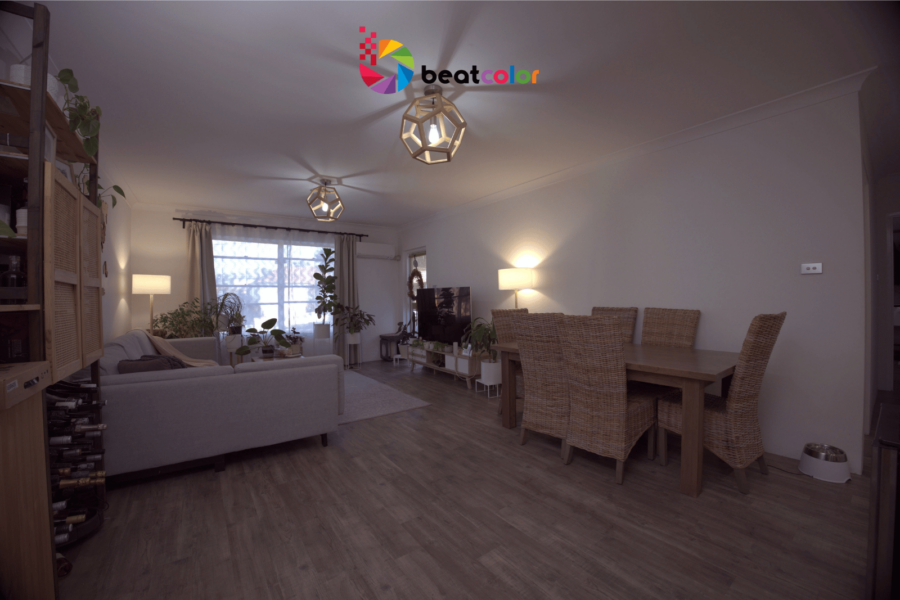

For luxury properties, competitive markets, or brokerages that depend on visual reputation, the risk of AI-only editing is too high. A single unnatural-looking photo can undermine buyer trust and hurt a listing’s performance — costing far more in lost interest than the money saved on editing.
Professional real estate editors bring:
- Trained eyes for lighting, composition, and color accuracy
- Attention to detail that catches what algorithms miss
- Understanding of buyer psychology and what makes a photo emotionally compelling
- Accountability — a real person who stands behind the final result
These are qualities no current AI model fully replicates.
Conclusion
AI real estate photo editing is a powerful tool for speed and basic corrections, but it isn’t a replacement for professional editors. When it comes to nuanced retouching, brand consistency, ethical compliance, and creative collaboration, human expertise remains irreplaceable. The smartest real estate businesses aren’t choosing AI or humans — they’re using AI to handle the routine work, while trusting professional editors to deliver the polish judgment and that turns a listing photo into a sold sign.
Read more:
Best AI Real Estate Photo Editing Tools Compared
Real Estate Editing AI vs Human: Which Delivers Better Results?
AI Real Estate Photo Editing: Benefits, Risks and Limitations