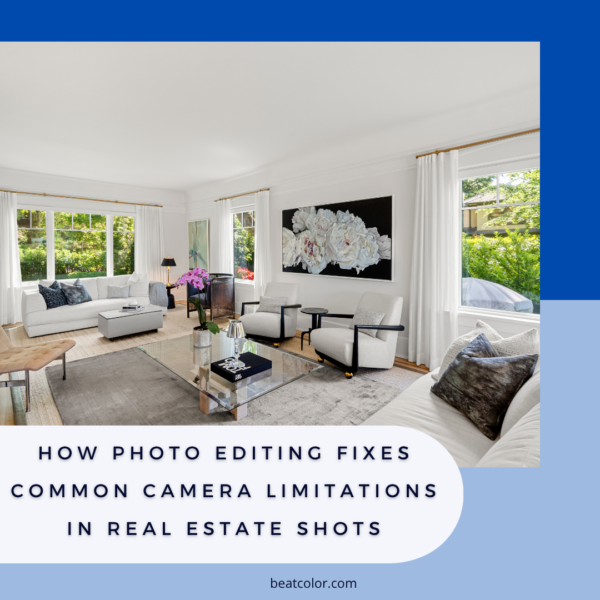

Virtual Staging Case Study: Transforming an Empty Property

An empty room tells you what exists. A well-staged room shows you what could exist. That difference matters in real estate marketing.
Today, buyers often encounter a property through listing photos first. Therefore, the visual story needs to communicate more than square footage. It needs to communicate possibilities.
This virtual staging case study explores how an empty property can become a more inviting space through carefully planned digital staging. Rather than changing the property itself, virtual staging changes how viewers understand the space.
The Starting Point: A Property Without a Story
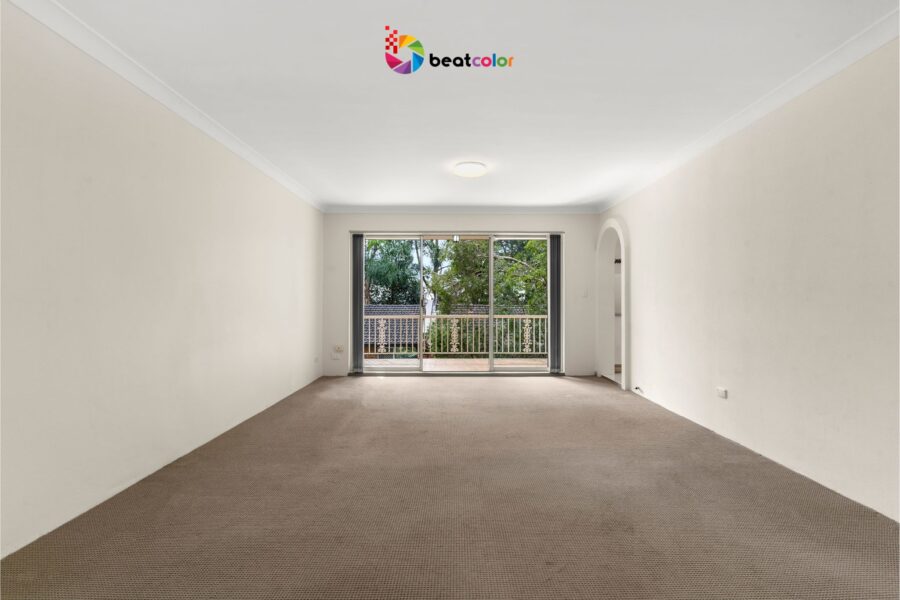
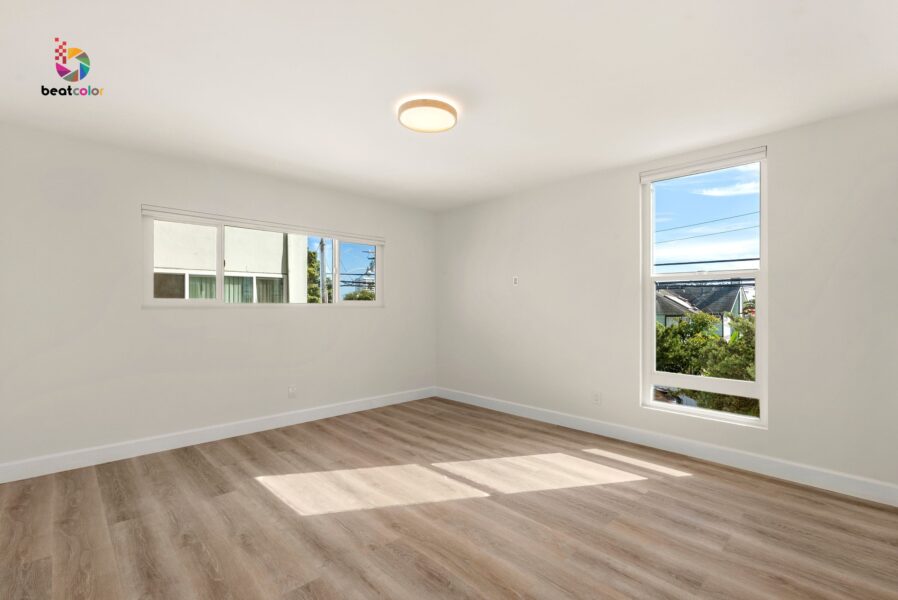
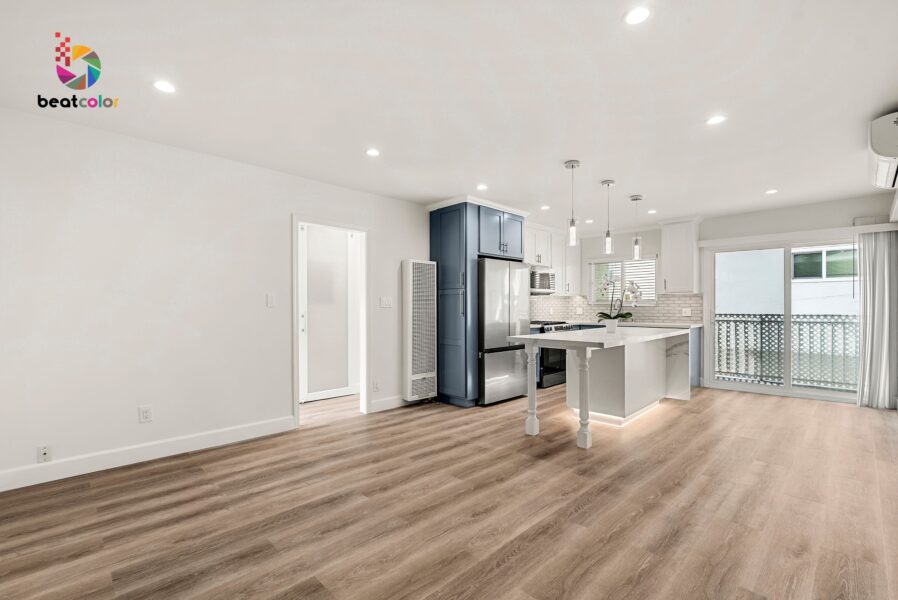
The project began with a common real estate challenge. The property was vacant, and several rooms appeared completely empty. The architecture was visible, but the purpose of each space was less obvious. An empty living room can look spacious.
However, it can also feel cold and difficult to visualize. The same issue can affect bedrooms, dining areas, and flexible rooms. There was no furniture to establish scale. There were no visual cues showing how the space could function. Consequently, the listing needed stronger visual storytelling. This is where virtual staging became part of the solution.
Why Staging Still Matters in 2026
Recent industry data shows why presentation remains important. According to NAR’s 2025 Profile of Home Staging, 83% of buyers’ agents said staging helps buyers visualize a property as their future home. Photos also remain highly important.
NAR reported that 73% of buyers’ agents considered listing photos highly important to their clients. For sellers’ agents, that figure reached 88%. Meanwhile, traditional physical staging was considered highly important by 43% of sellers’ agents. These numbers reveal an important point. Staging does not replace photography. Instead, staging can strengthen the story that photography already captures. Virtual staging offers another way to create that visual context.
Virtual Staging: The Objective Was Not to “Decorate”
This project was not about adding random furniture. The goal was to make each room easier to understand. That required several decisions before placing the first virtual sofa.
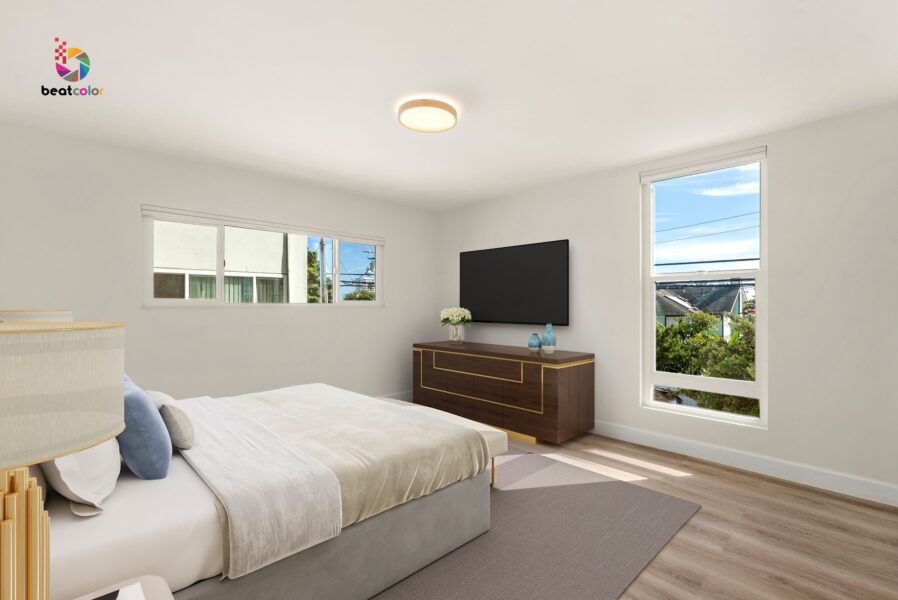
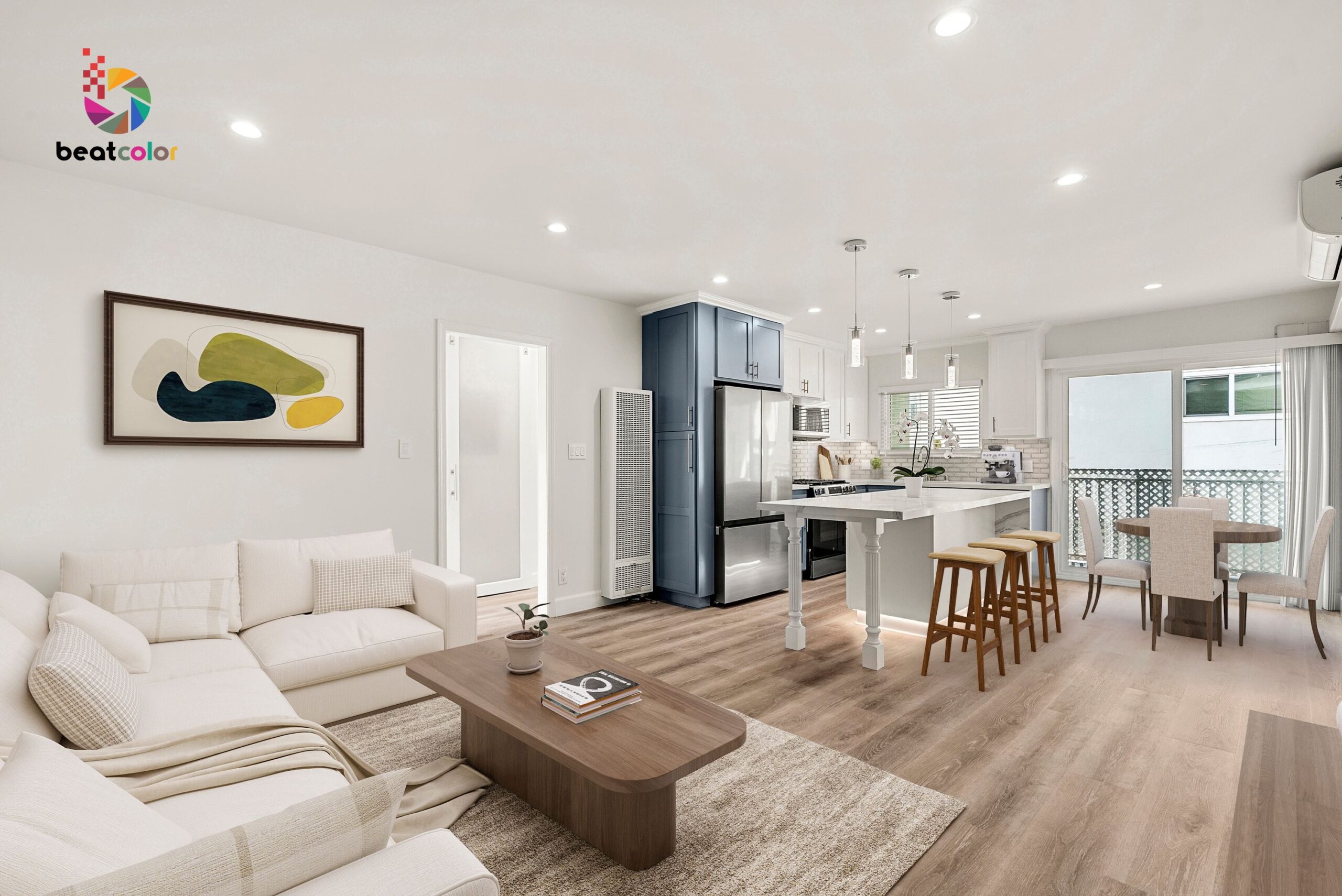
First, the furniture needed to match the property’s architecture. Second, the scale needed to feel believable. Third, the layout needed to preserve natural movement through the room. Finally, lighting and shadows needed to match the original photograph.
These details separate convincing virtual staging from simple digital decoration. The best result should feel intentional. More importantly, it should still feel like the same property.
Step One: Finding the Right Visual Direction
Every room has a visual language. A contemporary property may suit clean lines and restrained furniture. A traditional home may require warmer materials and more classic pieces. Meanwhile, a compact apartment may benefit from lighter furniture and simpler arrangements.
For this project, the design direction focused on creating a natural residential atmosphere. The furniture was selected to support the room. It was not selected to dominate the image.
That distinction is easy to overlook. Yet, it can dramatically affect the final result.
Step Two: Building the Room Around Perspective
Perspective is where virtual staging becomes technical. A sofa cannot simply be placed into an empty room. Its position must follow the camera angle, match the room. Its contact with the floor must also look believable. Otherwise, the furniture can appear to float. Therefore, perspective matching became a key part of the editing process. The same principle applied to tables, beds, chairs, rugs, and decorative elements. Each object needed to belong naturally within the existing photograph.
Step Three: Making Light Behave Naturally
Furniture placement alone does not create realism. Lighting does. The original photograph already contains information about light direction.
It shows where highlights appear. It also shows where shadows fall. The virtual staging therefore needs to respect those visual cues. Soft shadows can establish contact between furniture and flooring. Subtle highlights can help objects interact with the existing light.
Meanwhile, excessive contrast can make staged furniture look artificial. The goal is simple. The furniture should look photographed in the room, not pasted into it.
Step Four: Keeping the Property Authentic
Virtual staging should enhance a property without changing its identity. Therefore, architectural features remain important. Windows should stay where they are. Doors should remain unchanged. Flooring should remain recognizable. Built-in elements should not suddenly disappear. The room should also retain its original proportions. This approach creates a useful balance. The image becomes more aspirational while remaining connected to the actual property. That balance is especially important for real estate marketing.
The Transformation: Before vs. After
Now comes the most visible part of the project.
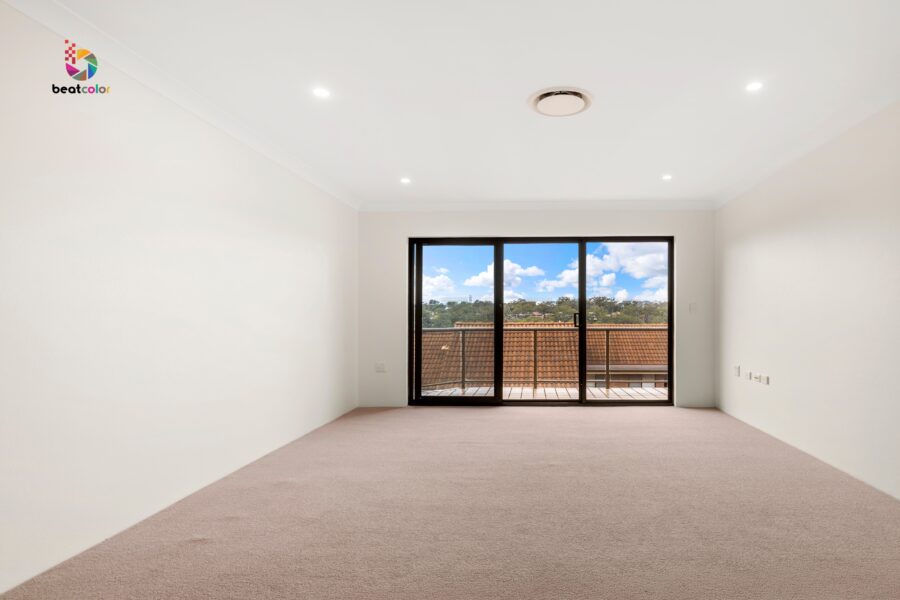
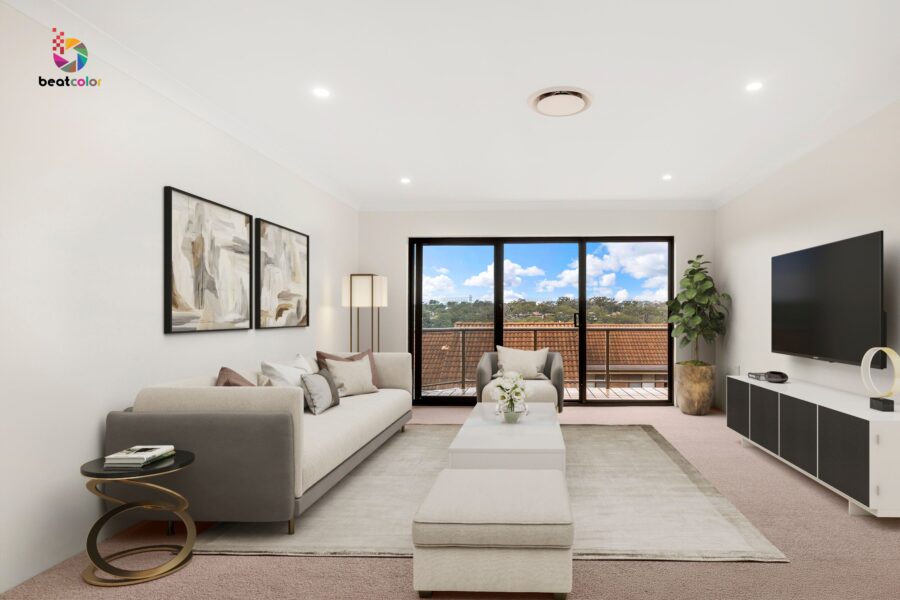
The transformation is not about making the property look different. It is about helping viewers understand what they are seeing. That is the real purpose of effective virtual staging.
Virtual Staging: What Makes the Final Images Work?
Several small decisions contribute to the final result.
1. Correct Scale
Furniture must match the room’s proportions. Oversized furniture can make a room appear smaller. Undersized furniture can make the space feel strangely empty.
2. Natural Composition
Furniture should create a logical path through the room. It should also support the room’s existing architecture.
3. Consistent Style
Different rooms should feel connected. A modern living room should not suddenly lead into an unrelated design style.
4. Realistic Lighting
Shadows and highlights should follow the original light source.
5. Visual Restraint
More furniture does not always create a better image. In many cases, fewer pieces create a cleaner result.
Where Virtual Staging Fits in Today’s Market
The latest NAR research also provides useful context. In its 2025 survey, 49% of sellers’ agents reported that staging reduced the time a home spent on the market. However, those findings relate to home staging generally. They should not be presented as proof that virtual staging alone produces the same result.
That distinction matters. Virtual staging is best understood as a visual marketing tool. It can help communicate space, function, and lifestyle through listing imagery. NAR also notes that virtual staging has become increasingly useful for vacant properties.
For agents, photographers, and property marketers, that creates a practical use case. A vacant property does not necessarily need physical furniture in every room. Instead, selected listing images can receive digital staging. This can create visual context while keeping the property itself untouched.
Virtual Staging: The Bigger Lesson From This Case Study
The most interesting part of this transformation is not the furniture. It is the change in communication. An empty room asks viewers to imagine. A thoughtfully staged room gives them a visual starting point. That does not mean every property needs virtual staging. It means the right property can benefit from a more deliberate visual presentation. Vacant homes are an obvious example. New construction can also benefit from showing potential room functions. Unfurnished investment properties may benefit as well. Even unusual rooms can become easier to understand with the right layout.
Virtual Staging Is Becoming More Visual, Not Less
Real estate marketing continues moving toward richer visual experiences. NAR reported in 2025 that buyers’ agents considered photos, physical staging, videos, and virtual tours important listing elements. At the same time, AI-assisted visual tools are developing rapidly.
NAR’s 2025 technology coverage highlighted advances in computer vision and generative models for digitally removing furniture and reconstructing spaces. However, technology does not remove the need for creative judgment. A convincing result still depends on composition, perspective, scale, lighting, and restraint. That is why professional virtual staging is more than inserting digital furniture. It is visual problem-solving.
Final Result: From Empty to Inviting
The finished images tell a clearer story. The architecture remains intact. The rooms remain recognizable. However, each space now communicates a possible lifestyle. That is the value of virtual staging. It gives an empty property visual context without physically changing the property. For real estate professionals, that can make listing photography more informative and visually engaging. For photographers and marketing teams, it also creates another way to present vacant properties. And for viewers, the result is simpler. They can look at the image and understand the room more quickly.
Looking for Professional Virtual Staging?
At BeatColor, virtual staging is approached as a combination of design and image editing. The goal is not simply to fill an empty room. The goal is to create realistic, balanced, property-appropriate imagery. Every detail matters. Furniture scale matters. Perspective matters. Lighting matters. Consistency matters. Most importantly, the original property still matters. Because effective virtual staging should answer one simple question:
Can viewers imagine themselves in this space?
When the answer becomes easier to see, an empty property can tell a much stronger story.
Read more:
Real Estate Photo Editing Packages: Which One Fits?
How BeatColor Used Sky Replacement to Elevate Their Listings
Case Study: Luxury Property Editing Project From Start to Finish