
AI Real Estate Photo Editing: Benefits, Risks and Limitations
Artificial intelligence has transformed real estate photography faster than many professionals expected. Today, AI real estate photo editing helps photographers create attractive listing images within minutes.
As online competition grows, image quality matters more than ever. According to the National Association of Realtors (NAR), nearly all homebuyers begin their property search online. Consequently, high-quality listing photos directly influence buyer engagement.
However, speed alone does not guarantee success. AI editing also raises questions about accuracy, ethics, and transparency.
This guide explains the latest benefits, risks, limitations, and trends of AI real estate photo editing in 2026.
What Is AI Real Estate Photo Editing?
AI real estate photo editing uses artificial intelligence to improve property photos automatically. Instead of editing every image manually, AI analyzes each photograph and applies intelligent corrections.
Common AI editing features include:
- Sky replacement
- Object removal
- HDR image blending
- Window view enhancement
- Color correction
- Exposure balancing
- Perspective correction
- Lawn enhancement
- Noise reduction
- Virtual staging
Modern AI also recognizes furniture, lighting conditions, and architectural elements. Therefore, editing has become faster and more consistent than traditional workflows.
Why AI Real Estate Photo Editing Is Growing
The real estate market has become increasingly digital. Buyers compare dozens of listings before contacting an agent.
Consequently, eye-catching photography creates an important competitive advantage.
Several factors continue driving AI adoption.
- Faster image delivery
- Lower editing costs
- Consistent editing quality
- Higher productivity
- Scalable workflows
- Better marketing performance
Furthermore, cloud-based AI software has become affordable for independent photographers and small agencies.
Benefits of AI Real Estate Photo Editing
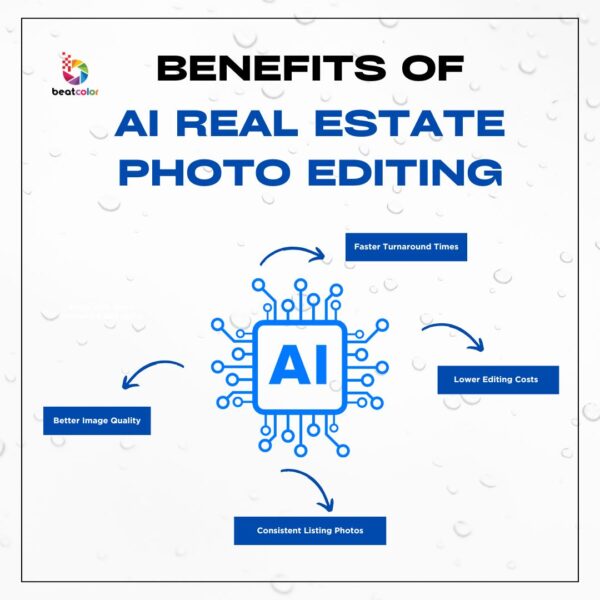
1. Faster Turnaround Times
Speed remains AI’s strongest advantage.
Traditional editing may require several hours for one property. AI can complete standard corrections within minutes.
As a result, photographers deliver projects much faster. Faster delivery also helps agents publish listings sooner.
2. Lower Editing Costs
Manual editing requires experienced professionals and considerable labor. AI automates repetitive adjustments without reducing overall image quality. Therefore, agencies can lower production expenses while increasing profitability.
3. Consistent Listing Photos
Consistency builds trust with potential buyers. AI applies similar editing styles across entire property galleries. Consequently, every listing maintains a professional appearance. Strong visual consistency also supports long-term brand recognition.
4. Better Image Quality
Modern AI enhances:
- Brightness
- White balance
- Sharpness
- Contrast
- Window exposure
- Color accuracy
Moreover, recent AI models preserve more natural lighting than earlier software. The final images appear polished instead of artificial.
Latest AI Trends in 2026
Artificial intelligence continues evolving rapidly. Several innovations now shape professional editing workflows.
AI Virtual Staging
Modern AI creates realistic furniture layouts within minutes. These virtual rooms help buyers visualize empty spaces more effectively.
Intelligent Decluttering
AI removes temporary objects while preserving permanent architectural features. Consequently, rooms appear cleaner without changing their structure.
AI Twilight Conversion
Daytime images can become realistic twilight photographs automatically. This feature reduces scheduling challenges for photographers.
Smart Batch Editing
AI edits hundreds of property photos using consistent settings. Therefore, agencies process large property portfolios much faster.
Generative AI Assistance
The newest AI models understand reflections, shadows, textures, and room geometry better than previous generations. However, human review remains essential before publishing.
Risks of AI Real Estate Photo Editing
Despite its advantages, AI introduces several important risks.
Misleading Property Photos
Overediting may create unrealistic expectations. Removing permanent defects or structural issues can misrepresent the property. Consequently, buyers may lose confidence during property visits.
Ethical Concerns
Transparency remains essential. Virtual staging should accurately represent room size and layout.
Likewise, AI enhancements should improve presentation instead of altering reality. Many professionals now disclose virtual staging within listing descriptions.
Copyright and Licensing
Generative AI continues raising copyright discussions. Some platforms train models using extensive image collections.
Therefore, photographers should understand software licensing before commercial use.
Data Privacy
Most AI platforms process images through cloud services. Secure storage and encryption have become increasingly important.
Businesses should carefully review each provider’s privacy policy.
Limitations of AI Real Estate Photo Editing
AI continues improving every year. Nevertheless, several limitations remain.
Limited Creative Vision
Artificial intelligence recognizes visual patterns. Experienced editors understand storytelling, composition, and emotional impact. Luxury properties especially benefit from artistic human refinement.
Complex Architectural Details
Historic homes often contain unique textures and decorative elements. AI occasionally struggles with intricate architectural features.
Therefore, manual adjustments remain valuable.
Inconsistent Editing
Mixed lighting and reflective surfaces still challenge many AI systems. Human quality control ensures consistent final results.
Local Buyer Preferences
Editing styles differ across regional markets. AI cannot always understand local visual preferences. Professional editors still provide important market insight.
Best Practices for Using AI
The best results combine automation with human expertise.
Follow these recommendations.
- Review every edited image carefully.
- Avoid unrealistic enhancements.
- Preserve architectural accuracy.
- Disclose virtual staging when appropriate.
- Protect client image data.
- Maintain consistent editing standards.
- Follow local advertising regulations.
- Use AI to support creativity, not replace it.
Will AI Replace Human Editors?
Probably not.
Instead, AI continues changing professional workflows. Routine corrections become automated.
Meanwhile, experienced editors focus on creative decisions, quality assurance, and client communication.
This hybrid approach delivers speed without sacrificing authenticity. As AI evolves, human expertise becomes even more valuable.
The Future of AI Real Estate Photo Editing
Several technologies will shape the industry’s future.
These include:
- Real-time AI editing during photography
- Personalized editing styles
- Voice-controlled editing
- Better architectural recognition
- AI quality inspection
- Faster cloud processing
- More realistic virtual staging
Industry organizations may also introduce clearer standards for AI-generated property images. Transparency will likely become a competitive advantage.
Final Thoughts
AI real estate photo editing has become an essential tool for modern property marketing. It improves productivity, reduces editing costs, and creates visually attractive listings.
However, responsible use remains critical. Photographers should balance automation with professional judgment. The most successful businesses combine AI efficiency with human creativity. That balanced approach builds trust while delivering exceptional listing images.
As AI technology continues advancing, professionals who prioritize realism, transparency, and quality will remain ahead of the competition.
Frequently Asked Questions
Is AI real estate photo editing better than manual editing?
AI is faster for routine adjustments. However, manual editing still delivers superior creative control and quality assurance.
Is AI real estate photo editing ethical?
Yes, when edits accurately represent the property. Misleading modifications should always be avoided.
Can AI replace real estate photographers?
No. AI improves editing efficiency, but photographers remain essential for composition, lighting, and property presentation.
What are the biggest benefits of AI real estate photo editing?
The biggest advantages include faster turnaround, lower costs, consistent image quality, improved productivity, and scalable editing workflows.
Read more:
Before and After Real Estate Photo Editing: Real Examples
How Professional Photo Editing Helps Realtors Sell Faster
Sky Replacement for Real Estate Photos: Best Practices and Examples