
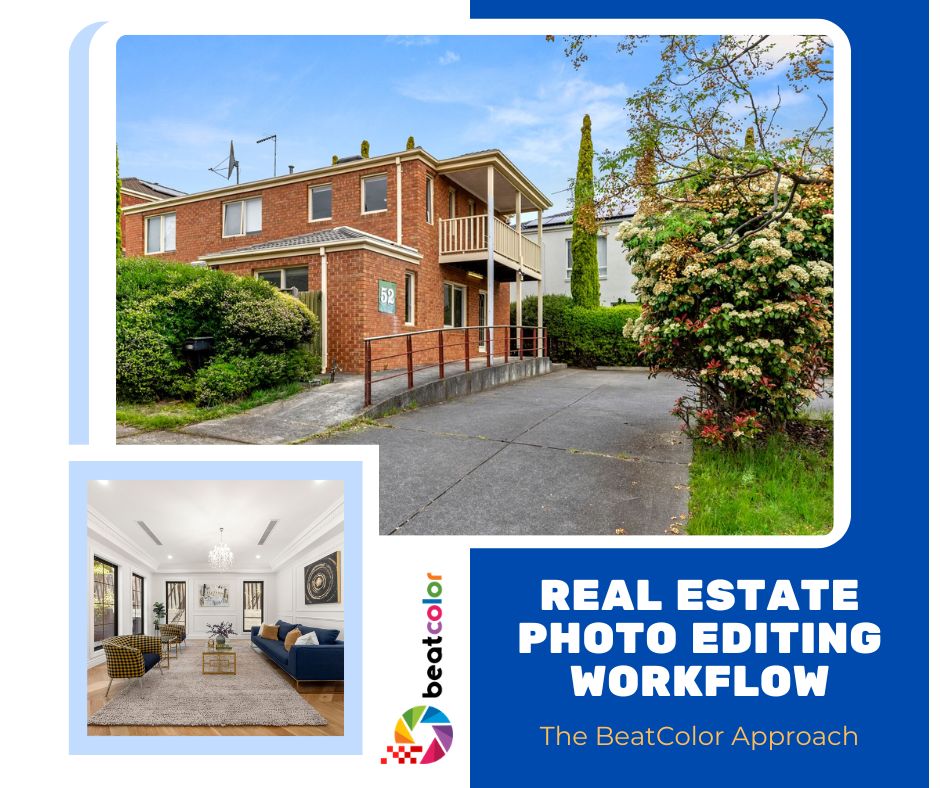
Real Estate Photo Editing Workflow: The BeatColor Approach
Introduction: Behind Every Listing-Ready Image
A compelling property photograph starts with the camera, but professional post-production brings its potential to life.
Bright windows, dark corners, distracting objects, and inconsistent colors can weaken even excellent photographs. Consequently, real estate photographers need an editing workflow that balances visual appeal, accuracy, and efficiency.
This is where BeatColor makes a difference.
Since 2016, BeatColor has supported photographers and businesses with specialized real estate photo editing and visual content services. Its offerings include HDR editing, retouching, virtual staging, virtual dusk, and video editing.
However, professional editing involves more than applying presets or correcting exposure. It requires a structured process, careful attention to detail, and consistent quality standards.
In this guide, we explore the essential stages of a modern real estate photo editing workflow. We also explain how BeatColor helps photography professionals manage post-production more efficiently.
Stage 1: Organizing Images for a Smoother Workflow
The objective: Establish a reliable foundation before editing begins.
Every successful editing project starts with organized source files.
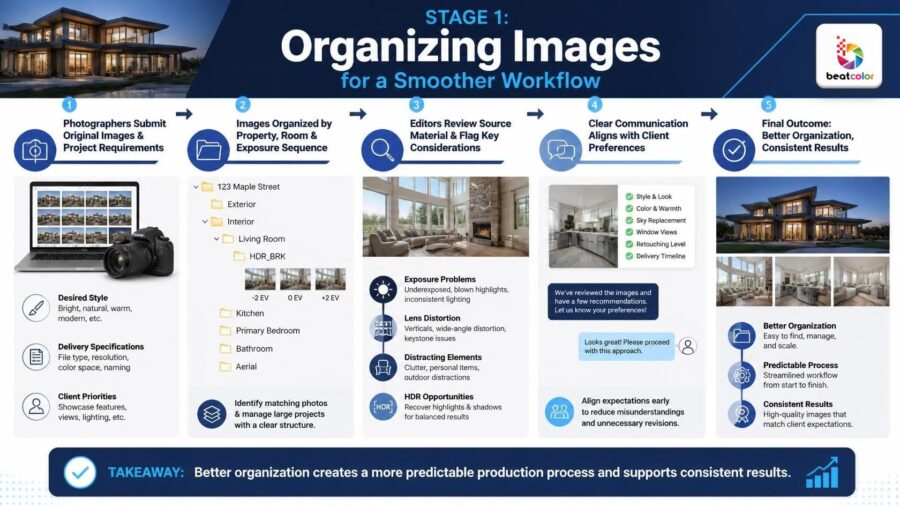
First, photographers submit their original images and project requirements. Clear instructions help editors understand the desired style, delivery specifications, and individual priorities.
Next, images are organized by property, room, and exposure sequence. This step makes it easier to identify matching photographs and manage larger projects.
Editors then review the source material. They identify exposure problems, lens distortion, distracting elements, and potential HDR opportunities.
At BeatColor, clear communication also helps align the final images with each client’s preferences. Consistent instructions reduce misunderstandings and unnecessary revisions.
The takeaway: Better organization creates a more predictable production process and supports consistent results.
Stage 2: Correcting Exposure, White Balance, and Color
The objective: Create natural, balanced photographs.
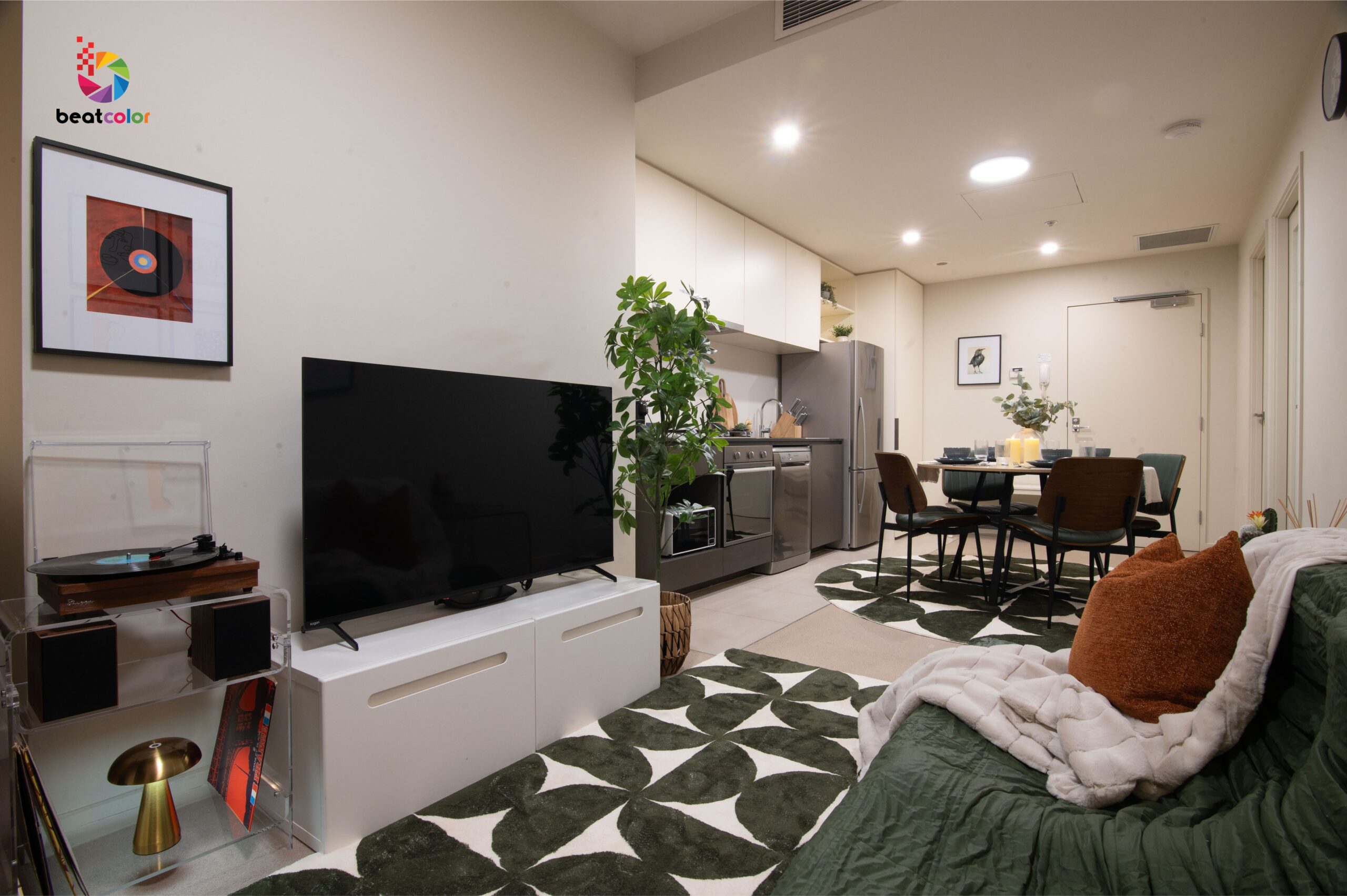
Lighting conditions vary significantly between rooms. Therefore, exposure correction is one of the most important stages of real estate photo editing.
Editors begin by balancing brightness, highlights, shadows, and contrast. They then correct white balance to maintain realistic colors across different lighting conditions.
For example, warm interior lights can make white walls appear yellow. Meanwhile, daylight entering through windows may introduce cooler tones.
Careful color correction helps resolve these inconsistencies without removing the property’s natural atmosphere.
Next, editors apply appropriate lens corrections and perspective adjustments. Straight architectural lines improve the photograph’s overall presentation.
BeatColor’s photo editing services include exposure and color adjustments, lens correction, noise reduction, and other essential refinements.
Nevertheless, the goal is not to make every room look identical. Each image should retain its original character while matching the property’s overall visual style.
Stage 3: HDR Blending for Challenging Interior Lighting
The objective: Preserve details in bright and dark areas.
High Dynamic Range (HDR) editing is especially valuable for interior photography.
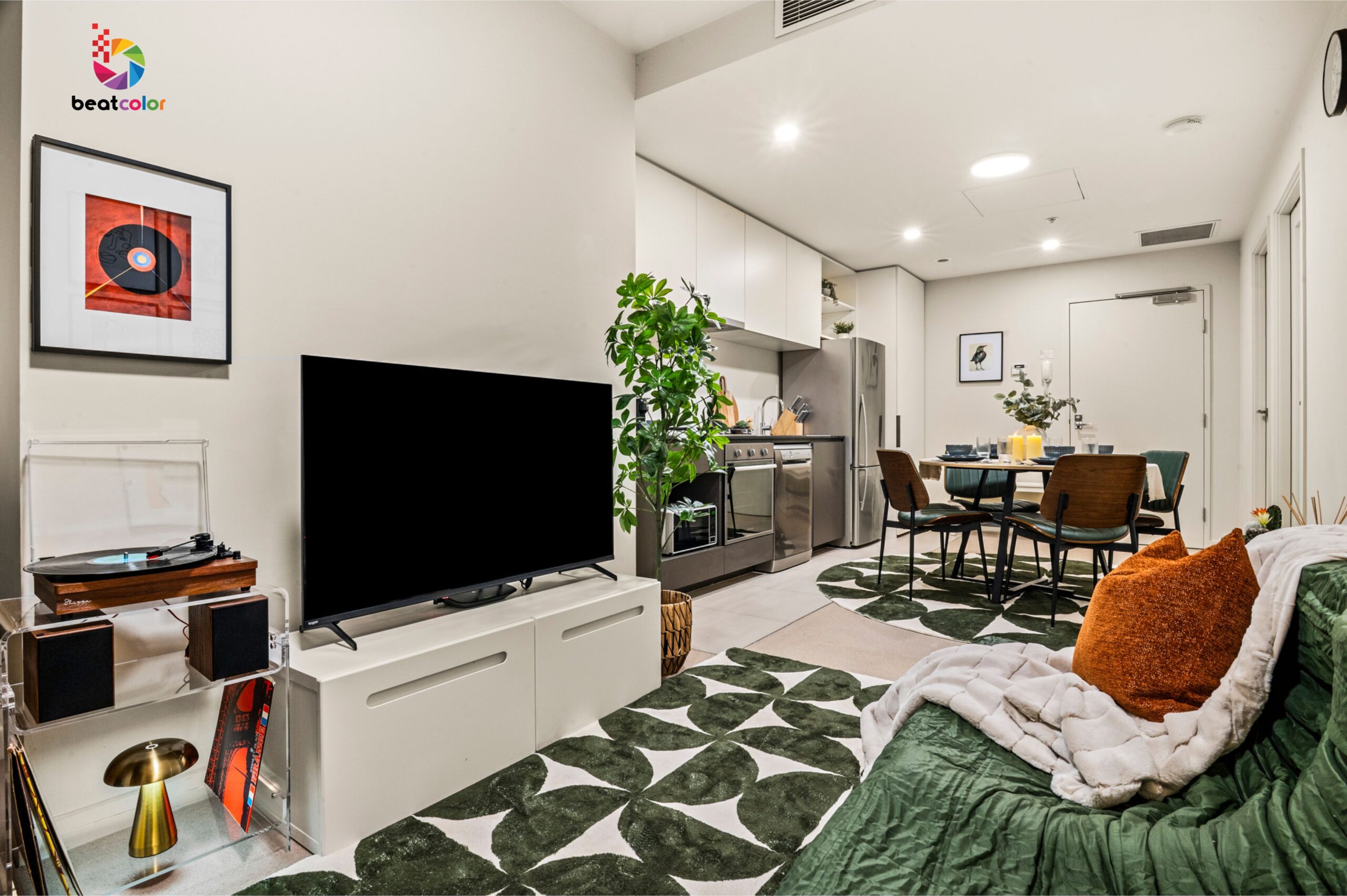
A single exposure may struggle to capture bright windows and shadowed furniture simultaneously. As a result, important details can disappear from either area.
HDR blending combines multiple exposures to create a more balanced photograph.
First, editors select compatible bracketed images. Next, they align the exposures and combine their useful lighting information.
However, merging photographs is only part of the process. Editors must also inspect window frames, reflective surfaces, ceiling lights, and moving objects.
Excessive tone mapping can produce unnatural colors and flattened shadows. Therefore, restrained adjustments generally create more convincing results.
BeatColor provides HDR editing to help photographers handle challenging interior lighting conditions. Its editors can refine the merged image to achieve a polished, natural appearance.
The takeaway: Effective HDR should reveal architectural details without making the room look artificial.
Stage 4: Real Estate Photo Editing Workflow: Retouching Without Losing Authenticity
The objective: Remove distractions while preserving the property’s identity.
Even well-prepared properties can contain distracting visual elements.
Temporary clutter, minor reflections, camera flashes, and other imperfections may draw attention away from important features. Thoughtful retouching helps create a cleaner presentation.
For example, removing a distracting reflection can improve the clarity of a kitchen photograph. Similarly, correcting minor visual distractions can strengthen an exterior image.
BeatColor offers real estate retouching services for these situations.
However, professional judgment remains essential. Removing permanent property features or changing structural details can create misleading impressions.
Therefore, editors should distinguish between harmless distractions and information buyers need to evaluate the property accurately.
When requested, additional enhancements can support a property’s marketing presentation. Nevertheless, the final image should remain consistent with the actual property and applicable listing requirements.
Stage 5: Using AI While Keeping Human Oversight
The objective: Improve efficiency without sacrificing visual quality.
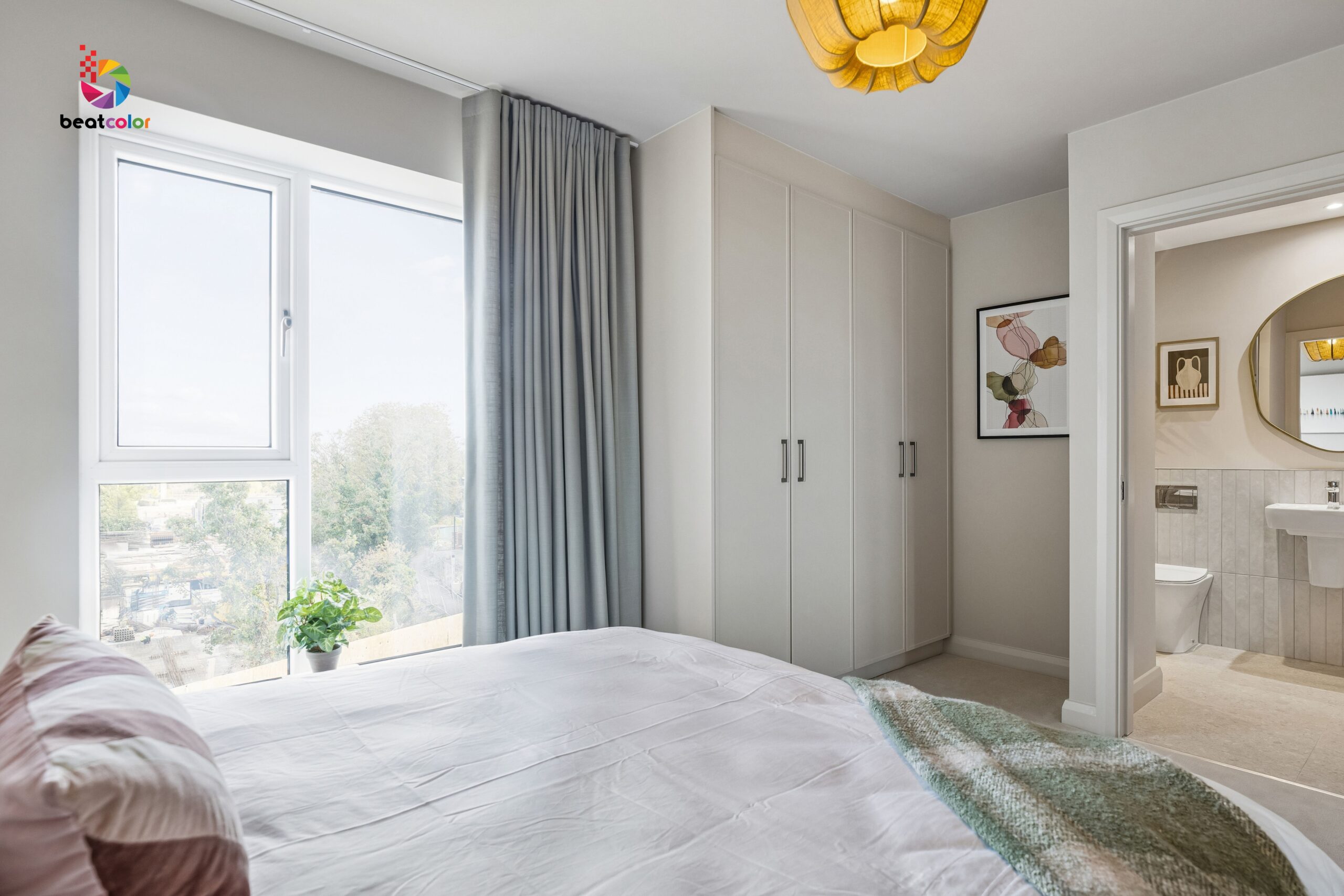
AI-assisted tools are changing how photography businesses approach post-production. They can accelerate repetitive adjustments and support more standardized workflows.
However, automation does not eliminate the need for experienced editors.
AI may misinterpret reflections, architectural edges, unusual lighting, or objects near windows. Consequently, automated results require appropriate inspection.
BeatColor’s workflow emphasizes professional image editing rather than relying solely on automatic corrections.
Editors can evaluate whether an adjustment improves the photograph or introduces unwanted artifacts. They can also consider the client’s preferred editing style.
Furthermore, virtual staging and other substantial digital alterations require additional care.
For example, California’s CRMLS introduced digitally altered image requirements effective January 1, 2026. Its guidance addresses disclosures and the presentation of original images alongside certain altered images.
Therefore, photographers should check the rules of their relevant listing platforms before publishing modified photographs.
The takeaway: AI can accelerate production, but human judgment protects quality and credibility.
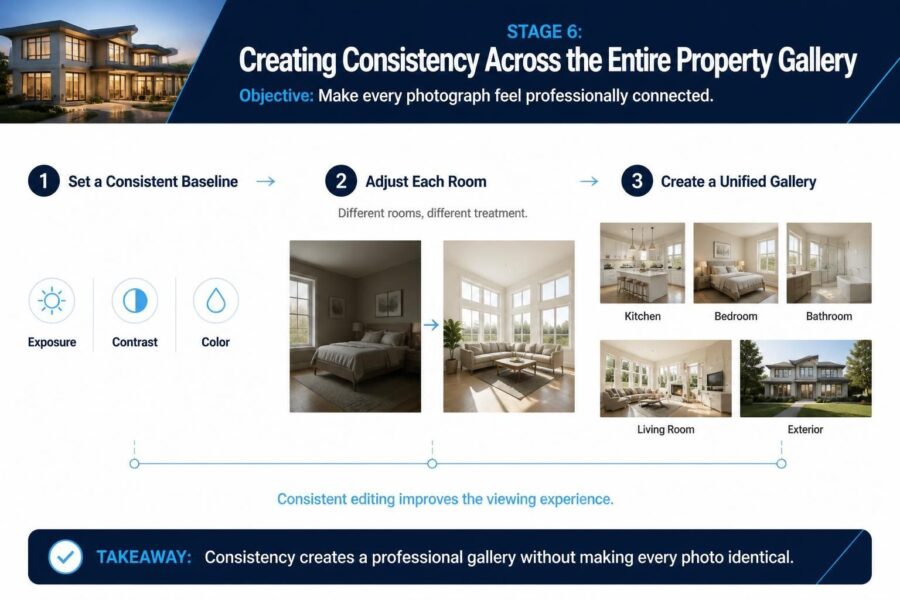
Stage 6: Creating Consistency Across the Entire Property Gallery
The objective: Make every photograph feel professionally connected.
Buyers rarely evaluate a property through one photograph alone. Instead, they move between kitchens, bedrooms, bathrooms, living areas, and exterior views.
Consequently, inconsistent editing can disrupt the viewing experience.
One photograph might appear overly warm, while another looks unusually dark. Even small differences can make the gallery feel unprofessional.
To prevent this, editors establish consistent baseline adjustments for exposure, contrast, and color.
However, individual photographs still require careful attention. A naturally dim bedroom needs different treatment from a sunlit living room.
BeatColor supports photographers who need consistent results across multiple images and ongoing projects.
With clear editing preferences and organized project requirements, clients can develop a recognizable visual style across their property portfolios.
The takeaway: Consistency builds a professional presentation without making every photograph look identical.
Stage 7: Final Quality Control and Delivery
The objective: Deliver polished images that meet client expectations.
Before delivery, every photograph should undergo a final review.
Editors should check for blending artifacts, excessive sharpening, color inconsistencies, distorted lines, and unnatural retouching.
They should also verify image order, file formats, dimensions, and other requested specifications.
Additionally, the gallery should be reviewed as a complete collection. This final comparison helps identify inconsistencies that individual image inspections might miss.
BeatColor advertises typical photo editing turnaround times of approximately 12–24 hours, depending on the service and order requirements.
For busy photography businesses, dependable delivery helps simplify scheduling and client communication.
Nevertheless, turnaround expectations should always be confirmed for the specific project.
After approval, files can be delivered according to the agreed specifications, ready for the client’s next production step.
Why Choose BeatColor for Real Estate Photo Editing?
An effective workflow combines technical expertise, clear communication, and reliable production management.
BeatColor brings these elements together through specialized real estate photo editing services.
Its service range includes HDR editing, image retouching, virtual staging, virtual dusk conversion, and video editing. This allows photography businesses to coordinate several post-production needs with one partner.
Moreover, outsourcing can help photographers spend less time processing images and more time serving clients.
Rather than managing every editing task internally, businesses can allocate resources toward photography, marketing, and customer relationships.
The best results still depend on clear instructions, suitable source images, and agreed quality standards. Therefore, choosing an editing partner should involve evaluating both output quality and workflow compatibility.
Conclusion: Better Workflows Create Better Property Presentation
A professional real estate photo editing workflow requires more than technical adjustments. It combines organization, exposure correction, HDR blending, careful retouching, and consistent quality control.
Meanwhile, evolving AI tools create opportunities to improve efficiency. However, authentic presentation and human oversight remain essential.
BeatColor helps real estate photographers and businesses manage these demands through specialized post-production services.
From individual image corrections to complete property galleries, the objective remains consistent: deliver polished photographs that present properties clearly and professionally.
Ultimately, a reliable editing partner does more than process images. It helps photographers build a smoother production workflow and maintain the visual standards their clients expect.
Ready to improve your real estate photo editing workflow? Explore BeatColor’s services and request a free editing trial to evaluate the results for yourself.
Read more:
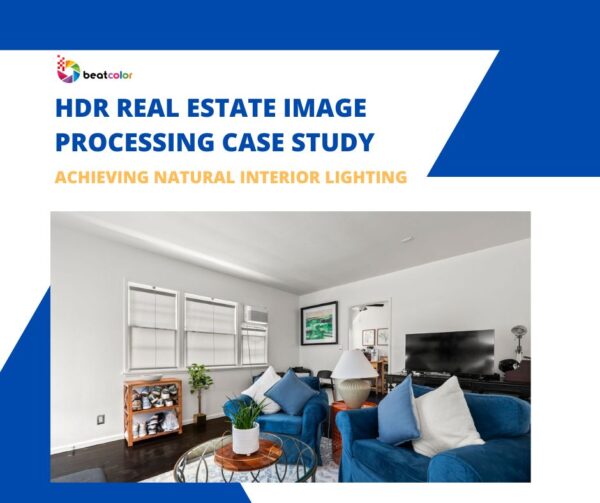
HDR Real Estate Image Processing Case Study: Achieving Natural Interior Lighting
Virtual Staging Case Study: Transforming an Empty Property
Real Estate Photo Editing Packages: Which One Fits?