
Virtual Staging Case Study: Transforming Empty Rooms Effectively
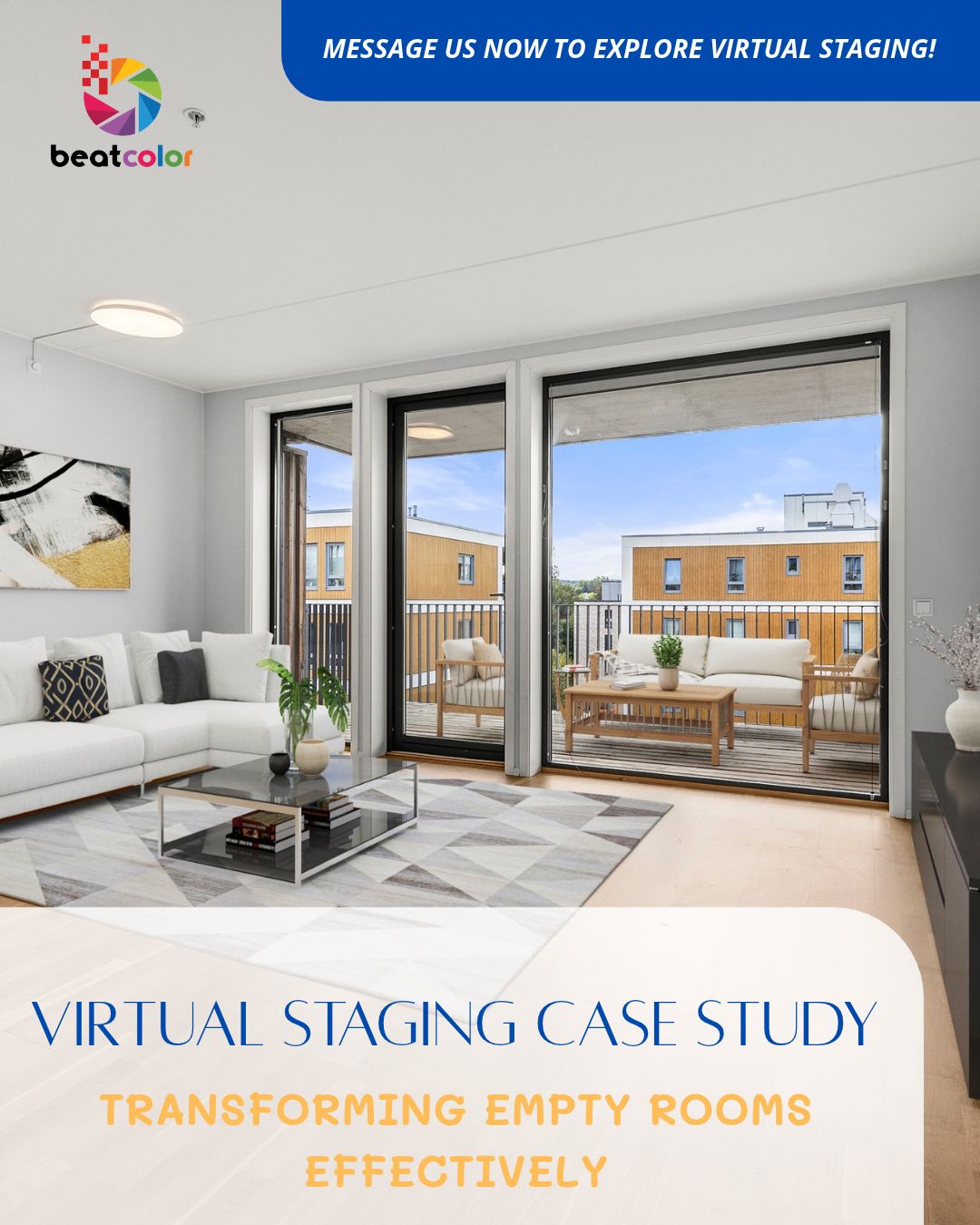
Virtual Staging project profile: A vacant two-bedroom apartment needed a stronger visual identity before its next marketing campaign.
Note: This is an illustrative case study, not a documented client project. The property scenario and proposed workflow demonstrate practical virtual staging applications without inventing actual performance results.
The apartment had attractive windows, neutral walls, and generous natural light. However, its listing photographs failed to communicate the property’s full potential.
Without furniture, the living room appeared unusually spacious but emotionally disconnected. Meanwhile, the second bedroom offered little guidance about its possible function.
Consequently, prospective buyers struggled to imagine everyday life inside the apartment. The listing needed more than brighter photographs or conventional color correction.
It needed a visual story.
The real estate team chose Virtual Staging to demonstrate how thoughtful furniture placement could transform empty spaces. Rather than renovating the property, the team focused on presentation, functionality, and visual consistency.
This approach offered a practical alternative to purchasing, transporting, and arranging physical furniture.
The Industry Context: Why Visual Presentation Matters
Before developing the creative direction, the team considered current home-staging research.
The National Association of REALTORS® published its 2025 Profile of Home Staging on May 6, 2025. Its findings highlighted the importance of helping buyers imagine themselves inside a property.
According to the report, 83% of buyers’ agents said staging helped buyers visualize a property as their future home. Additionally, 49% of sellers’ agents reported reduced market time following staging. However, these findings reflect agents’ observations, not guaranteed outcomes.
These findings provide useful context for visual marketing decisions. Nevertheless, they do not establish that virtual staging independently produces the same results.
The distinction matters because digital presentation and physical staging involve different experiences.
For this project, the objective was straightforward: communicate the apartment’s potential without misrepresenting its existing condition.
The Creative Virtual Staging Strategy: Three Rooms, Three Stories
Instead of applying identical furniture throughout the apartment, the team developed a distinct purpose for each space.
Scene One: The Living Room Becomes a Lifestyle Destination
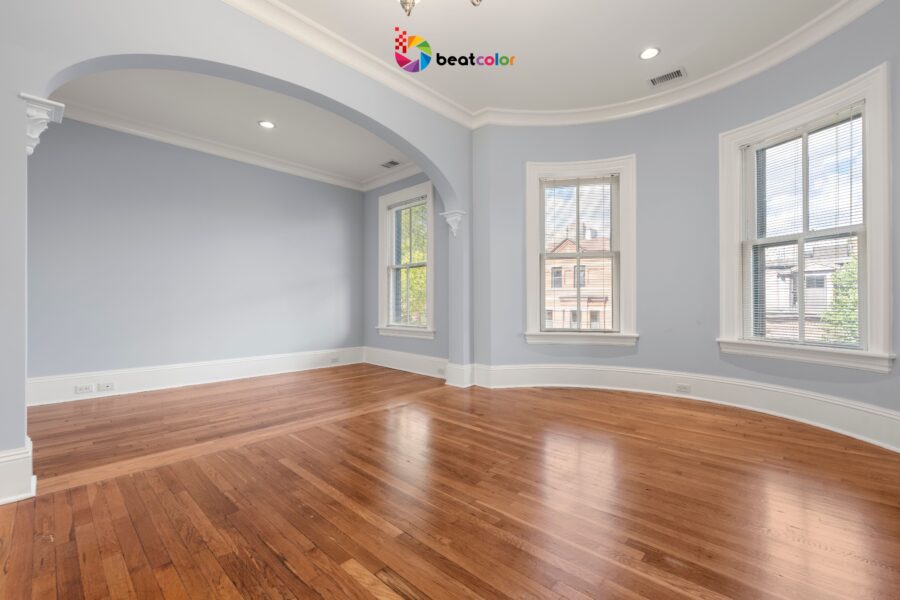
The original photograph showed an empty room with large windows and uninterrupted flooring.
Although these features were attractive, the absence of furniture made the room feel unfinished. Buyers could not immediately understand the relationship between seating, circulation, and natural light.
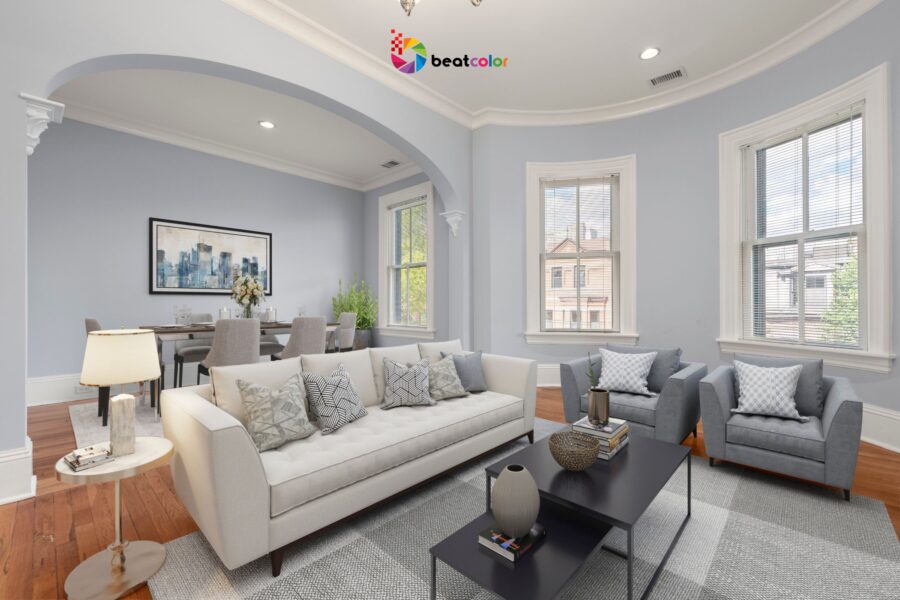
The virtual staging concept introduced a contemporary sofa, a textured rug, a compact coffee table, and restrained decorative accents.
Furniture placement followed the room’s existing architecture. The sofa faced a suitable focal point without obstructing the windows or creating artificial depth.
Meanwhile, neutral upholstery complemented the existing finishes. Warm wood introduced contrast without overwhelming the photograph.
The result was a more understandable layout that preserved the property’s actual dimensions.
Creative objective: Help buyers recognize the room’s potential for relaxation, conversation, and everyday living.
Scene Two: The Primary Bedroom Creates a Sense of Calm
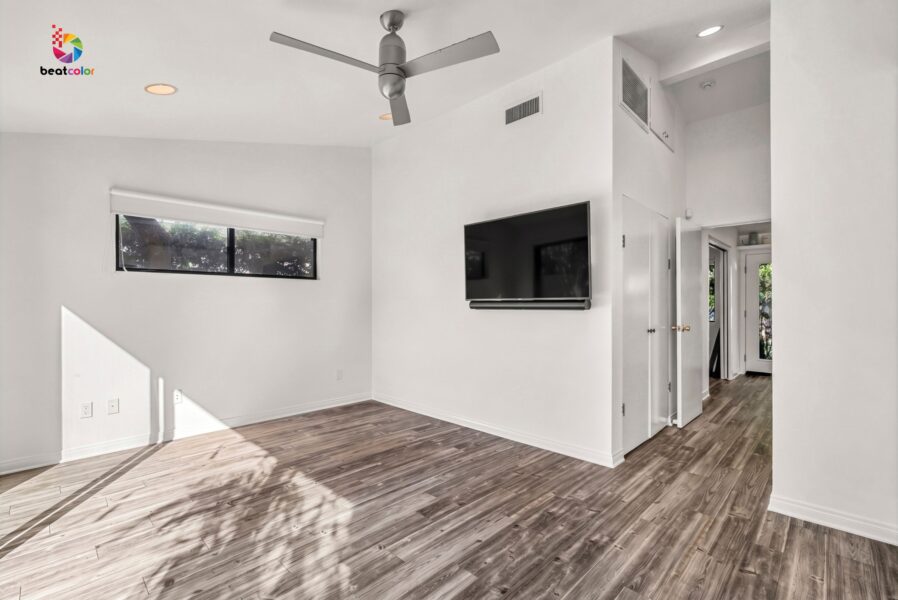
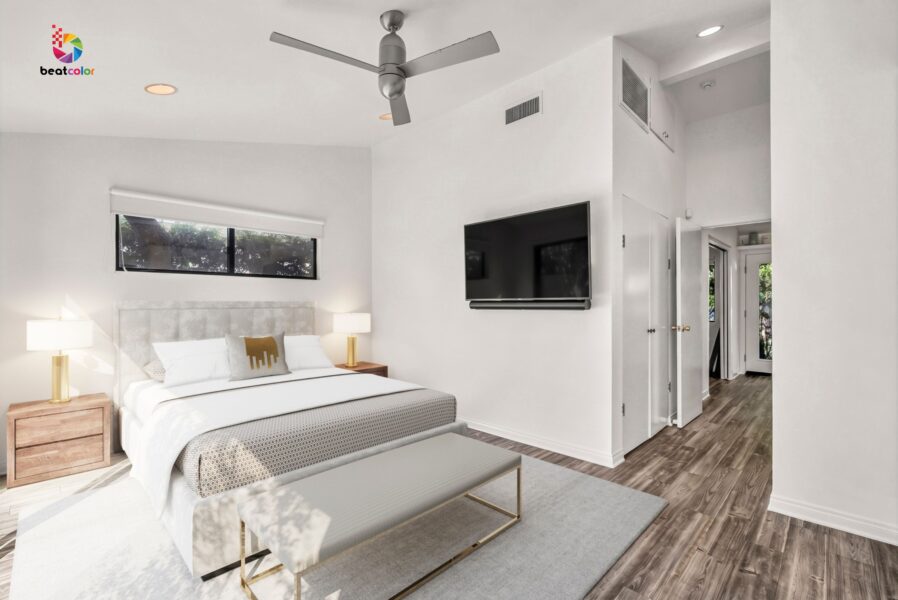
Next, the team addressed the primary bedroom.
An empty bedroom can make dimensions difficult to interpret, particularly when buyers view photographs on small screens.
The proposed design featured a properly scaled bed, understated bedside tables, soft textiles, and minimal artwork.
Lighting adjustments maintained consistency with the original photograph. Shadows and perspective also needed to match the room’s existing light sources.
Importantly, the staging avoided oversized furniture that might exaggerate the available space.
Creative objective: Present a welcoming bedroom while keeping the architecture and proportions believable.
Scene Three: The Spare Bedroom Gains a Clear Purpose
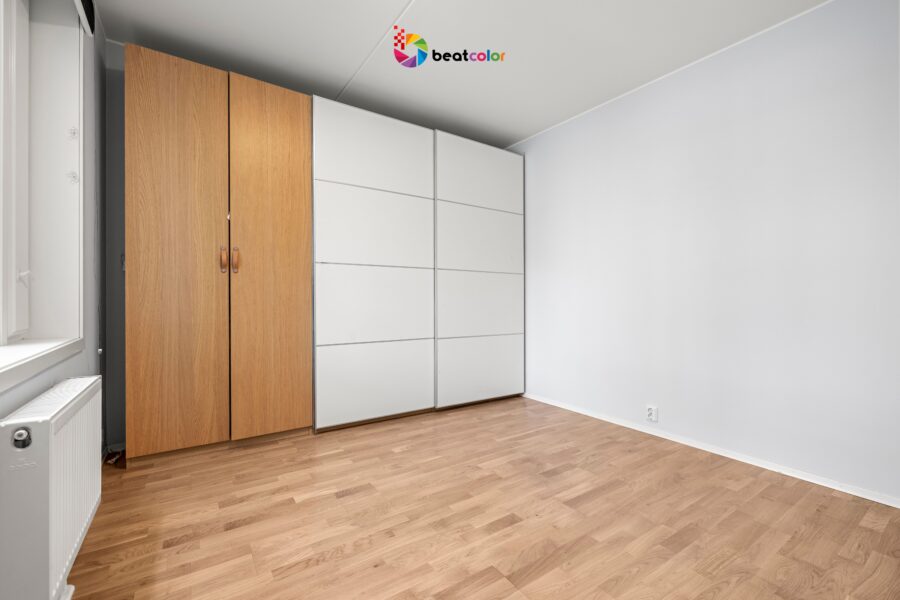
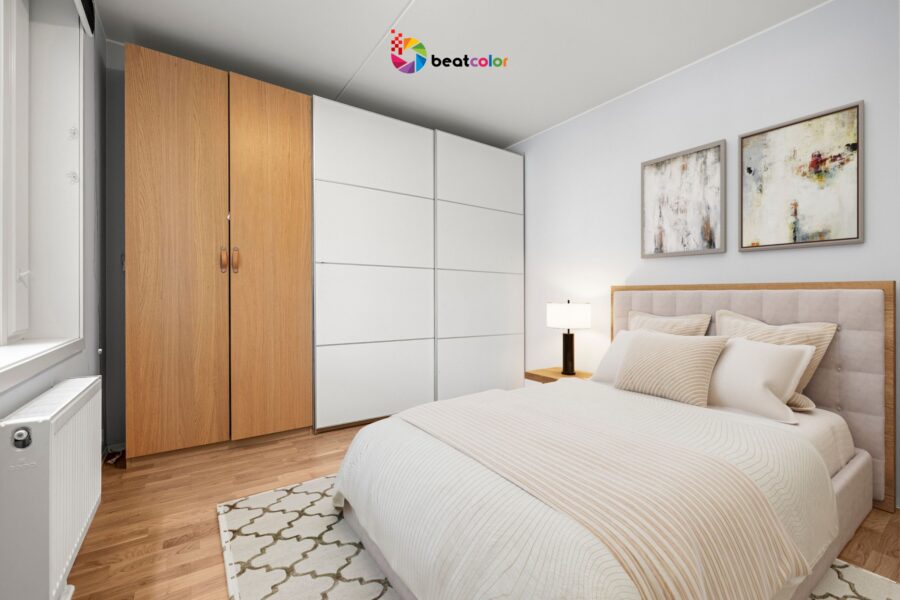
Finally, the team transformed the second bedroom into a flexible workspace.
A compact desk, ergonomic chair, bookshelf, and subtle accessories communicated a practical use for the room.
This decision addressed a common challenge in property marketing. Buyers may overlook smaller rooms when photographs provide insufficient context.
By demonstrating one possible arrangement, virtual staging made the room’s functionality easier to understand.
The design remained intentionally flexible. Prospective buyers could imagine using the space as an office, guest bedroom, or creative studio.
Creative objective: Demonstrate versatility without suggesting additional floor space or structural changes.
The Production Workflow of Virtual Staging: Realism Before Decoration
Successful virtual staging requires more than attractive furniture and sophisticated editing tools.
For this project, the workflow followed five essential stages.
Stage 1: Evaluate the original photographs.
The editor reviewed perspective, image resolution, natural lighting, and architectural details. Each photograph needed sufficient information for realistic furniture integration.
Stage 2: Establish a consistent design direction.
The team selected a contemporary style with restrained colors and complementary materials. Consistency helped the apartment feel like one cohesive property.
Stage 3: Integrate furniture accurately.
Furniture scale, camera perspective, contact shadows, and reflections required careful attention. Incorrect proportions could make otherwise attractive images appear artificial.
Stage 4: Refine the visual details.
The editor checked furniture edges, floor contact, lighting direction, and color balance. These refinements helped digital elements blend naturally into the original photographs.
Stage 5: Review accuracy and disclosure.
Every staged image was compared against its original photograph. The team retained unaltered versions and planned appropriate disclosure before publication.
This final stage protects buyer trust. Digital furniture should never conceal defects or imply nonexistent architectural features.
Measuring Success: Beyond the Finished Photograph
A compelling transformation deserves evaluation beyond subjective visual appeal.
However, the illustrative project has no verified campaign results. Therefore, assigning actual conversion improvements or sales figures would be misleading.
Instead, the team could establish measurable indicators before publishing the revised listing.
Listing engagement: Compare click-through rates between comparable campaigns, accounting for differences in pricing, traffic sources, and market conditions.
Buyer interest: Monitor qualified inquiries and viewing requests following publication.
Viewing quality: Ask agents whether prospective buyers understand the room layouts before visiting.
Production efficiency: Record editing costs, delivery times, and revision requirements against the team’s existing workflow.
Listing performance: Track days on market and final sale outcomes while considering pricing, location, and broader market conditions.
These measurements provide a stronger evaluation framework than visual preference alone.
For context, the Real Estate Staging Association reported an average staging investment of $4,934 across 233 properties in its first-half 2026 statistics. Its reported average sale-to-list ratio was 111% across 175 properties.
However, these figures represent participating properties, not the entire housing market. They also do not isolate virtual staging’s contribution or establish a causal return on investment.
Consequently, this research supports broader interest in staging rather than a guaranteed financial outcome for digitally staged listings.
The 2026 Virtual Staging Perspective: AI Efficiency Meets Buyer Trust
Artificial intelligence is changing how real estate professionals create and refine listing imagery.
Modern editing workflows can accelerate furniture placement, explore alternative design directions, and reduce repetitive production tasks.
Nevertheless, speed does not automatically produce convincing results. Automated tools may introduce inconsistent shadows, distorted objects, or unintended changes to architectural details.
These problems become especially serious when an edited photograph no longer represents the actual property.
Transparency is therefore an essential part of modern virtual staging.
For example, California’s Assembly Bill 723 introduced disclosure requirements for digitally altered real estate advertising images, effective January 1, 2026. Applicable requirements include disclosures and access to original images. Professionals should verify current legal and MLS requirements for their specific markets.
For the apartment in this case study, the safest approach combines realistic editing, retained originals, and appropriate disclosures.
The objective is not to make an empty property look flawless. Instead, it is to help prospective buyers understand what genuinely exists and what furniture could add.
Final Takeaway: Make Empty Spaces Easier to Imagine
This case study illustrates how virtual staging can turn ordinary listing photographs into clearer visual narratives.
The living room communicates lifestyle potential. The primary bedroom emphasizes comfort. The spare bedroom demonstrates flexibility.
Together, these scenes help prospective buyers interpret the property’s possibilities without requiring physical furniture.
However, strong results depend on more than decorative choices. Accurate perspective, believable lighting, restrained design, and transparent presentation remain essential.
For real estate photographers, image editors, and property marketers, Virtual Staging offers a valuable way to improve visual communication.
When executed thoughtfully, it bridges the gap between an empty room and a buyer’s imagination.
The most effective image does not promise a different property. It helps people see the possibilities within the property they are actually considering.
Read more:
Real Estate Photo Editing Workflow: The BeatColor Approach
Real Estate Photo Editing Company: Top 5 Compared
HDR Real Estate Image Processing Case Study: Achieving Natural Interior Lighting