
From Ordinary to Outstanding: A Real Estate Photo Editing Case Study
Real Estate Photo Editing can transform ordinary property photographs into clear, professional, and visually appealing marketing assets.
Imagine scrolling through a property listing and stopping at a photograph that immediately feels inviting. The room looks bright, the colors feel natural, and every architectural detail appears clear. Nothing looks artificial, yet the entire image feels more professional.
But what makes this transformation possible?
In this case study, we explore how a typical residential property improves through professional photo editing. From correcting uneven lighting to restoring natural colors, each adjustment addresses a specific visual problem.
The following sections examine the original photographs, the editing process, and the final improvements. Although this example is illustrative rather than a documented client project, it demonstrates a practical workflow for preparing property images.
Ultimately, the goal is simple: show a property’s genuine strengths through better photography, without misleading potential buyers.
The Starting Point: A Living Room That Needed Attention
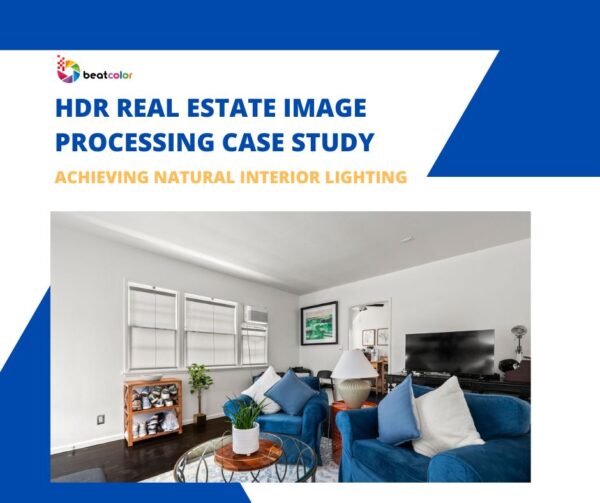
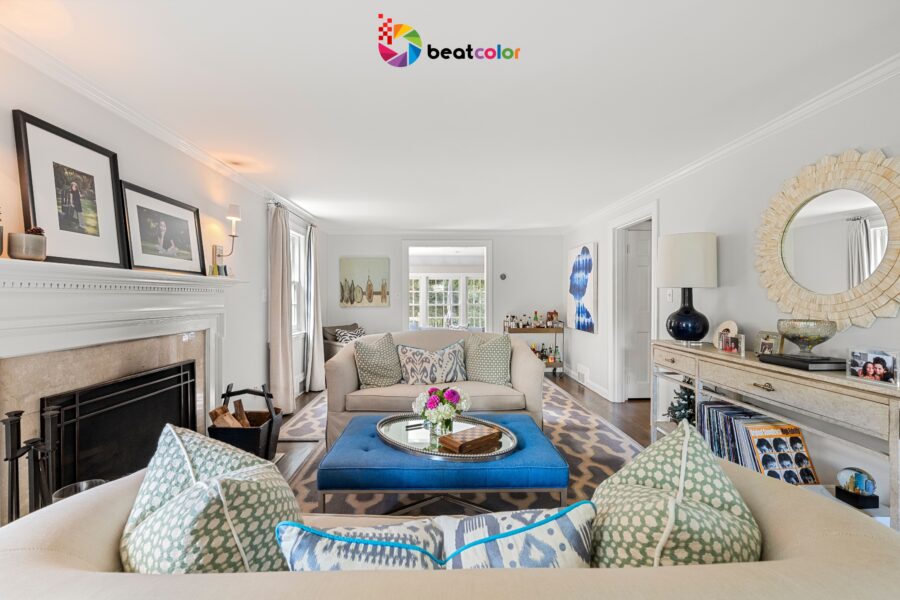
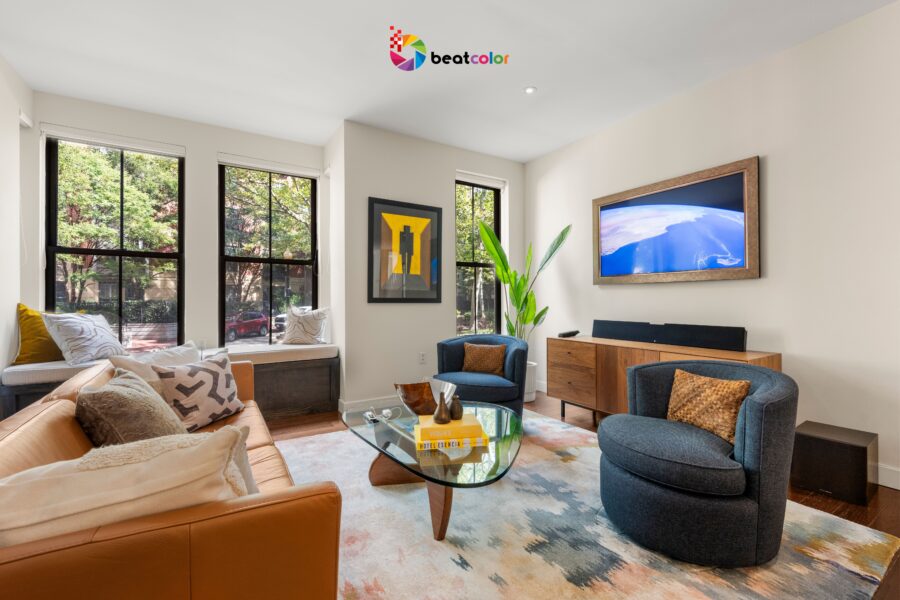
The property had attractive features, including large windows, wooden flooring, and a spacious living area. Unfortunately, the original photographs failed to communicate those strengths clearly.
The corners appeared too dark, while sunlight created harsh highlights near the windows. Additionally, warm indoor lighting made the white walls look yellow.
The camera also captured slightly tilted vertical lines. Consequently, the room looked less balanced than it appeared in person.
These issues are common in real estate photography. Cameras must capture rooms containing different light sources, reflective surfaces, and contrasting brightness levels.
The challenge was not to change the living room. Instead, the objective was to present its existing features more accurately.
The First Transformation: Bringing Natural Light Back
The first editing stage focused on exposure and lighting.
Simply increasing brightness would have made the windows even more overexposed. Therefore, the editor adjusted highlights, shadows, and overall exposure separately.
Shadow recovery revealed more detail in the furniture and darker corners. Meanwhile, controlled highlights preserved as much window detail as the original files allowed.
When multiple exposures were available, HDR blending offered another solution. It combined suitable details from different exposures into one balanced photograph.
However, excessive HDR processing could make the room look artificial. The editor therefore prioritized realistic light distribution over dramatic effects.
The result was a living room that appeared brighter without losing its natural atmosphere.
This improvement also made important details easier to recognize. Buyers could see the flooring, furniture, and architectural features more clearly.
Real Estate Photo Editing: Correcting Colors Without Losing Character
Lighting affects how viewers perceive colors.
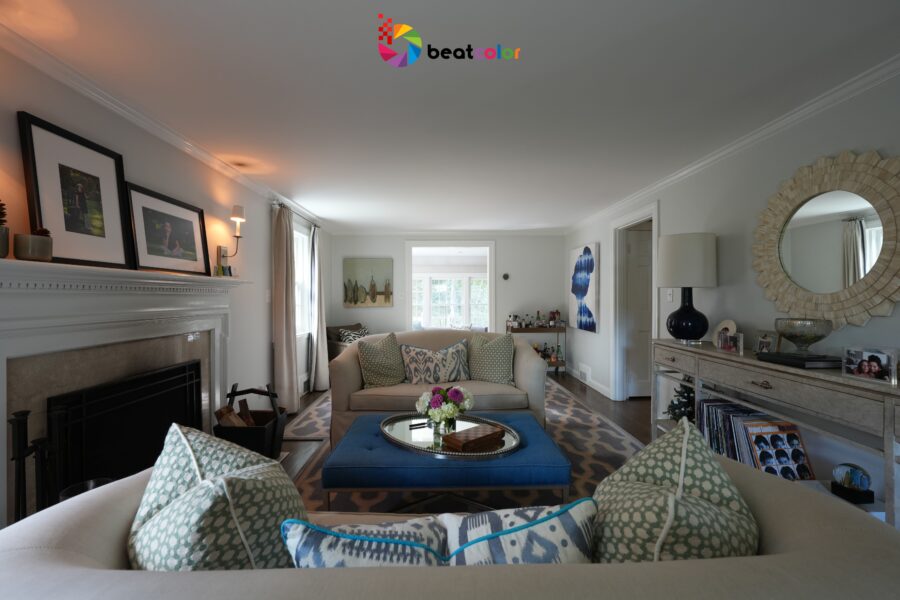
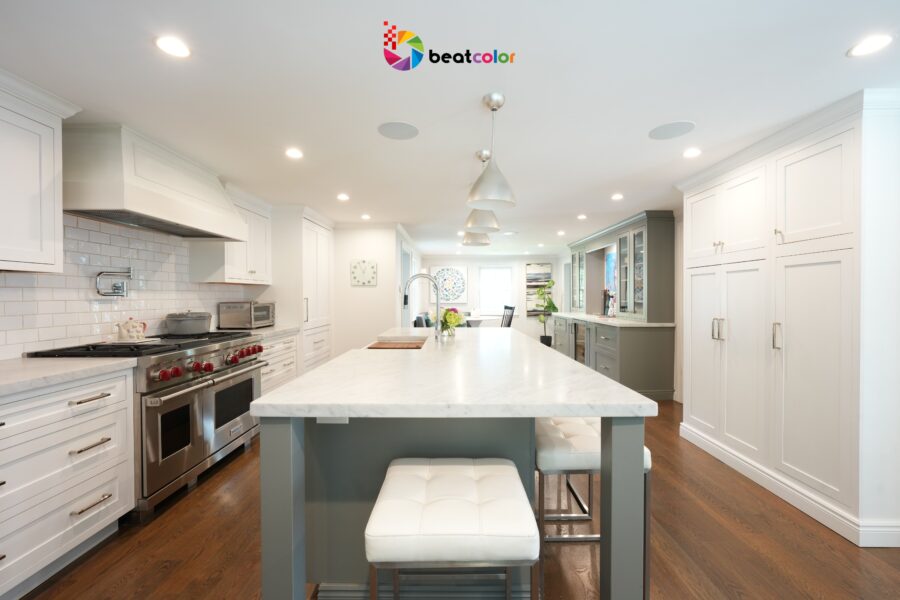
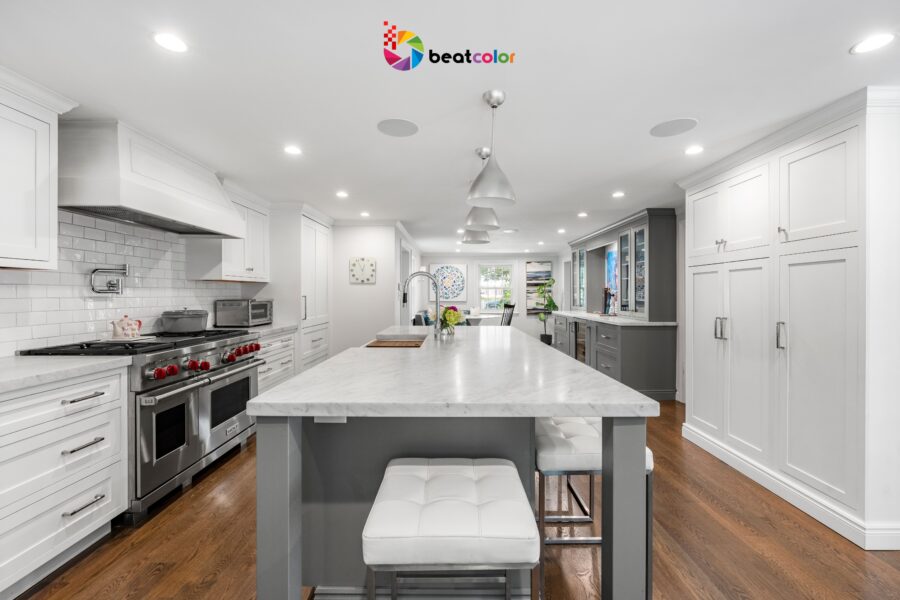
In the original photographs, warm bulbs introduced yellow tones across the walls and countertops. The wooden cabinets also appeared more orange than expected.
The editor began by correcting white balance. Next, selective color adjustments helped restore realistic tones across different materials.
White surfaces became more neutral, while wooden textures retained their warmth. Meanwhile, darker furniture maintained sufficient contrast against lighter backgrounds.
This distinction matters because accurate colors help buyers understand a property’s existing finishes.
Overcorrection would have created another problem. Removing every warm tone could make a welcoming interior feel cold and lifeless.
Therefore, the editing process aimed for consistency rather than complete color uniformity.
The finished photographs presented the kitchen more clearly while preserving its original design.
The Third Transformation: Making Windows Part of the Story
Windows often create one of the most challenging problems in property photography.
Outdoor daylight can be considerably brighter than indoor lighting. As a result, the exterior becomes nearly white while the interior remains relatively dark.
Window masking helps editors balance these competing areas.
The editor selectively adjusted the window region and surrounding interior. Where source exposures contained sufficient information, additional exterior details could be recovered.
Careful masking also preserved the edges of window frames. This prevented distracting halos and unnatural transitions.
However, the editor did not invent scenery or replace the actual surroundings.
The final image showed a more balanced relationship between the interior and exterior. Consequently, viewers could better understand the room’s natural light and outlook.
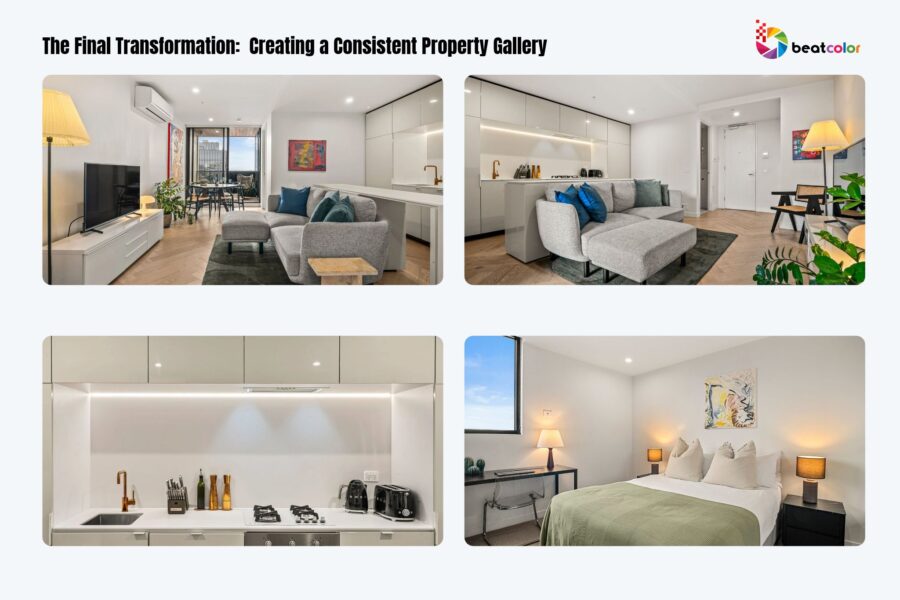
The Final Transformation of Real Estate Photo Editing: Creating a Consistent Property Gallery
A single attractive photograph cannot guarantee a professional property listing.
Every image must work alongside the others. Otherwise, inconsistent colors and brightness can make the gallery feel disjointed.
The editor reviewed the photographs together before final delivery.
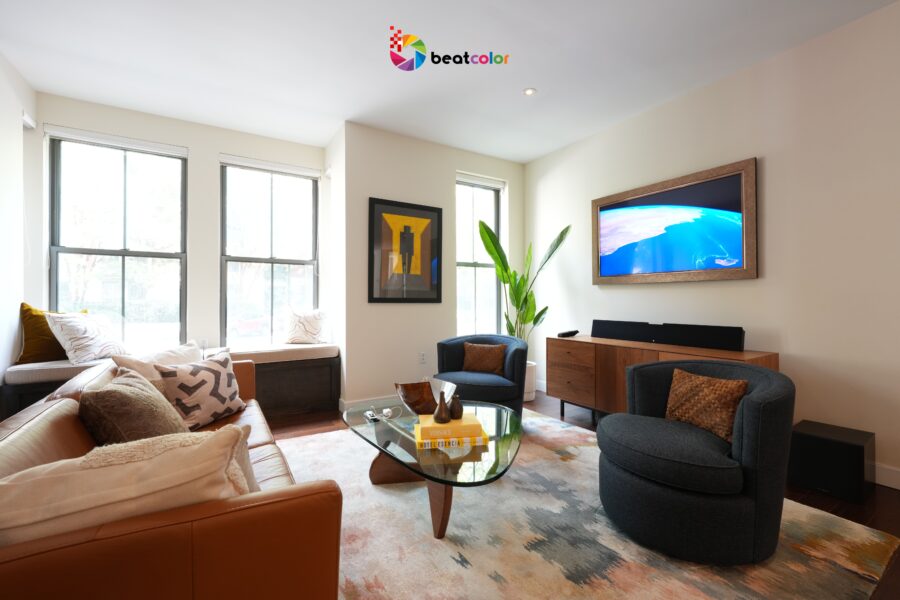
The living room maintained a natural balance between sunlight and shadows. The kitchen displayed accurate surface colors, while the bedroom retained its original atmosphere.
The bathroom received similar attention to exposure, white balance, and reflective surfaces.
Finally, the team checked image sharpness, cropping, export quality, and consistency across the complete gallery.
This final review helped establish a recognizable visual style without making every room look identical.
Why These Improvements Matter in Real Estate Photo Editing 2026
Professional property images remain important in the online home-search experience.
The National Association of REALTORS® reported in its 2025 Profile of Home Buyers and Sellers that 81% of internet-using buyers considered listing photos very useful.
The same report found that 77% valued detailed property information, while 57% valued floor plans.
These findings demonstrate why property marketing benefits from clear, informative visual presentation.
Meanwhile, AI-assisted editing continues to make routine adjustments more accessible. However, faster processing does not eliminate the need for professional judgment.
In October 2026, NAR highlighted growing industry attention toward transparency in digitally altered listing images.
This development reinforces an important principle: editors should improve photographs without changing the property’s actual characteristics.
For example, correcting exposure is different from digitally enlarging a room. Similarly, removing a temporary camera distraction differs from concealing permanent damage.
Professional workflows should preserve original files and clearly identify virtual staging when required.
Final Thoughts: Better Images, Clearer Property Stories
This case study shows how a few focused corrections can transform a property’s visual presentation.
Exposure adjustments reveal details hidden in shadows. Color correction restores realistic finishes, while window masking balances indoor and outdoor light.
Perspective correction improves architectural clarity. Finally, consistent processing brings the entire property gallery together.
These improvements do not require dramatic effects or unrealistic alterations. Instead, they depend on careful decisions and attention to detail.
For editing companies, a repeatable workflow also creates opportunities to measure quality through revision rates, delivery times, and customer feedback.
Actual listing performance should be evaluated separately because pricing, location, market conditions, and marketing exposure also influence buyer interest.
Ultimately, Real Estate Photo Editing works best when technical skill supports honest visual storytelling.
A successful edit does not make an ordinary property look extraordinary through deception. It helps viewers appreciate the genuine qualities that the original photographs failed to communicate.
Read more:
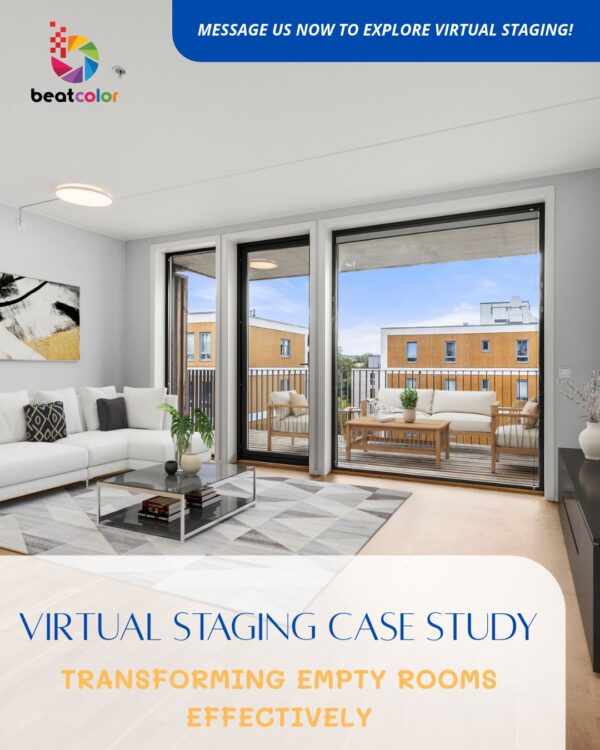
Virtual Staging Case Study: Transforming Empty Rooms Effectively
Real Estate Photo Editing Cost: Is Professional Editing Worth It?
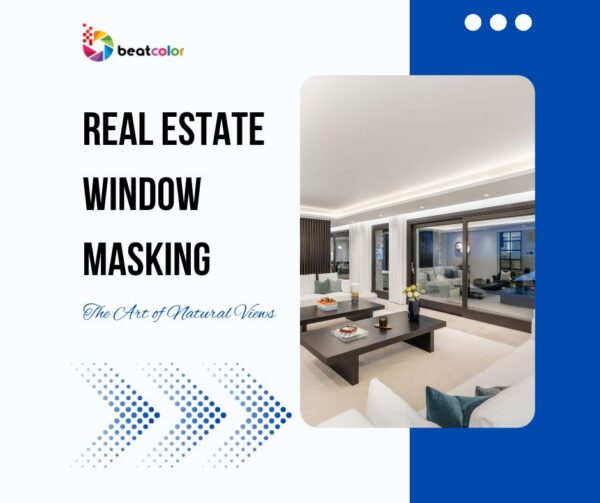
Real Estate Window Masking: The Art of Natural Views