
Real Estate Photo Editing Case Study: One Property, Three Audiences
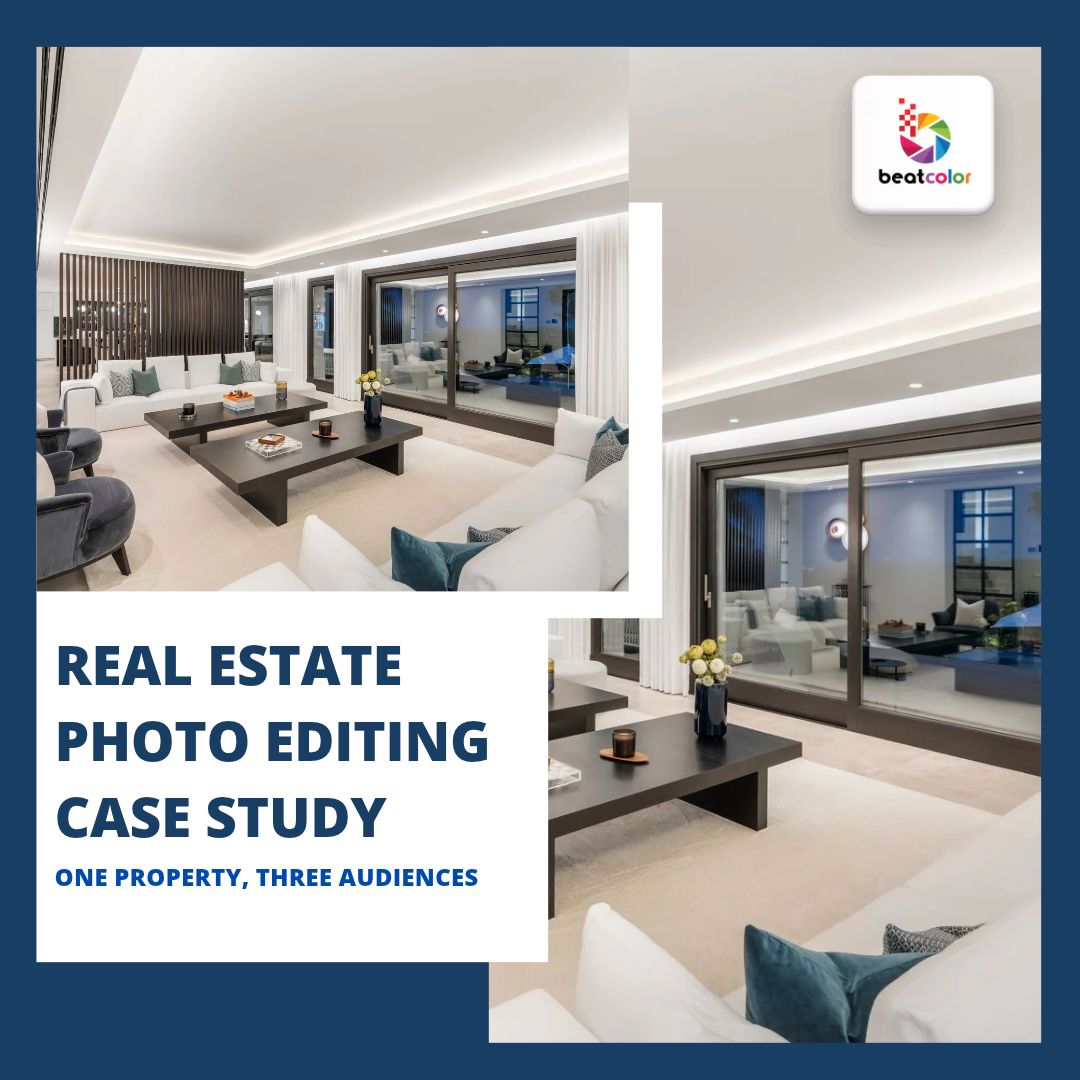
Real Estate Photo Editing is no longer just about making property photographs look attractive. It is about transforming one photography session into valuable visual assets for multiple marketing purposes.
A single property shoot can support listing galleries, social media campaigns, and printed brochures. However, each platform requires a different visual approach.
So, how can photographers maximize the value of their original images without repeating unnecessary work?
In this case study, we explore how one property photography project becomes three coordinated marketing packages. Discover the workflow, creative decisions, and practical benefits behind a more flexible approach to real estate image production.
Project note: This is an illustrative production scenario based on common real estate photography requirements. It does not represent a verified BeatColor client assignment or measured campaign results.
The Assignment: One Property, Multiple Marketing Goals
Imagine a modern residential property preparing for a new marketing campaign.
The photographer captures approximately 35 photographs. The collection includes exterior views, interior spaces, architectural details, and lifestyle-oriented compositions.
Initially, everything looks straightforward.
However, the marketing team has three separate requirements:
- A professional gallery for the property listing.
- Attractive photographs for social media promotion.
- A polished image collection for brochures and marketing materials.
Each destination has different presentation requirements.
For example, listing photographs need to communicate room layouts. Social media images need stronger visual impact. Meanwhile, brochures require flexible compositions and consistent image quality.
The challenge is creating three distinct packages without repeating the entire editing process.
Package One: The Listing Gallery – Clarity Comes First
The audience: Property buyers and real estate agents.
The first package focuses on presenting the property accurately.
Unlike promotional graphics, listing photographs must help viewers understand the actual spaces.
Therefore, image selection becomes an important production decision.
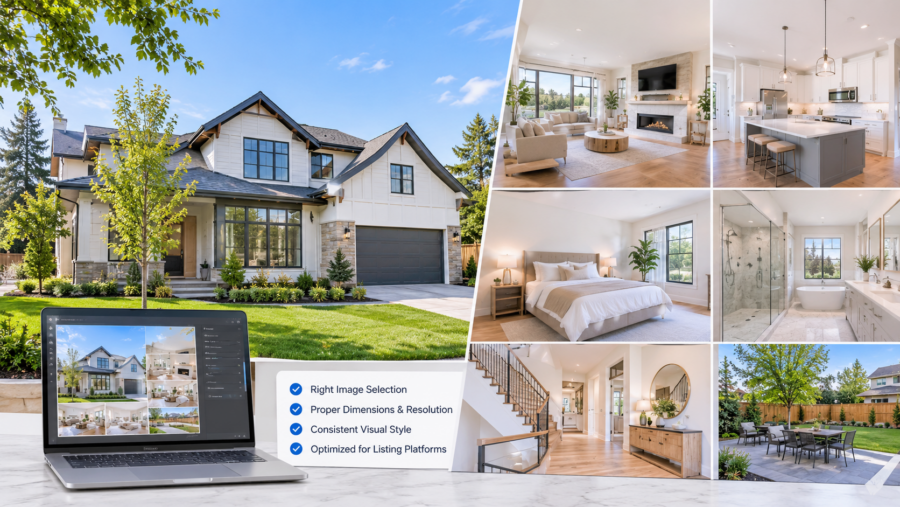
Rather than using every available photograph, the team organizes images into logical categories:
- Exterior photographs introduce the property.
- Living areas demonstrate the main shared spaces.
- Kitchens highlight functionality and design.
- Bedrooms communicate privacy and available space.
- Bathrooms showcase fixtures and finishes.
- Additional photographs reveal architectural details.
Next, the editing team prepares the selected photographs for listing platforms.
This includes checking image dimensions, resolution, cropping, and file formats.
Editors also review distracting inconsistencies between photographs. They ensure the final gallery follows one recognizable visual direction.
The result: A structured property gallery that communicates the home’s features more effectively.
Buyers can follow the property’s layout through a logical sequence. Agents also receive a more organized collection for publishing.
Package Two: Social Media – Turning Property Features Into Attention
The audience: Social media users and potential buyers.
Social media introduces a different challenge.
People scroll quickly through crowded feeds. As a result, property photographs must communicate their strongest features immediately.
However, simply uploading the listing gallery may not produce the most effective presentation.
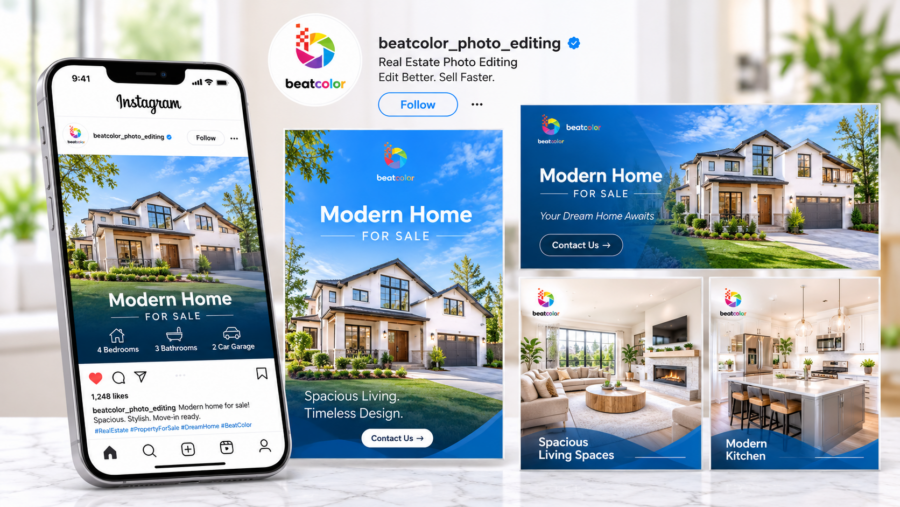
The marketing team therefore selects photographs with stronger visual compositions.
For example, a wide living-room photograph can introduce the property. A distinctive kitchen detail can become another promotional image.
An attractive exterior can also support a campaign announcement.
Next, editors prepare platform-appropriate versions.
Portrait crops may suit Instagram feeds and Stories. Square compositions can support other social placements.
Importantly, cropping must preserve essential architectural details. Otherwise, the photograph may lose important context.
The team also considers text placement when preparing promotional layouts. This prevents important property features from becoming hidden behind graphics.
The result: A collection of photographs designed for different social placements.
Instead of repeatedly uploading identical images, marketers receive more flexible visual assets.
This makes campaign preparation easier and creates opportunities for different promotional formats.
Package Three: Brochures and Marketing Materials – Consistency Becomes Essential
The audience: Property sellers, investors, and prospective clients.
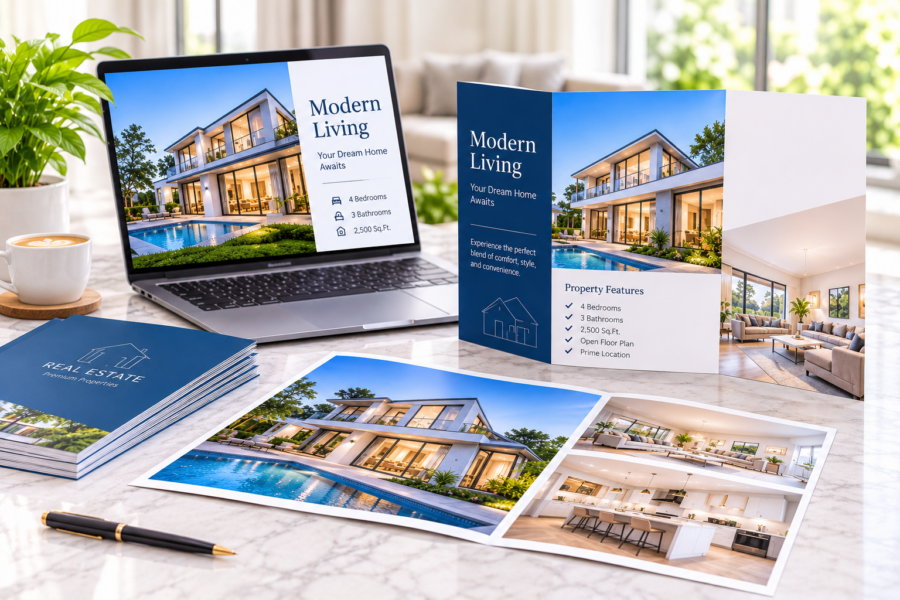
Printed marketing materials require another approach. Unlike social media, brochures often combine photographs with descriptions, property specifications, and contact information.
Therefore, image composition matters beyond visual attractiveness.
The design team needs photographs that accommodate different layouts. Some images work better as wide banners. Others suit smaller supporting sections.
The editing team prepares suitable versions for these applications. They check resolution, cropping, image orientation, and overall consistency.
Additionally, they ensure that photographs remain visually balanced when placed together.
A brochure should not contain images that appear noticeably different in brightness or presentation.
The result: A more cohesive collection that supports professional marketing layouts.
The marketing team can select suitable images without repeatedly requesting new exports. Meanwhile, photographers can provide additional value beyond standard listing delivery.
Behind the Scenes: How One Workflow Supports Three Packages in Real Estate Photo Editing
Creating multiple packages does not mean starting from scratch each time.
The key is establishing a clear production structure.
For this project, the workflow follows five stages.
Stage 1: Organize the source photographs
The team receives the original photographs and organizes them by property and room.
Clear file naming makes individual images easier to locate. It also prevents confusion during later revisions.
Stage 2: Establish the visual direction
Before editing begins, the team reviews the client’s references and requirements.
This includes identifying preferred presentation styles and intended marketing platforms.
Consequently, editors understand the expected output before processing the complete collection.
Stage 3: Prepare the master image collection
The editors process the selected photographs according to the approved brief.
They also maintain organized master files for subsequent export requirements.
This creates a reliable foundation for different marketing applications.
Stage 4: Create platform-specific versions
The team prepares suitable crops, dimensions, and export settings.
Each version serves its intended destination without unnecessarily changing the property’s appearance.
Stage 5: Review and deliver
Finally, quality control checks the complete collection.
The team verifies file names, dimensions, image consistency, and delivery requirements.
The finished packages are then organized for convenient client access.
Real Estate Photo Editing: What Makes This Approach Valuable in 2026?
Property marketing increasingly involves several digital experiences. Photographs remain important, but buyers also expect useful supporting information.
Zillow’s 2026 Consumer Housing Trends research highlights this development. Its research found that 82% of buyers were more likely to view homes featuring appealing floor plans.
Additionally, 69% said 3D tours helped them understand properties better than static photographs.
These findings highlight an important opportunity for photography businesses. Professional image delivery should support the wider property marketing experience. However, this does not mean photographs should replace floor plans or virtual tours.
Instead, each format should communicate information that complements the others.
Consequently, photographers and editing companies can develop more comprehensive delivery solutions.
Evaluating the Results: Beyond the Before-and-After Image in Real Estate Photo Editing
A successful project should not be evaluated through visual appearance alone. For this type of assignment, several practical indicators matter.
Production efficiency: Can the team prepare multiple output formats without repeating unnecessary work?
Delivery consistency: Do all packages follow the client’s approved visual standards?
File organization: Can clients quickly locate photographs for specific marketing purposes?
Revision requirements: Are the delivered files suitable for their intended platforms?
Client satisfaction: Does the final collection meet the original project brief?
These indicators help photography businesses evaluate their production processes. However, actual listing engagement and sales performance require separate tracking. Pricing, property location, market conditions, and campaign exposure also influence those outcomes. Therefore, editing quality should not be presented as the sole reason for improved sales.
Final Thoughts: One Shoot Can Create More Marketing Opportunities
A photography session creates the raw material for property marketing. Professional Real Estate Photo Editing helps turn that material into organized, useful visual assets.
As this case study demonstrates, one collection can serve listing platforms, social media, and printed materials. The difference comes from understanding each audience and preparing suitable deliverables.
At BeatColor, we believe successful editing partnerships go beyond producing individual finished photographs. They support photographers and real estate businesses throughout their visual production process.
Whether you handle individual properties or multiple photography projects, an organized editing workflow makes collaboration easier.
Ready to make more of every photography session?
Contact BeatColor to discuss your editing requirements and explore how our team can support your real estate photography business.
Read more:
From Ordinary to Outstanding: A Real Estate Photo Editing Case Study
What Professional Property Photo Editing Can Fix in One Listing
Virtual Staging Case Study: Transforming Empty Rooms Effectively