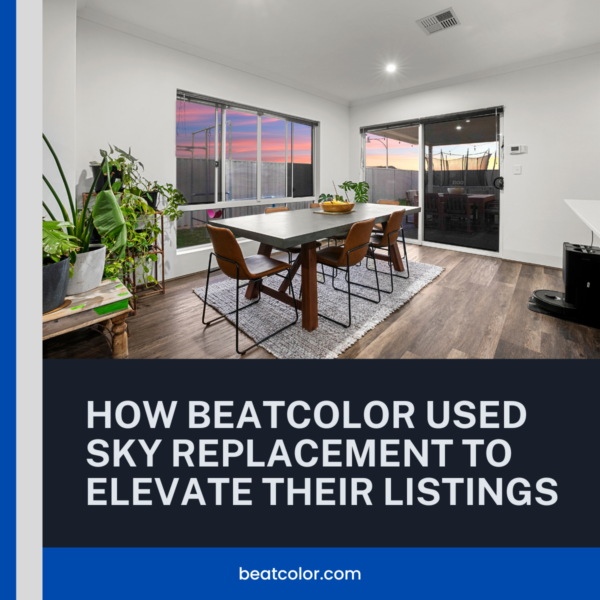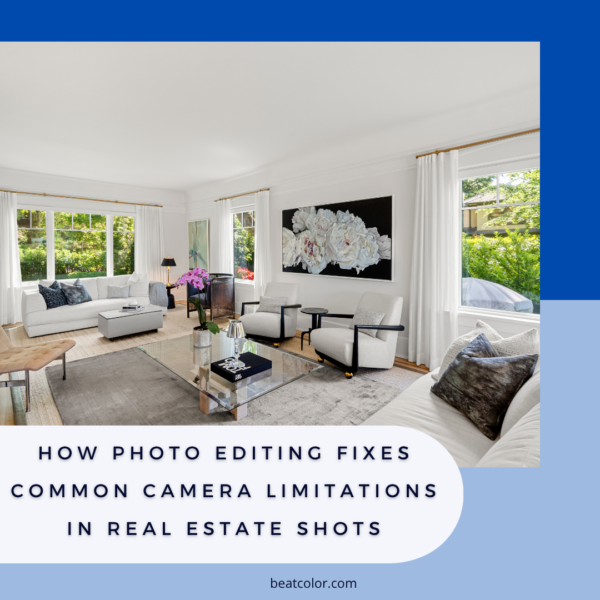

AI Real Estate Photo Editing: The Future of Property Marketing

AI real estate photo editing is currently transforming the visual standards of the global housing market. In the past, photographers spent hours manually adjusting shadows or fixing colors, but those days are fading. Consequently, professional editors are now embracing sophisticated software to deliver high-quality results in half the time. This shift is not just a trend because it represents a fundamental change in how we perceive property value through a screen.
In this blog, we’ll share how AI real estate photo editing works, the benefits of using automated property image enhancement, and why a human-AI hybrid model is the best choice for your business. Furthermore, we will explore specific features of AI-powered image retouching that make your listings stand out to potential buyers.
I. Why AI Real Estate Photo Editing is Essential Today
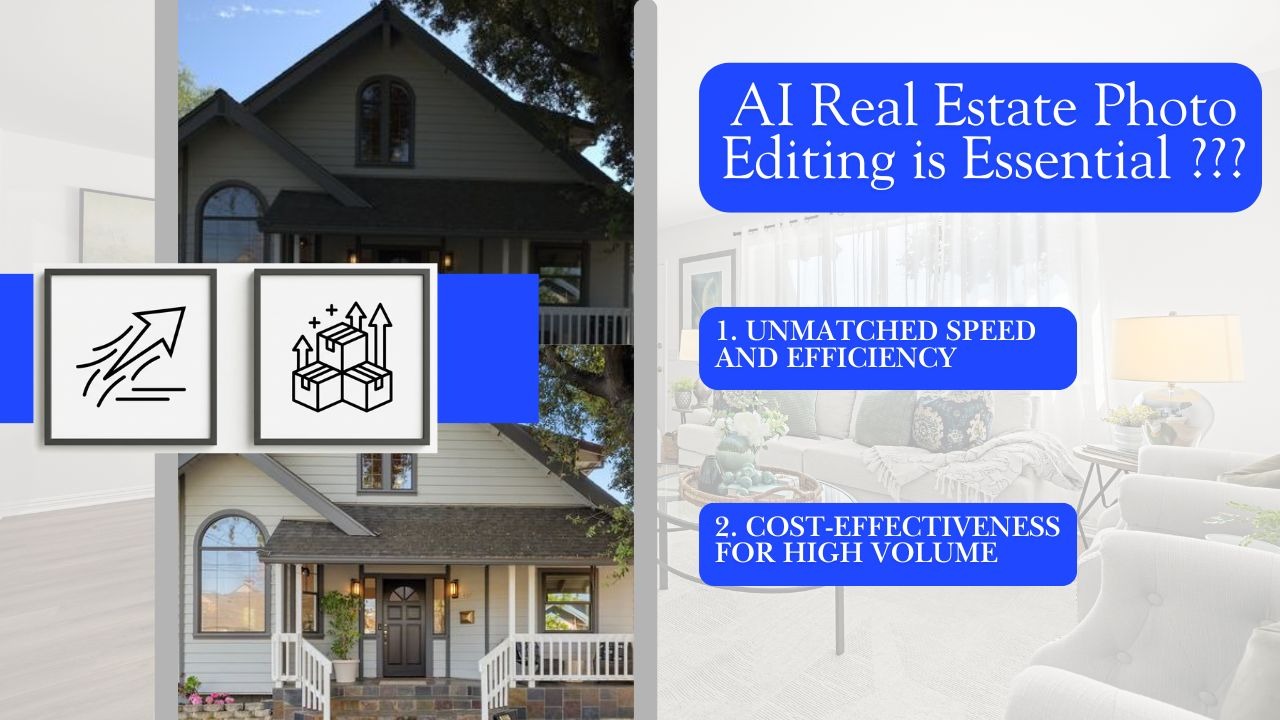
AI real estate photo editing has become a non-negotiable tool for agents who want to stay competitive. Because first impressions happen in milliseconds, your images must be flawless. Therefore, relying on manual editing alone can create bottlenecks in your marketing pipeline. AI helps solve this by processing bulk images with incredible precision.
1. Speed and Efficiency via Machine Learning for Real Estate Photos
Machine learning for real estate photos allows algorithms to identify architectural elements instantly. Unlike traditional methods, these systems can adjust exposure and white balance across hundreds of photos in seconds. As a result, real estate agents can get their listings live on the market much faster. This efficiency is vital in a fast-paced economy where every hour counts.
2. Cost-Effectiveness Through Automated Property Image Enhancement
Automated property image enhancement reduces the labor costs associated with high-end photography. While manual editing requires a high hourly rate for skilled labor, AI tools offer a scalable solution for a fraction of the price. However, this does not mean quality is sacrificed. Instead, it allows agencies to allocate their budgets toward other marketing strategies like social media ads.
II. Key Features of Automated Property Image Enhancement
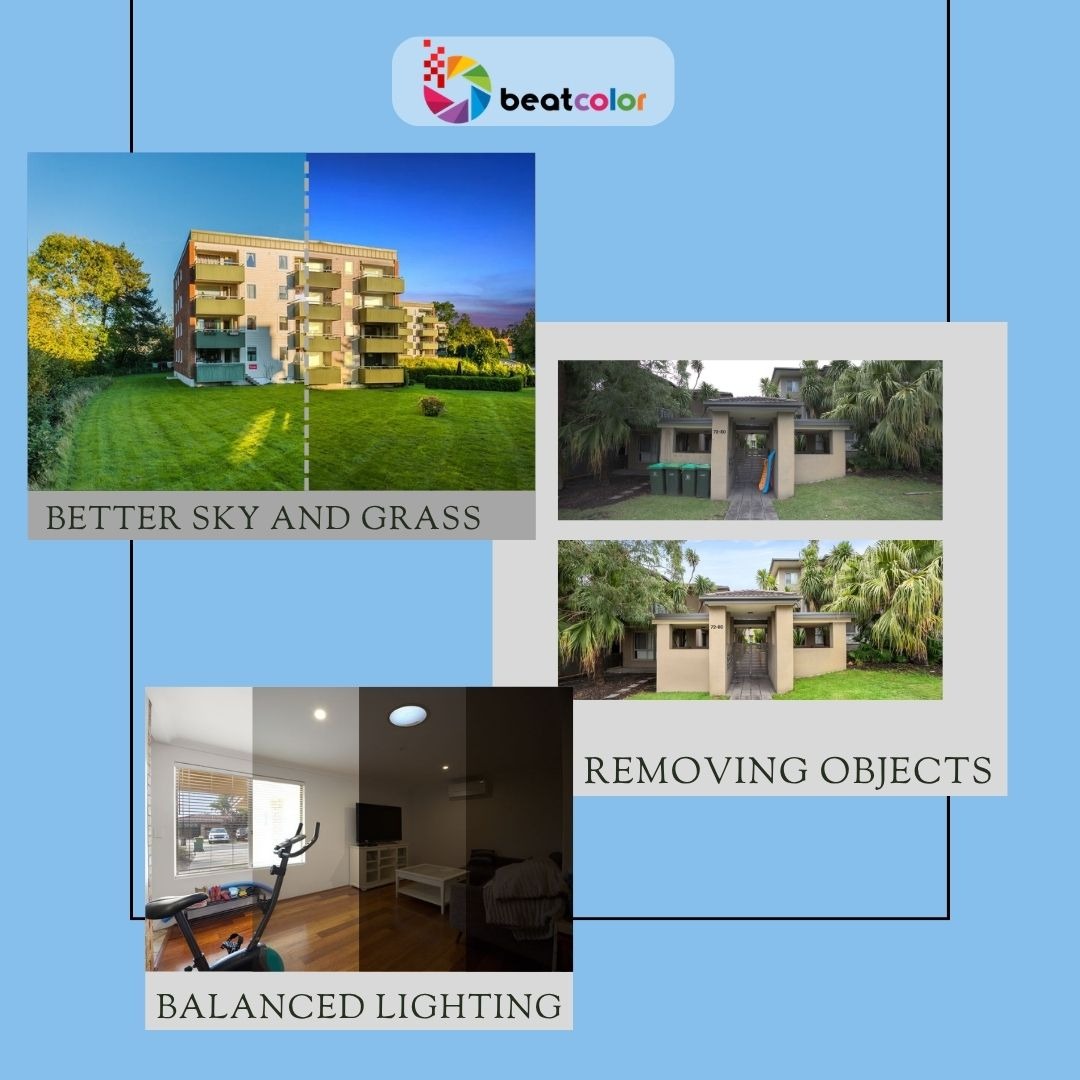
Automated property image enhancement provides a suite of tools that were once considered “magic” in the industry. These tools focus on the most common distractions in real estate photography. By removing these hurdles, the viewer can focus on the home’s potential.
1. Better Sky and Grass with AI-Powered Image Retouching
AI-powered image retouching can swap a gloomy, gray sky for a vibrant sunset in one click. Moreover, it can turn dead, brown lawns into lush green paradises. These “blue sky” and “green grass” edits are statistically proven to increase click-through rates. Since the AI understands the boundary between the house and the horizon, the replacement looks perfectly natural.
2. Removing Objects Using Virtual Staging Technology
Virtual staging technology is often paired with AI-driven object removal to clean up messy rooms. For example, if a homeowner left a garden hose on the lawn or a car in the driveway, the AI can erase it seamlessly. Subsequently, the software fills in the missing pixels by analyzing the surrounding textures. This ensures that the final image looks clean and professional.
3. Balanced Lighting in AI Real Estate Photo Editing
AI real estate photo editing excels at High Dynamic Range (HDR) processing. It merges multiple exposures to ensure that both the bright windows and the dark corners of a room are perfectly visible. Because lighting is often the hardest thing to control on-site, having an AI that can balance these levels automatically is a massive advantage.
III. Integrating Machine Learning for Real Estate Photos into Your Workflow
Machine learning for real estate photos is not just about the software; it is about the strategy. When you integrate these tools into your daily workflow, you create a seamless bridge between the camera and the listing. Many professionals now use these technologies to provide a “premium” look even for entry-level properties.
1. Brand Consistency with AI-Powered Image Retouching
AI-powered image retouching ensures that every photo in your portfolio has a consistent “look and feel.” If you have different photographers shooting different houses, the AI can apply a uniform style to all of them. Thus, your brand remains recognizable and professional across all platforms. This consistency builds trust with your clients.
2. Combining AI Real Estate Photo Editing with Human Expertise at Beatcolor
AI real estate photo editing is powerful, but it works best when guided by human experts. At Beatcolor, we combine the speed of AI with the artistic eye of professional editors. While the machine handles the repetitive tasks, our team ensures that the final output meets the highest industry standards. This hybrid approach prevents the “uncanny valley” effect where photos look too robotic.
3. Tracking Modern Trends Through Virtual Staging Technology
Virtual staging technology is constantly evolving based on current interior design trends. AI can suggest furniture styles that are currently popular in specific regions. Therefore, your listings will always feel modern and appealing to the local demographic. Staying updated with these trends is much easier when your software does the heavy lifting for you.
IV. The Limitations of AI Real Estate Photo Editing and Professional Alternatives
AI real estate photo editing offers undeniable speed, but over-relying on it can actually damage your brand’s credibility. While automation is helpful, purely robotic edits often lack the “soul” and nuance that a human eye provides. Therefore, it is crucial to understand when to step back from the software. If every image looks identical and overly processed, potential buyers may feel the photos are deceptive rather than inviting.
1. Preventing “Uncanny” Results in Automated Property Image Enhancement
Automated property image enhancement can sometimes make a home look like a video game. For instance, the AI might make colors too vibrant or remove shadows that are essential for depth. Consequently, the property feels “fake” to the viewer. Because trust is the foundation of any real estate deal, using too much AI can lead to disappointment during physical tours. Thus, keeping a natural look should always be your primary goal.
2. Prioritizing Authenticity Over Basic Machine Learning for Real Estate Photos
Machine learning for real estate photos works by following mathematical patterns, not aesthetic principles. It might accidentally blur important architectural details or ignore the unique textures of a luxury material. However, a human editor notices these small things immediately. Because of this, maintaining a realistic representation is much more effective for long-term marketing success.
Final Thoughts
AI real estate photo editing is no longer a luxury; it is a necessity for modern real estate success. By utilizing automated property image enhancement, you can save time, reduce costs, and significantly improve the quality of your listings. However, remember that the best results come from a balance of technology and human creativity.
At Beatcolor, we are dedicated to helping you master these tools to achieve your goals. Whether you need virtual staging technology or simple color corrections, the future is digital. Embrace these changes today to ensure your business remains at the top of the market tomorrow. If you are ready to elevate your brand, start incorporating these AI-driven strategies into your next project.Read more:
The Limitations of AI Real Estate Photo Editing and Professional Alternatives
Professional Photo Editing Services for High-Quality Images
5 Best Photo Editing Software in 2026 for Creators and Professionals