

Virtual Renovation: The Ultimate Guide to Transforming Real Estate Listings

Virtual renovation is rapidly becoming the gold standard for real estate professionals looking to showcase a property’s true potential without the high costs of physical construction. In a competitive market, stagnant listings often fail to capture interest due to buyers’ difficulty in visualizing the modernization of a dated space. By utilizing digital tools, you can revitalize outdated rooms and transform “fixer-uppers” into dream homes in no time.
Virtual renovation is the primary focus of this guide, where we explore how digital staging and architectural rendering can revolutionize your marketing strategy. In this blog, we’ll share the essential benefits of digital remodeling, how it differs from traditional staging, and the best practices to ensure your listings stand out to potential buyers through high-quality property visualization.
I. Understanding the Power of Virtual Renovation in Modern Real Estate
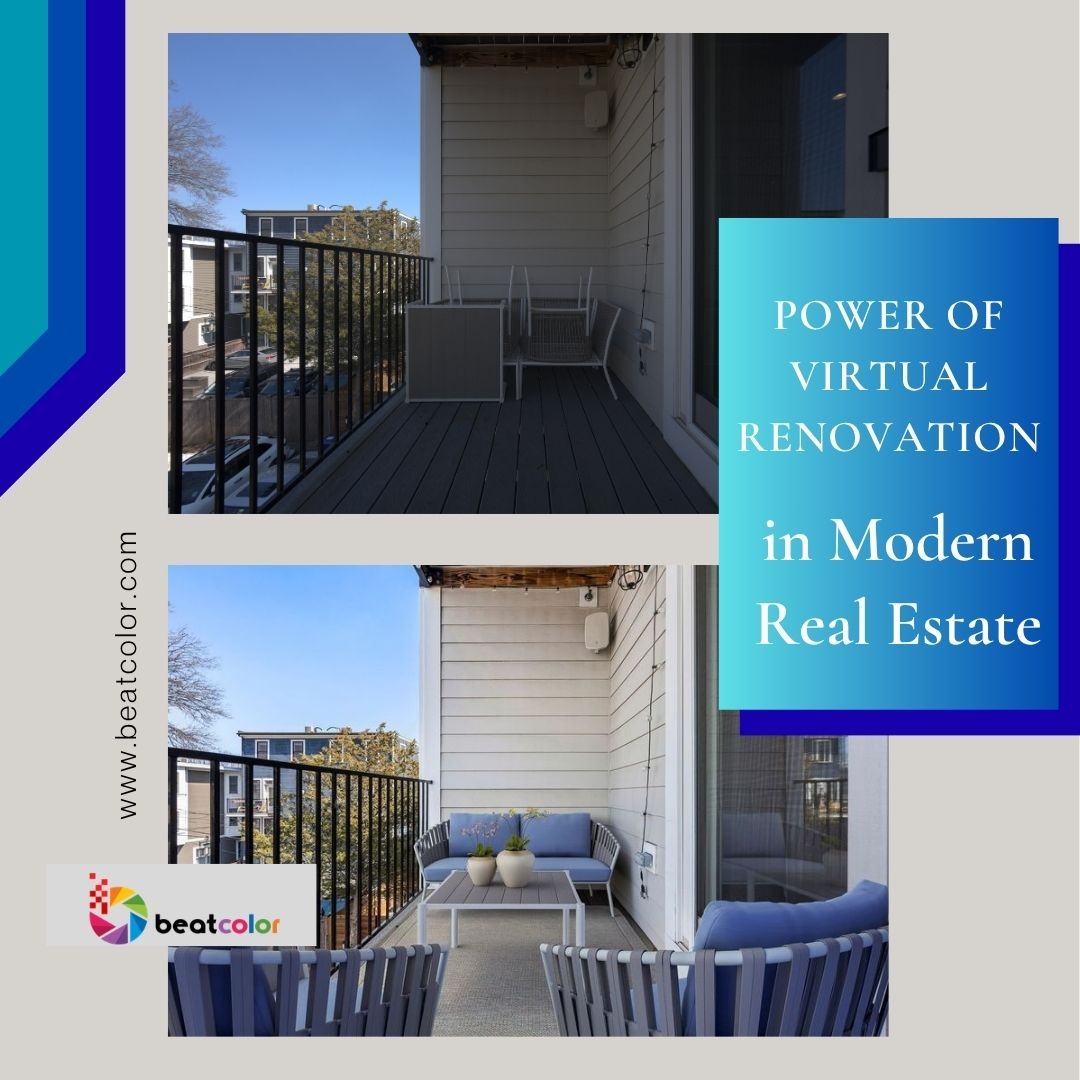
Virtual renovation serves as a bridge between a property’s current state and its future possibilities. Unlike traditional staging, which requires renting furniture and heavy lifting, this digital approach allows editors to change flooring, paint walls, and even remove structural eyesores with a few clicks. Consequently, homeowners and agents save thousands of dollars while still presenting a high-end aesthetic.
1. What Is Digital Remodeling?
Digital remodeling refers to the process of using 3D software to edit existing photos of a property. While standard staging only adds furniture, this technique involves changing the “bones” of the house. For instance, an editor might replace old shag carpet with sleek hardwood or update a 1970s kitchen with marble countertops. Because the changes are digital, the creative options are virtually limitless for any property type.
2. The Impact of Digital Home Transformation on Buyer Psychology
Digital home transformation techniques are powerful because most buyers decide on a property within the first few seconds of viewing photos. If a kitchen looks dark and cramped, they may keep scrolling. However, showing a bright, open-concept version of that same kitchen keeps them engaged. Since humans are visual creatures, providing a clear roadmap of what a renovation could look like reduces the perceived risk of buying a “work in progress.”
II. Key Benefits of Implementing Virtual Renovation
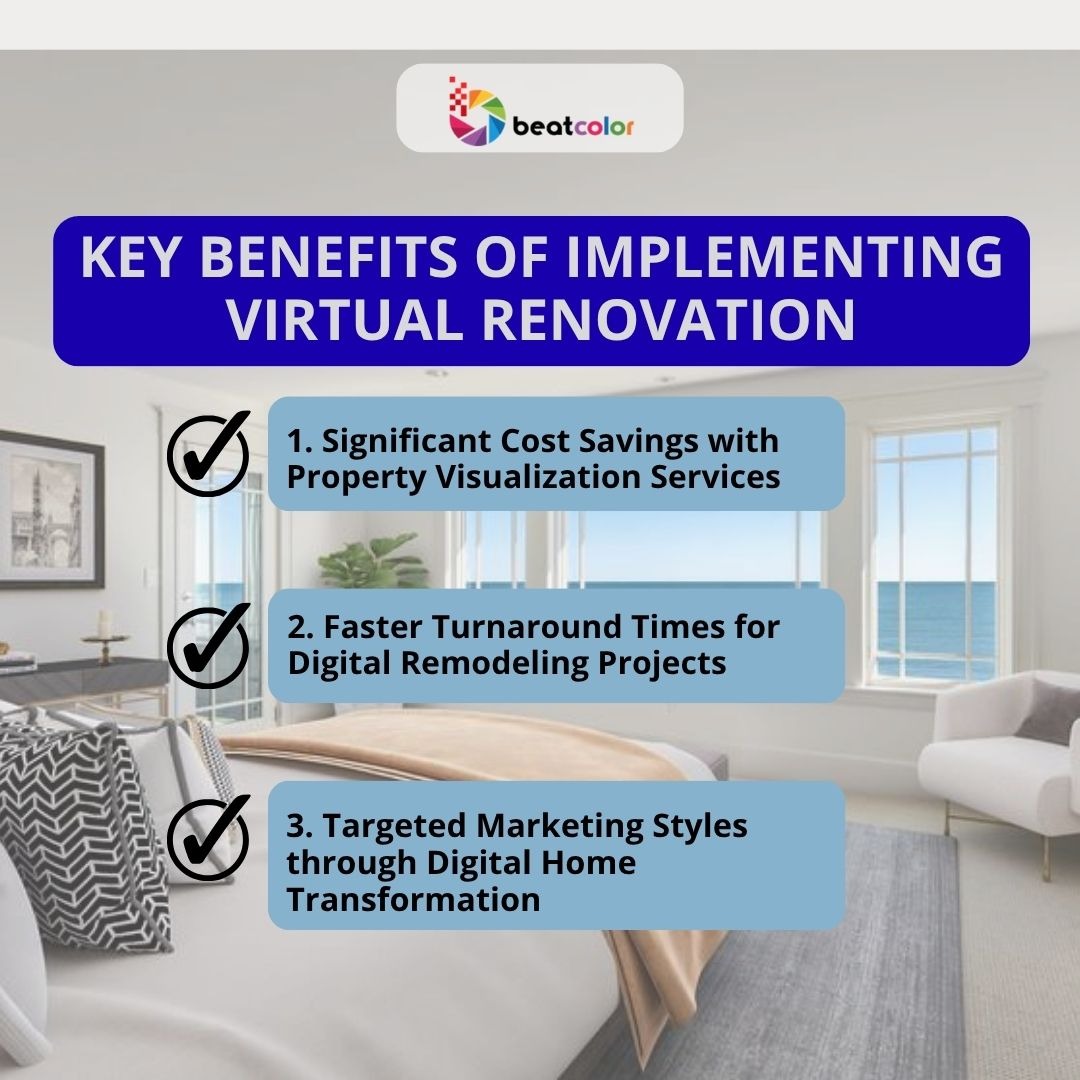
Virtual renovation offers a competitive edge that traditional photography simply cannot match. It is not just about making things look pretty; it is about efficiency and return on investment. Whether you are dealing with a vacant shell or a cluttered lived-in home, digital tools provide a clean slate that appeals to a much wider demographic of investors.
1. Significant Cost Savings with Property Visualization Services
Physical renovations or professional staging can cost upwards of $5,000 to $10,000 depending on the property size. On the other hand, property visualization services cost a fraction of that amount. You can essentially “flip” a house for the price of a few high-quality photo edits. Therefore, agents can manage more listings with a smaller marketing budget while maintaining premium quality.
2. Faster Turnaround Times for Digital Remodeling Projects
Time is of the essence in real estate. Waiting for contractors to paint or for a staging company to deliver furniture can delay a listing by weeks. In contrast, digital edits can often be completed within 24 to 48 hours. Because you can get the property on the market faster, the chances of a quick sale increase significantly, which is vital in a fluctuating economy.
3. Targeted Marketing Styles through Digital Home Transformation
Digital home transformation allows you to tailor a room’s style to a specific buyer. For example, if the neighborhood attracts young professionals, you can style the home with modern, minimalist decor. But if the area is better suited for families, you can digitally turn an extra room into a nursery or a playroom to trigger an emotional connection.
III. How Virtual Renovation Differs from Virtual Staging
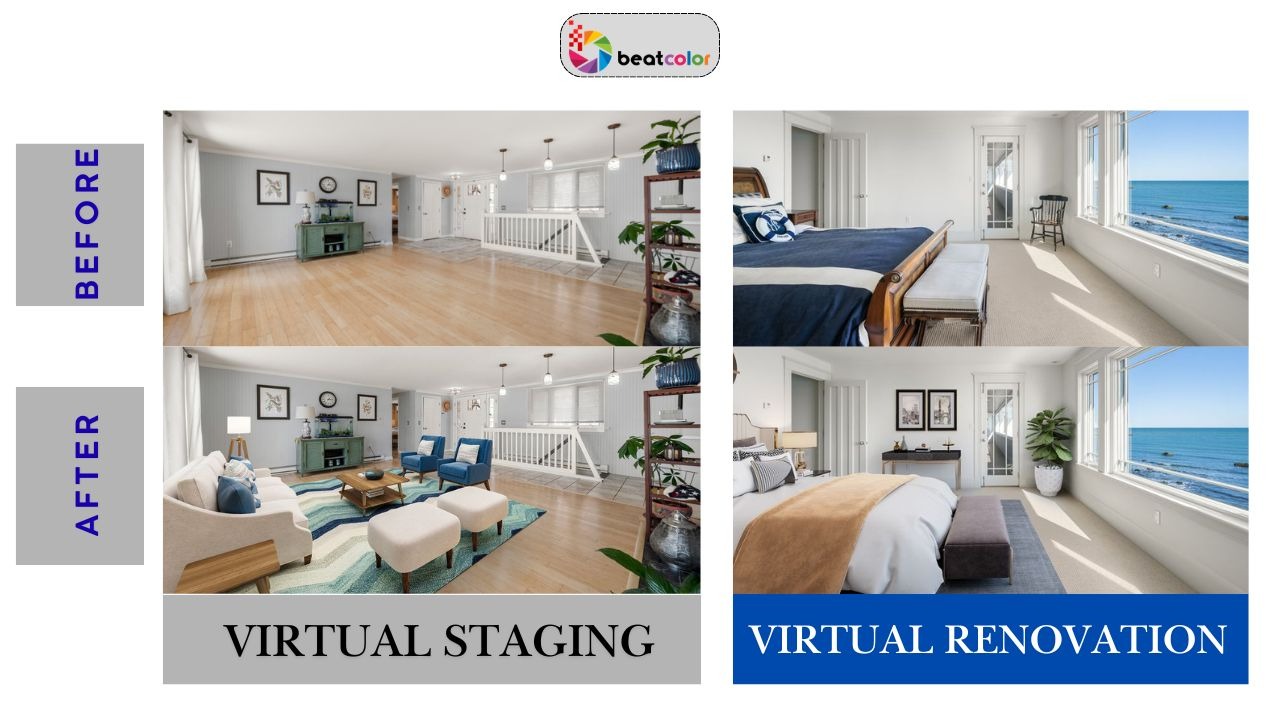
Virtual renovation and virtual staging are often used interchangeably, but they serve different functions. Understanding the distinction is crucial for setting expectations with your clients. While both use digital technology, the scope of work varies significantly between the two, especially when dealing with structural changes.
1. Adding Furniture vs. Digital Remodeling
Virtual staging typically involves adding furniture and decor to an empty room to give it scale. However, digital remodeling involves altering the fixed elements of the property. This includes changing cabinetry, removing walls, or updating the exterior landscaping. It is a much more intensive process that focuses on the architecture rather than just the basic interior design layout.
2. Fixing Damage via Property Visualization Services
Staging cannot hide a cracked floor or a stained ceiling, but property visualization services can fix those issues effortlessly. If a property has been neglected, staging might actually make the damage more obvious by contrast. By digitally repairing the space first, you create a cohesive and inviting environment that looks well-maintained and ready for move-in day.
IV. Best Practices for High-Quality Virtual Renovation Results
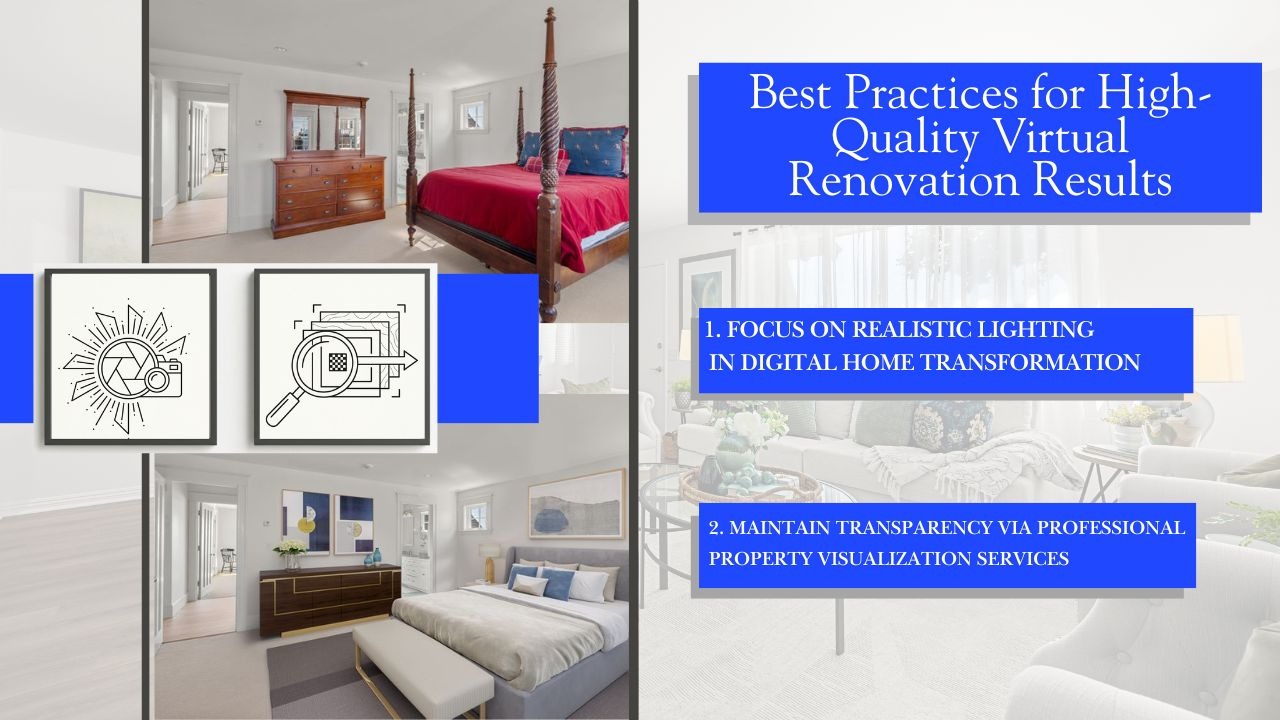
Virtual renovation must look realistic to be effective. If the edits look like a video game, buyers will lose trust in the listing. Achieving a “human” touch in digital renders requires extreme attention to detail, lighting, and perspective to ensure the final image is indistinguishable from a real photograph taken on-site.
1. Focus on Realistic Lighting in Digital Home Transformation
The most common mistake in digital home transformation is mismatched lighting. If the sunlight is coming from a window on the left, the shadows of the digital furniture must fall to the right. Therefore, working with professional editors who understand global illumination is vital. For more technical insights, you can visit NAR’s marketing technology resources.
2. Maintain Transparency via Professional Property Visualization Services
While you want to show potential, you must also be honest. It is a best practice to include the “before” photo alongside the virtual renovation image. This ensures buyers aren’t surprised when they visit the home in person. In fact, many MLS platforms require a disclaimer stating that the images have been digitally altered to prevent any legal misunderstandings.
Final Thoughts
Virtual renovation is no longer a luxury reserved for multi-million dollar mansions; it is an essential tool for every real estate professional today. By utilizing digital remodeling and property visualization services, you can overcome the hurdles of dated interiors and vacant spaces. Ultimately, this technology empowers buyers to see a house not for what it is, but for what it can become.
As the industry evolves, those who embrace these digital tools will undoubtedly see higher engagement and faster closings. To see how these services can elevate your specific project, feel free to explore our portfolio at BeatColor. Whether you are a solo agent or a large firm, digital transformation is the key to unlocking hidden value in every listing.
Read more:
Virtual Home Staging: The Ultimate Strategy for Real Estate Success
Mastering Multiple Exposures in Photo Editing: A Creative Guide
Photo Enhancement: The Secret to Luxury Real Estate Visuals in 2026