
Natural HDR Real Estate Photography: The Art of Keeping Every Detail Real
Imagine opening a property listing and seeing a beautifully illuminated living room. Sunlight enters through the windows. The furniture looks inviting, while the walls retain their natural colors. Nothing feels exaggerated.
Now imagine another photograph of the same room. The windows appear unnaturally bright, shadows look strangely gray, and every surface seems overly sharp.
Both images might use HDR processing. However, only one creates a believable impression.
This difference explains why Natural HDR Real Estate Photography matters more than ever.
HDR is no longer simply about making photographs brighter. Instead, professional editing focuses on preserving the atmosphere, architectural details, and natural lighting of each property.
Every image should communicate the property’s actual appearance while making its strongest features stand out.
The Real Challenge: Balancing Light Without Losing Reality
Every property has its own lighting challenges.
A bright kitchen might contain dark cabinets, reflective countertops, and large windows. Meanwhile, a bedroom could receive limited natural sunlight. Unfortunately, one camera exposure rarely captures every detail perfectly.
This is where High Dynamic Range photography becomes valuable.
HDR combines multiple exposures of the same scene. Each exposure records different brightness levels, creating more information for the final image. Typically, photographers capture darker, normal, and brighter exposures. Professional editors then blend these images into one balanced photograph.
However, the real challenge begins during post-production.
The goal isn’t to reveal every possible detail. It’s to reveal the right details naturally.
Consider three common situations:
- Bright windows: Preserve outdoor views without making interiors appear unnaturally dark.
- Deep shadows: Recover architectural details while maintaining realistic depth.
- Mixed lighting: Balance daylight and artificial lighting without creating strange color shifts.
When these elements work together, the photograph feels comfortable and visually consistent. More importantly, viewers can understand the space without being distracted by editing artifacts.
Inside the Editor’s Studio: Three Moments That Define Natural HDR Real Estate Photography
Let’s examine three practical editing situations. Each demonstrates why subtle adjustments often produce stronger results.
Case A: The Window That Competes With the Room
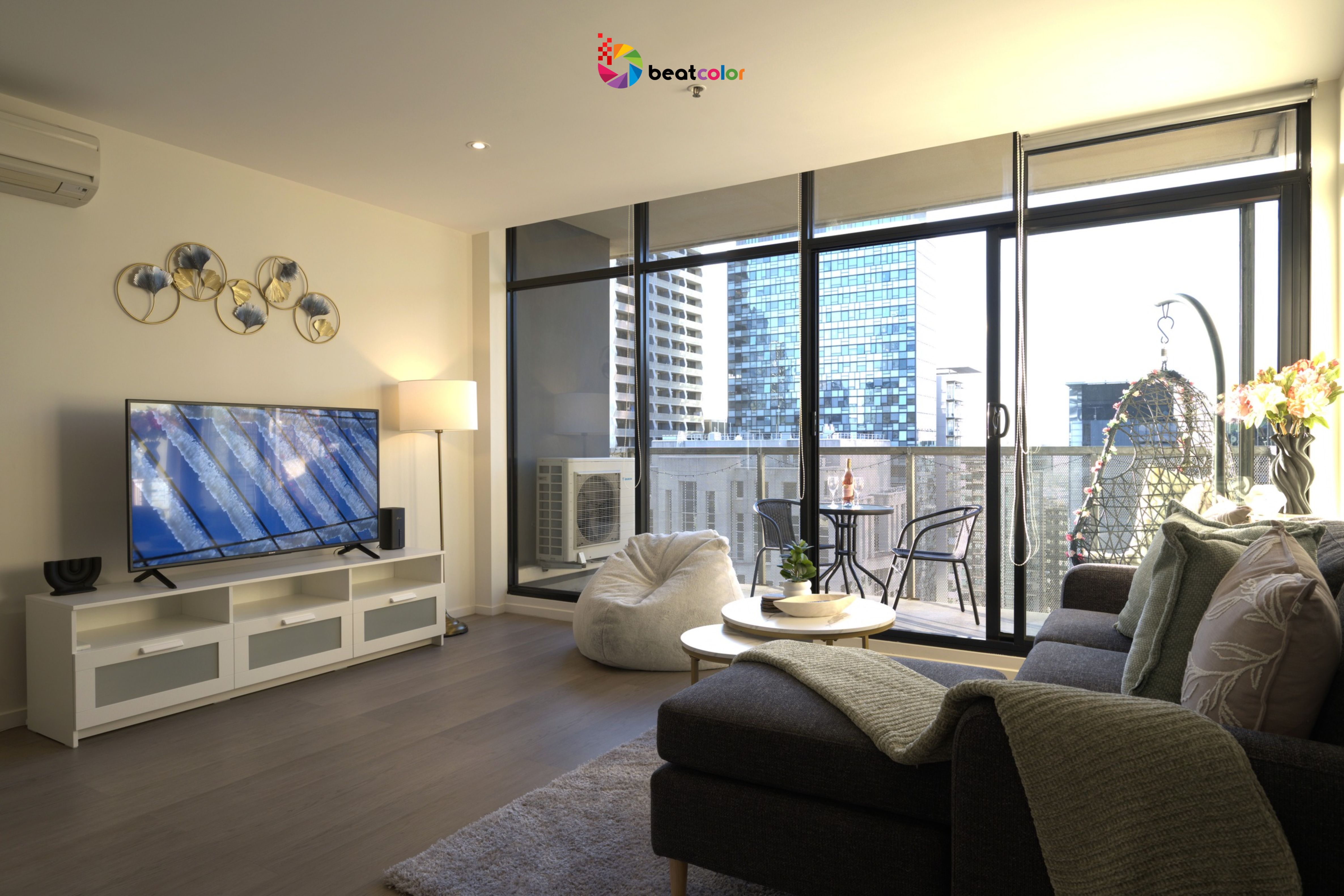
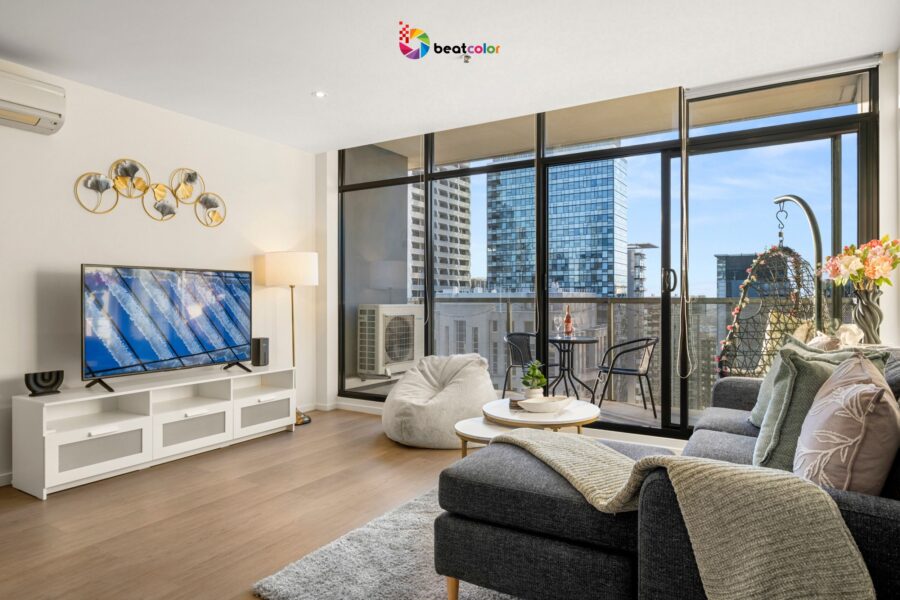
The problem: A living room looks attractive, but its windows appear completely white.
The original exposure captures the interior beautifully. Unfortunately, outdoor details disappear because sunlight overwhelms the camera sensor.
The editing approach:
- Recover window highlights using darker exposures.
- Blend exterior details carefully into the original frame.
- Maintain realistic brightness around window frames.
- Preserve the original direction and quality of sunlight.
The final result: The outdoor scenery becomes visible without overpowering the living room. A successful window pull should never look like another photograph pasted into the scene.
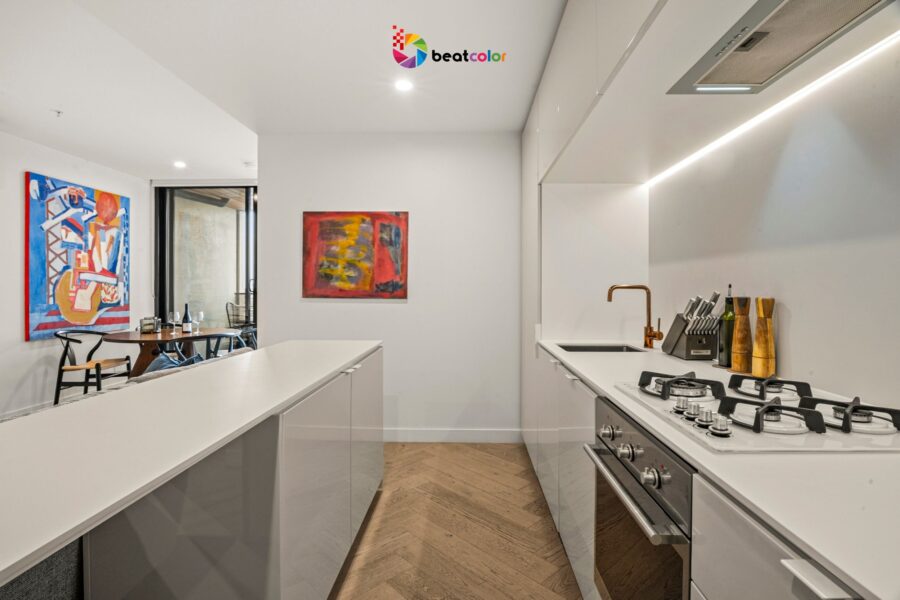
Case B: The Interior That Looks Too Flat
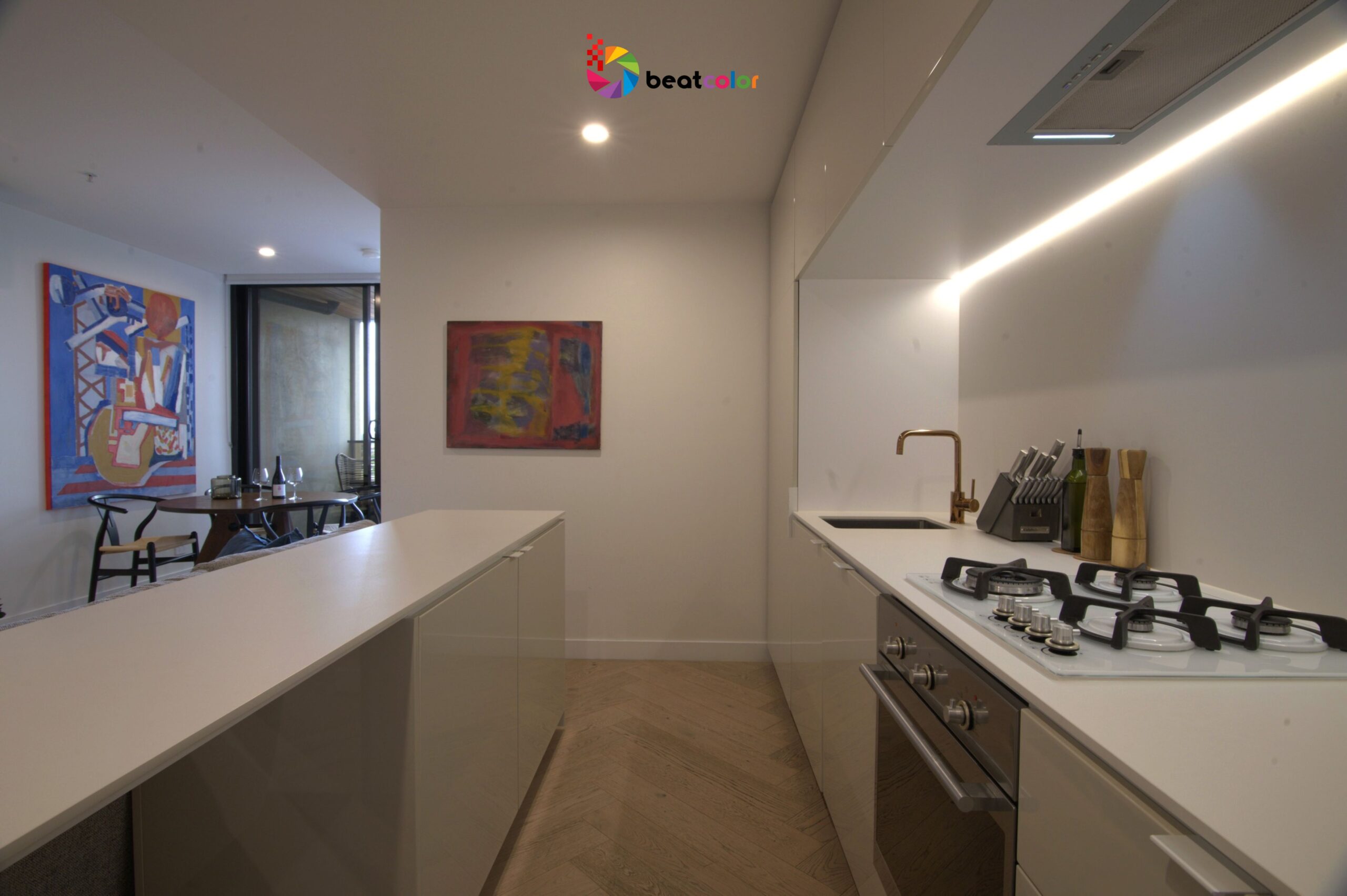
The problem: A kitchen appears bright, yet its surfaces lack depth. Cabinet details disappear, countertops look dull, and the entire space feels strangely artificial.
The editing approach:
- Recover shadow details without eliminating natural contrast.
- Adjust exposure selectively across different surfaces.
- Preserve realistic shadows beneath furniture and cabinets.
- Refine highlights to maintain texture and material definition.
The final result: The kitchen looks brighter, clearer, and more inviting.
Nevertheless, shadows should not disappear completely. They help viewers understand depth and spatial relationships.
Case C: The Colors That No Longer Feel Natural
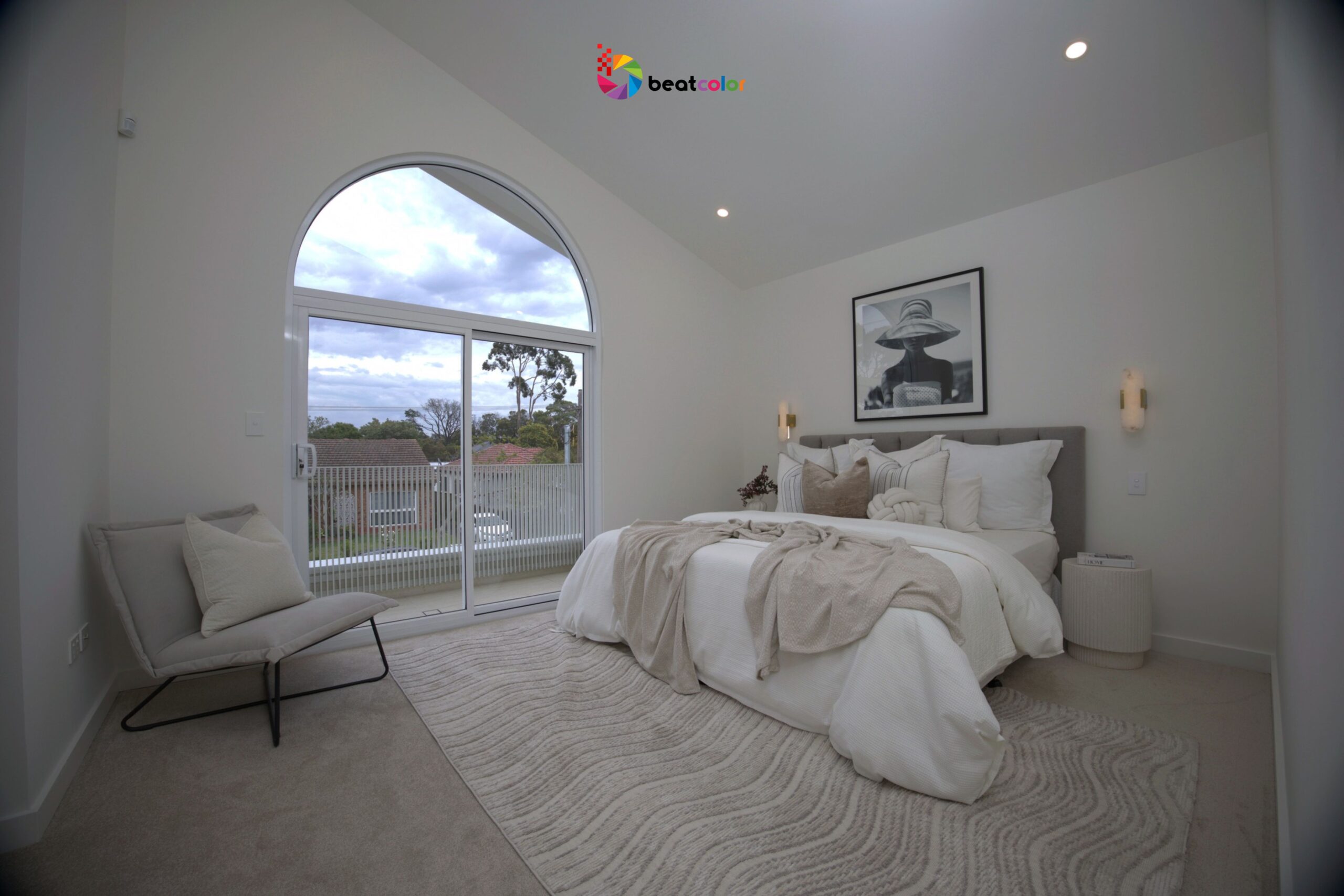
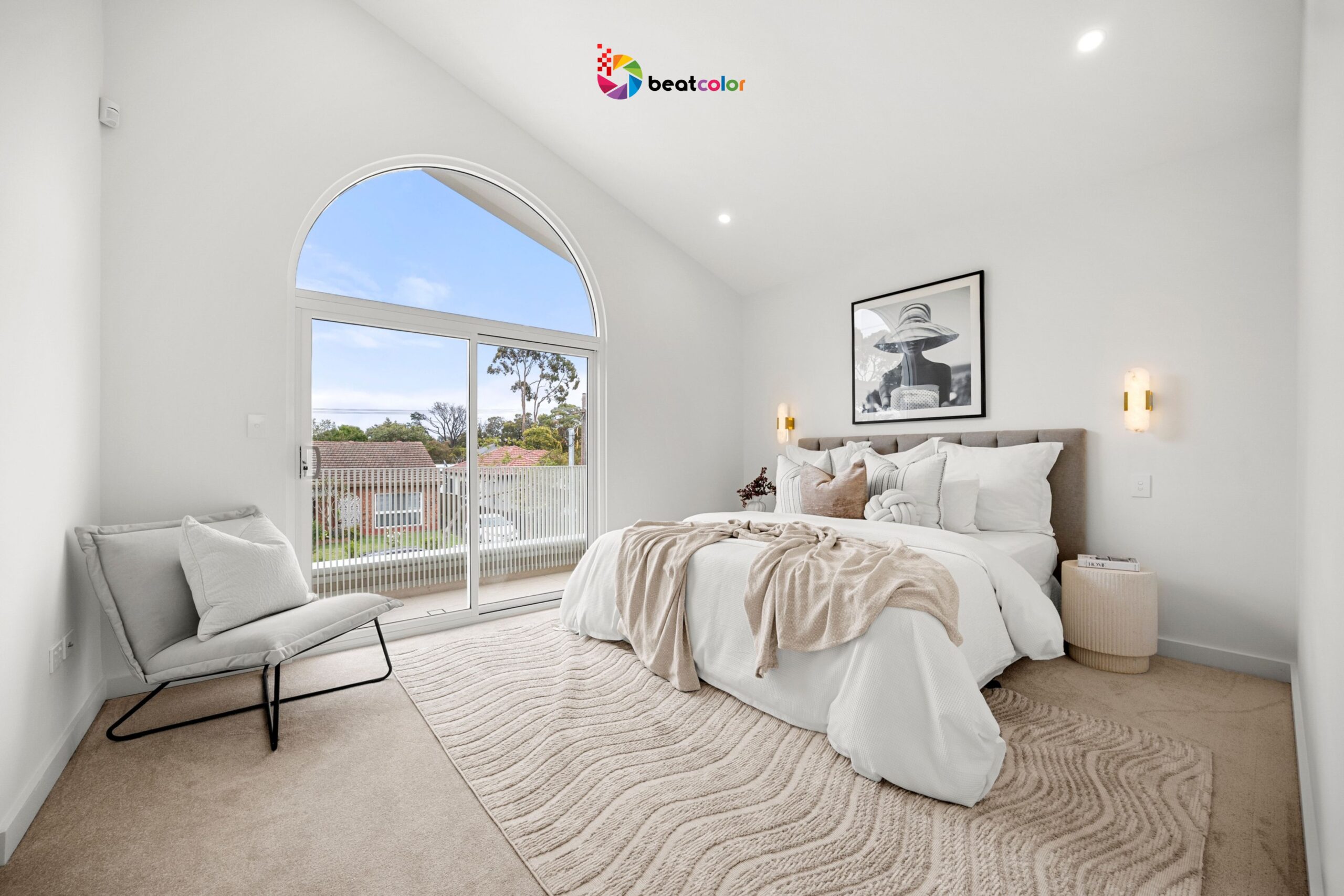
The problem: A bedroom has warm wooden floors and neutral walls.
After aggressive HDR processing, the floor becomes orange. Meanwhile, the walls develop an unwanted yellow or green tint.
The editing approach:
- Correct white balance using reliable visual references.
- Control saturation without removing natural color richness.
- Adjust individual color channels when necessary.
- Keep wooden surfaces, fabrics, and painted walls visually believable.
The final result: Materials retain their original character. This matters because color accuracy helps viewers develop realistic expectations before visiting a property.
The 2026 Natural HDR Real Estate Photography Standard: Less Processing, Better Judgment
Real estate photography continues evolving through AI-assisted editing and increasingly sophisticated processing tools. However, faster editing doesn’t automatically produce better photographs.
The direction of professional HDR work is increasingly focused on realistic lighting, controlled contrast, and consistent presentation.
Here are five principles worth prioritizing.
1. Natural Window Views
Outdoor scenery should remain visible without looking artificially inserted. Exposure transitions around windows must also appear seamless.
2. Realistic Shadow Recovery
Dark areas deserve detail, but they still need appropriate depth. Completely removing shadows can make interiors feel strangely weightless.
3. Accurate White Balance
White walls should look white, not blue or yellow. Similarly, warm lighting should retain its natural character.
4. Controlled Contrast
Strong contrast can create visual drama. Nevertheless, excessive contrast often hides important property details.
5. Consistent Image Collections
A property gallery should feel like one cohesive visual experience. Different rooms shouldn’t have noticeably different brightness or color temperatures.
Ultimately, natural HDR requires more than technical knowledge. It demands an editor who understands how people perceive spaces.
AI and Human Editing: Where Should the Balance Be?
AI has changed the way real estate photographs are processed. Modern tools can assist with exposure blending, masking, noise reduction, and color correction. These capabilities help editors handle larger image volumes efficiently.
Nevertheless, automation still requires careful supervision.
For example, an automated HDR tool might brighten a dark corner successfully. However, it could also create unwanted halos around furniture or windows. Similarly, automated color adjustments might produce inconsistent results across photographs taken under different lighting conditions.
Therefore, a practical workflow combines technological efficiency with human judgment.
AI can handle repetitive technical adjustments. Meanwhile, experienced editors evaluate realism, architectural accuracy, and visual consistency.
This approach offers an important advantage: faster production without sacrificing professional standards. For real estate photography businesses, that balance becomes particularly valuable when managing demanding delivery schedules.
The Authenticity Test: Five Questions Before Delivering an Image
Before approving an HDR photograph, step away from the editing software. Look at the image as someone viewing the property for the first time.
Then ask these five questions:
- Do the windows show believable outdoor details?
- Are the shadows still providing natural depth?
- Do walls, floors, and furniture retain accurate colors?
- Does the lighting match the property’s actual atmosphere?
- Would someone recognize this room immediately during an in-person viewing?
If the answer to any question is no, another editing adjustment might be necessary.
This final inspection also helps prevent a common problem: making photographs look attractive at the expense of accuracy.
In February 2026, the National Association of REALTORS® highlighted concerns about overly idealized listing photographs misleading prospective buyers.
That discussion reinforces an important principle. Property marketing should attract attention without creating unrealistic expectations.
Why Natural HDR Real Estate Photography Creates More Valuable Listing Photography
A professional property photograph has several responsibilities. It needs to attract attention, communicate useful information, and represent the property honestly.
Natural HDR supports all three objectives.
First, balanced exposure makes architectural features easier to understand. Buyers can see room layouts, window placement, and interior finishes.
Second, accurate colors create a more consistent viewing experience. Photographs also become easier to compare across different rooms.
Finally, believable lighting helps establish trust between property marketers and prospective buyers.
According to NAR’s 2025 research, photographs ranked among the most useful website features for internet-using home buyers.
Clearly, image quality deserves more than a final editing shortcut. For photographers and real estate agencies, investing in professional HDR processing can improve the overall presentation of their listings. However, the most effective approach isn’t necessarily the brightest or most dramatic one.
It’s the photograph that makes someone understand the property immediately.
The BeatColor Perspective: Make the Editing Disappear
At BeatColor, we believe professional real estate photo editing should enhance a property’s natural appeal.
Every room has different lighting conditions, materials, and architectural characteristics. Therefore, every photograph deserves an appropriate editing approach.
Our focus goes beyond exposure blending. We pay attention to window details, realistic shadows, accurate colors, and consistent presentation across entire property galleries.
Because ultimately, great editing shouldn’t announce itself. It should make the property look its best while allowing viewers to appreciate its genuine character.
Natural HDR Real Estate Photography isn’t about creating a perfect-looking image. It’s about presenting a real property in its best possible light.
And sometimes, the most impressive editing is the kind nobody notices.
Read more:
Virtual Renovation Real Estate: Ideas for Outdated Kitchens, Bathrooms, and Floors
Real Estate Sky Replacement: When to Swap the Sky and When to Keep It
Winter Real Estate Photo Editing: Before and After Transformations