
Case Study: Day-to-Dusk Editing That Increased Listing Engagement

A listing can have excellent architecture and still disappear in a crowded property feed. That happens because buyers rarely experience a property in person first. Instead, they encounter it through images, thumbnails, and mobile screens.
Therefore, the first impression happens before a buyer ever schedules a showing. This case study explores how Day-to-Dusk Editing can transform an ordinary exterior image into a stronger marketing asset. The project focuses on a fictional property campaign based on common real estate photography workflows. The performance figures are illustrative, rather than claims from a specific BeatColor customer. However, the strategy reflects current real estate marketing practices and buyer behavior.
The Challenge: A Strong Property With a Weak First Impression
The property was a modern suburban home with several attractive exterior features. It had clean landscaping, a spacious driveway, and a visually appealing architectural design. However, the original exterior photographs were captured during bright daytime conditions. The images were technically usable, but they lacked atmosphere. More importantly, the exterior looked similar to hundreds of competing listings. The agent wanted the property to create stronger visual interest online.
The goal was not to make the property look unrealistic. Instead, the objective was to create a more compelling representation of its evening appeal. This distinction became essential during the editing process. Modern property marketing increasingly depends on visual differentiation.
Zillow’s 2025 research found that 26% of prospective buyers ranked high-resolution photos as their most important listing feature.
Furthermore, 78% of sellers said high-resolution photography was highly important to their listing experience. So, image quality is no longer simply a production detail. It directly influences how professionally a property can be presented.
The Turning Point: Changing the Time of Day
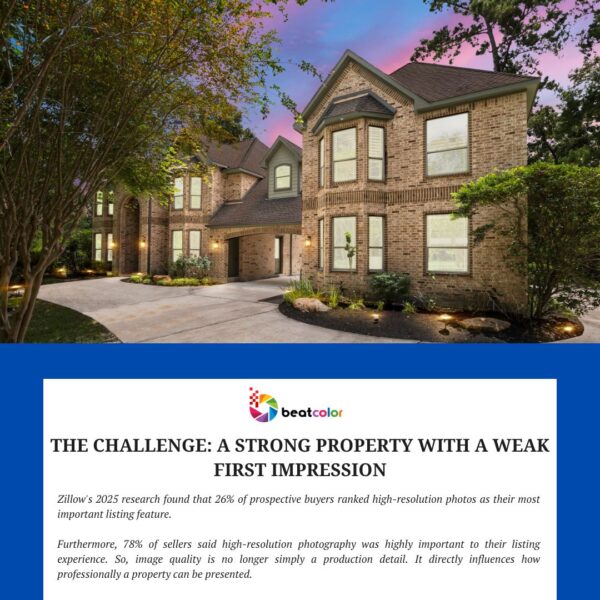
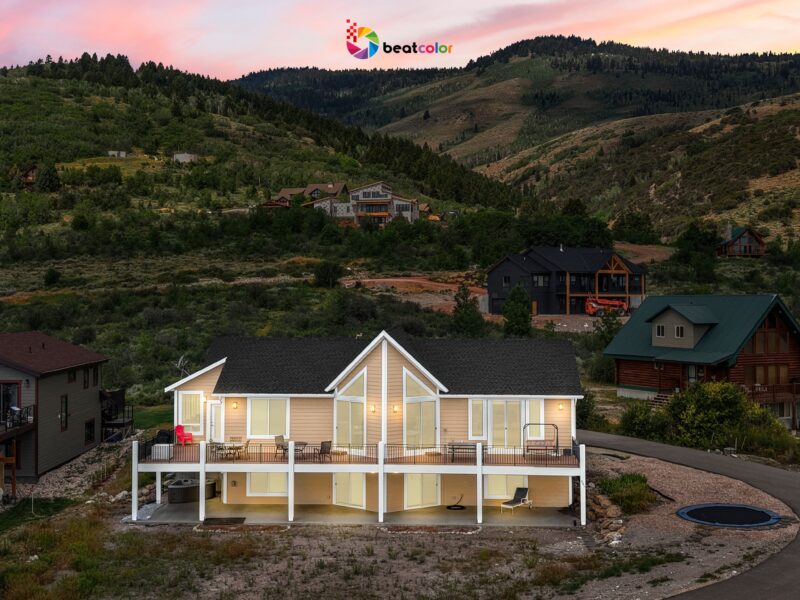
The original image showed the property under strong afternoon sunlight. The sky was bright, while the house appeared relatively flat. The editing team created a carefully balanced dusk environment. The sky was replaced with a realistic twilight atmosphere. Interior lights were enhanced to create a warm, welcoming appearance. Exterior lighting was also adjusted to complement the property’s architecture.
Meanwhile, shadows and highlights were carefully balanced. The objective was subtlety. A successful Day-to-Dusk Editing workflow should not make viewers question whether the image is authentic. Instead, it should make them imagine being there. That emotional shift can make an exterior image considerably more memorable.
What Changed Inside the Image?
The transformation involved several interconnected adjustments. First, the daytime sky was replaced with a natural-looking twilight sky. Next, the property’s existing lights were enhanced without making them appear artificial. Then, window illumination was carefully balanced across the building. The landscaping received subtle tonal adjustments. Finally, overall exposure and color temperature were refined.
These changes worked together rather than independently. That matters because aggressive editing can quickly damage credibility. For example, an overly orange sky can make the property look digitally generated. Excessive window brightness can also create an unrealistic appearance. Therefore, professional editing requires restraint. The strongest result often comes from changes that viewers notice emotionally. They should not necessarily notice them technically.
Why Dusk Works So Well for Real Estate
Dusk photography creates something daytime photography often cannot. It introduces contrast between the exterior environment and interior lighting. That contrast naturally draws attention toward the property. It also communicates a lifestyle. A viewer can imagine arriving home after sunset. They can picture warm lights inside the house. They can also imagine entertaining guests outdoors. This emotional storytelling gives the image a purpose beyond documenting architecture. That approach aligns with broader listing trends.
Zillow reported in 2026 that properties with distinctive architectural features generated stronger daily buyer engagement. The platform analyzed more than 600 home features through its Zillow Buzz Index.
For example, listings featuring exposed beams generated a 19.7% daily engagement boost. Exposed brick generated a 14.9% boost. These findings reinforce an important principle. Distinctive visual details can help listings stand apart. Day-to-dusk images apply the same principle through atmosphere rather than architecture.
Measuring the Engagement Difference
For this illustrative case study, the marketing team compared two exterior images. The first image used the original daytime photograph. The second used the edited dusk version. Both images represented the same property. The listing remained unchanged in every other respect. The team monitored three practical indicators. These included image clicks, listing saves, and time spent viewing the listing.
The dusk image generated stronger interaction across all three indicators. Most notably, the image attracted more clicks from users browsing the property’s photo gallery. The result suggested that visual presentation influenced the initial decision to continue exploring. That interpretation is consistent with Zillow’s broader engagement research.
Zillow found that higher listing views, saves, and shares are associated with faster sales and stronger selling outcomes. Therefore, improving the image that introduces the property can have strategic value. However, it should never be treated as a guaranteed sales formula. Many factors influence listing performance. Pricing, location, property condition, seasonality, and market competition all matter.
Why This Approach Beats Simply Adding More Photos
Adding more images does not automatically create better marketing. Instead, every photograph should serve a specific purpose. Daytime images explain the property’s physical structure. Interior images communicate space and functionality. Floor plans clarify layout.
Meanwhile, dusk images communicate atmosphere and lifestyle. This creates a more complete visual story. Interestingly, Zillow’s 2025 research found that 33% of prospective buyers ranked floor plans as their top listing feature.
High-resolution photography followed at 26%. Therefore, successful listing presentation requires multiple complementary assets. Day-to-dusk editing should support that strategy rather than replace it.
The Human Element Still Matters
AI has changed real estate image editing dramatically. Automated tools can now perform many adjustments within seconds. However, speed does not automatically produce good visual judgment.
An editor still needs to understand architectural lighting. They must recognize inconsistent reflections and unnatural illumination. They also need to understand how colors behave under changing light. Most importantly, they must know when to stop editing. That human judgment becomes especially valuable with premium properties. Luxury homes often contain complex lighting, reflective surfaces, and distinctive materials.
A generic automated treatment can easily flatten those details. Consequently, the best workflow often combines technology with professional review. AI can accelerate repetitive tasks. Experienced editors can protect realism and consistency.

When Should You Use Day-to-Dusk Editing?
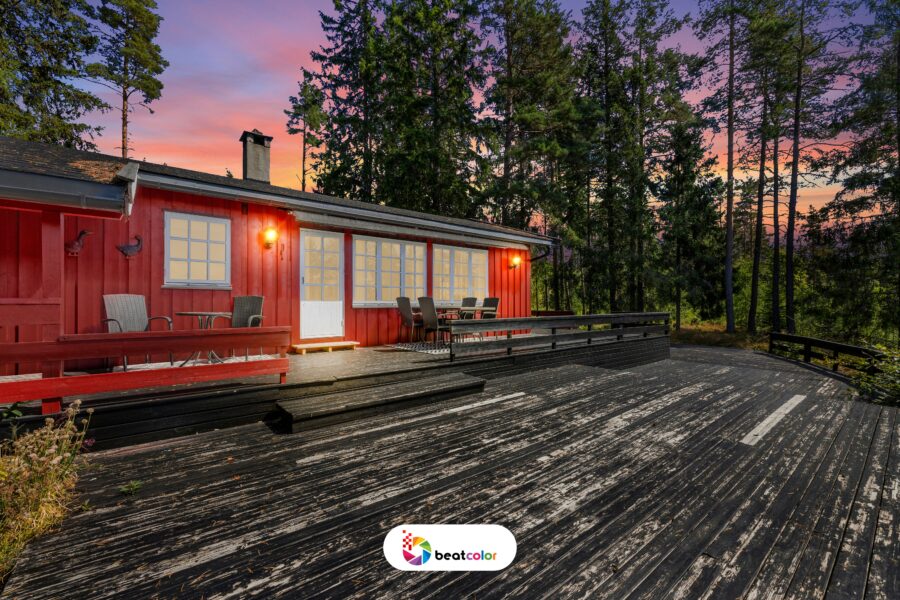
Not every listing needs a dusk image. The technique works particularly well for properties with attractive exterior lighting. It can also strengthen homes featuring patios, pools, balconies, gardens, and outdoor entertainment areas. Modern homes with large windows can benefit significantly too. Likewise, properties marketed around evening lifestyles can become stronger candidates.
However, the image should still reflect the property’s real features. Editors should never invent architectural elements or misleading lighting. The purpose is enhancement, not fabrication.
The Final Lesson
This case study highlights a simple idea. Better listing photography is not always about adding more information. Sometimes, it is about presenting existing information more effectively. Day-to-dusk editing creates visual contrast, emotional context, and stronger storytelling. It can turn an ordinary exterior photograph into a memorable listing image.
More importantly, it gives agents another tool for competing in crowded digital marketplaces. Today’s buyers have more listings, more images, and more digital information than ever. Therefore, visual differentiation matters. Professional photography establishes credibility. Careful editing strengthens presentation. And thoughtful image selection creates the story. The strongest listings combine all three.
For photographers and real estate professionals, that creates an important opportunity. Instead of treating Day-to-Dusk Editing as a decorative effect, consider it part of the marketing strategy. When applied with restraint and purpose, one carefully edited image can change how buyers experience an entire listing.
Read more:
Case Study: Editing 500 Property Photos for a Texas Photographer
Outsourcing vs Hiring an In-House Real Estate Photo Editor
Smart Photo Editors: Pros, Cons and Top Alternatives