
Virtually Staged Listings: The Psychology Behind Why They Sell
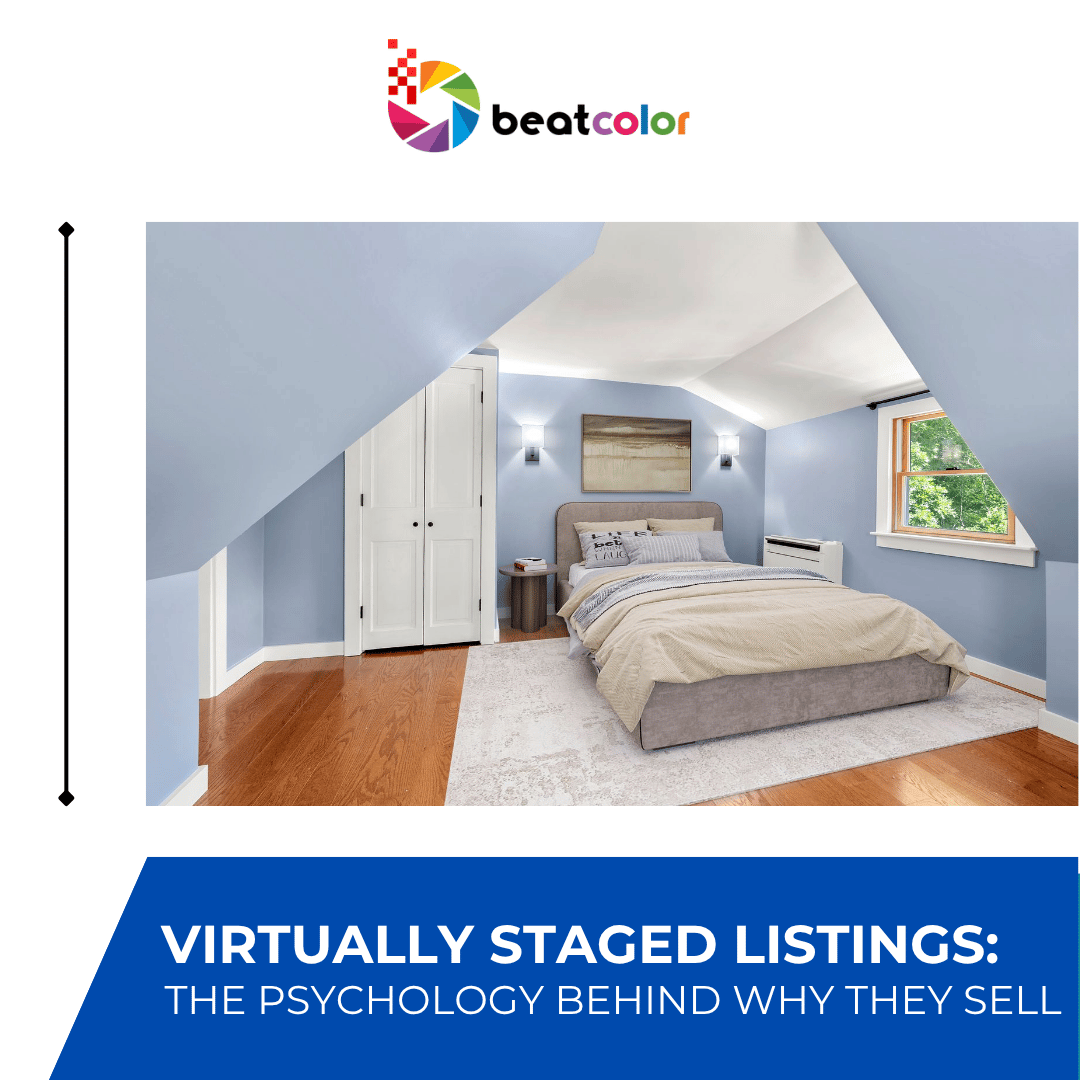
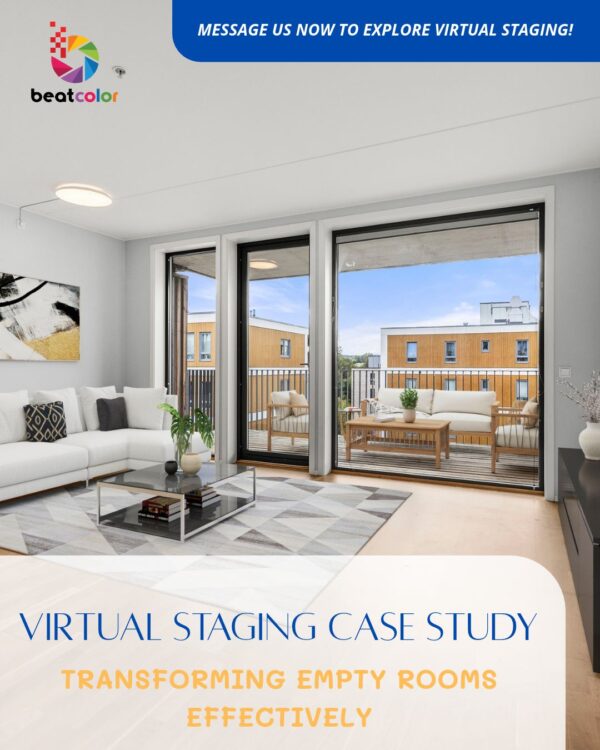
Virtually Staged Listings do more than fill an empty room with digital furniture. They tap into how buyers actually think, feel, and make decisions when they scroll through property photos. Understanding the psychology behind this process helps agents and photographers create images that don’t just look nice — they actively influence buyer behavior. In fact, this is a big part of how realtors use virtual staging to attract more buyers in a crowded market. This article explores the mental shortcuts, emotional triggers, and perception patterns that make virtually staged listings so effective.
Why Empty Rooms Struggle to Connect With Buyers
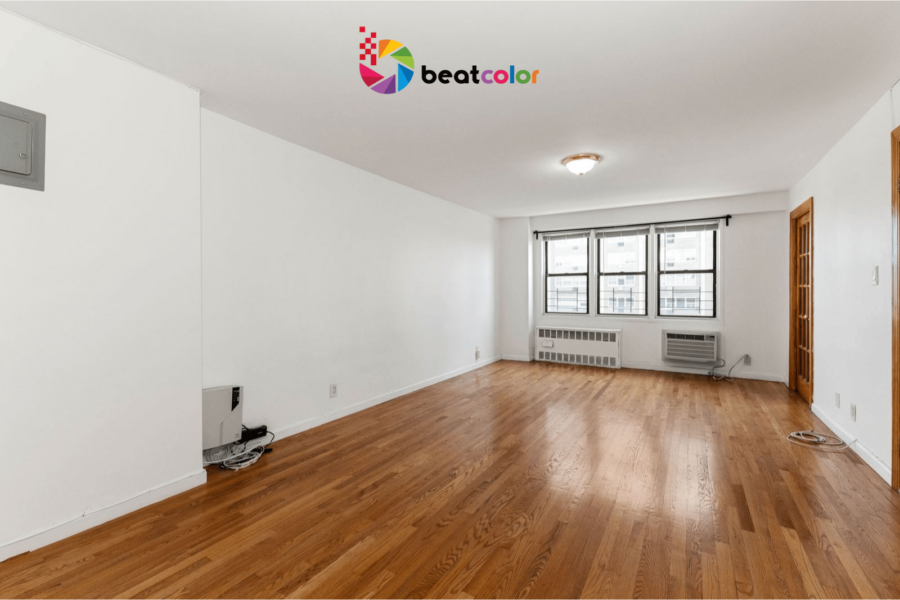
An empty room forces buyers to do extra mental work. Without furniture, buyers must imagine scale, function, and flow entirely on their own. Most people simply don’t do this well. As a result, empty rooms often get judged as smaller, colder, or less appealing than they really are — a challenge covered in more detail in Empty Room Virtual Staging: Examples and Benefits.
This happens because of a psychological principle called cognitive load. When a brain has to work harder to process information, it tends to react less favorably to it. An empty room requires more imagination and interpretation, so buyers unconsciously associate that extra effort with negative feelings — even though the room itself hasn’t changed.
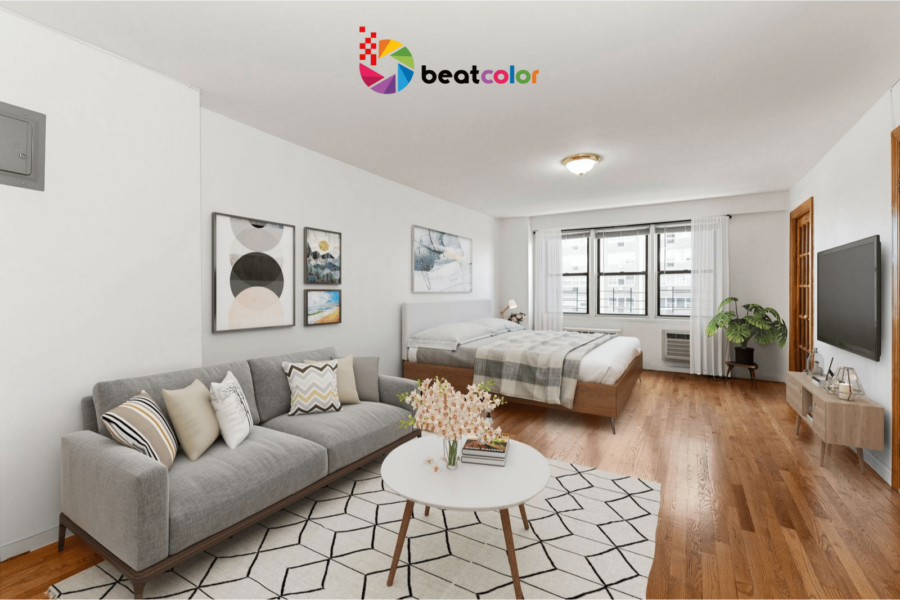
Virtually Staged Listings remove this burden. They do the imagining for the buyer, which lowers cognitive load and creates a smoother, more positive first impression.
The Power of Visual Context
Humans process visual information incredibly fast — often within milliseconds of seeing an image. During that split second, the brain forms an impression that shapes everything that follows. This is why first impressions matter so much in real estate marketing.
Furniture, decor, and lighting give the brain useful reference points. A staged photo instantly communicates room size, purpose, and style, so buyers don’t need extra context to understand what they’re looking at. Consequently, virtually staged listings tend to earn faster engagement than empty-room photos, since buyers form a clear impression right away instead of hesitating.
Emotional Storytelling in Virtually Staged Listings
Buying a home is rarely a purely logical decision. Emotion plays a major role, even for highly analytical buyers. Virtually staged listings tap into this by creating a lifestyle narrative rather than simply displaying a room.
A staged living room with soft lighting and a cozy throw blanket suggests comfort and relaxation. A staged home office with clean lines and natural light suggests productivity and focus. These small emotional cues help buyers imagine their future life in the space, not just the physical structure of it.
This effect connects to a concept psychologists call the self-referencing effect. People remember and respond more strongly to information that relates to their own life or identity. When a staged room reflects a lifestyle buyers want for themselves, they form a stronger emotional connection to the listing.
The Anchoring Effect and Perceived Value
Anchoring is a well-documented psychological bias where people rely heavily on the first piece of information they receive when making decisions. In real estate, listing photos often act as this anchor.
If the first photos a buyer sees show an empty, uninviting room, that impression can anchor their perception of the entire property — even if the home has excellent bones. Virtually staged listings shift this anchor in a positive direction. A well-staged image sets a higher perceived value from the very first photo, which can influence how buyers judge the rest of the listing, and even the price they’re willing to offer. The side-by-side comparisons in Virtual Staging Before and After: Real Property Transformations show just how dramatic this shift in perception can be.
Social Proof and the “Lived-In” Effect
People trust spaces that look lived-in more than spaces that look sterile or abandoned. This connects to a broader psychological principle known as social proof — the tendency to feel more confident about a decision when it looks like others have already made a similar choice.
An empty room can unconsciously signal vacancy, neglect, or a property that’s struggled to sell. A staged room, on the other hand, suggests a home that’s cared for and desirable. Even though buyers know the staging is virtual, the psychological association still holds, and it often makes the property feel more trustworthy and appealing.
How Color and Style Choices Influence Perception
Virtually staged listings also apply color psychology, whether consciously or not. Warm tones like amber and soft beige tend to feel inviting and comfortable. Cool tones like blue and gray tend to feel calm and modern. Choosing the right palette for a room can subtly shift how buyers emotionally respond to a space.
Style choices matter too. A minimalist staging style often appeals to younger, urban buyers who value simplicity and open space. A traditional style, with richer textures and classic furniture, tends to resonate more with buyers looking for a sense of permanence and comfort. Matching staging style to the target buyer’s psychology increases the chance that a listing feels personally relevant.
Why Virtually Staged Listings Improve Buyer Confidence
Uncertainty makes decision-making harder, and buying a home is already one of the largest financial decisions most people make. Virtually staged listings reduce uncertainty by clearly showing how a room can function, which helps buyers feel more confident moving forward with a showing or an offer.
This reduction in uncertainty matters more than it might seem. Psychologically, people avoid decisions that feel ambiguous or risky. A clearly staged room removes ambiguity about scale and function, so buyers can focus their mental energy on other factors, like location or price, instead of struggling to interpret an empty space.
Using These Principles Responsibly
Understanding the psychology behind virtually staged listings comes with a responsibility to use it ethically. Staging should enhance a buyer’s understanding of a space, not create false expectations about what’s included in the sale. Clear disclosure that photos are virtually staged protects buyer trust and keeps the psychological benefits from turning into misleading marketing.
Conclusion
The Psychology Behind Virtually Staged Listings goes far beyond simply making a room look nicer. From reducing cognitive load to creating emotional connection, shifting perceived value, and building buyer confidence, virtual staging taps into deep, well-documented patterns in human decision-making. When agents and photographers understand these psychological principles, they can use virtually staged listings not just as a visual upgrade, but as a genuinely persuasive tool that helps properties sell faster and connect with the right buyers.