
Best Real Estate Marketing Tools for Agents and Brokers

Real estate marketing no longer starts with a listing and ends with an open house. Today, buyers discover properties through social feeds, search engines, videos, email, and online marketplaces.
Meanwhile, sellers expect agents to market properties with professional visuals and measurable digital strategies. That creates a problem.
Which real estate marketing tools are actually worth using?
The answer depends on where your marketing process needs improvement. Instead of collecting dozens of subscriptions, build a focused marketing stack. Each tool should solve one specific problem and support the next stage.
Start With the Marketing Problem
Before choosing software, identify your biggest marketing bottleneck.
Are people failing to discover your listings? Do prospects contact you but never respond again? Are you spending hours creating content? Do your listings look inconsistent across different platforms? Or can you not identify which campaigns generate serious leads?
Each problem requires a different solution. Therefore, the best real estate marketing tools are not necessarily the most popular ones. They are the tools that remove your biggest obstacle.
The Real Estate Marketing Stack
| Marketing Goal | Tool Category | Primary Job |
| Get discovered | Social media | Generate attention |
| Create content | AI and design | Produce content |
| Showcase listings | Photo and video | Improve presentation |
| Capture leads | Website and forms | Collect inquiries |
| Nurture prospects | CRM and email | Maintain relationships |
| Measure results | Analytics | Identify winners |
This approach also prevents unnecessary technology spending. NAR’s 2025 Technology Survey found that 34% of REALTORS® spent $50–$250 monthly on technology. Consequently, every subscription should have a measurable purpose.
1. Build Visibility With Social Media
Social media remains one of the strongest channels for real estate marketing. NAR reports that 75% of REALTORS® use social media professionally.
More importantly, social media generates quality leads for many agents. In NAR’s 2025 survey, 39% named social media their top source of quality leads. That makes social platforms more than branding channels. They can become part of your lead-generation system.
Tools such as Meta Business Suite help agents manage Facebook and Instagram content. Meanwhile, TikTok offers another opportunity for short-form property and educational content. However, consistency matters more than simply opening another account. Create repeatable content formats instead.
For example, rotate property tours, neighborhood insights, market updates, and client-focused advice. This creates a recognizable content system.

2. Real Estate Marketing: Use AI to Increase Output, Not Replace Expertise
AI has quickly become part of real estate marketing. NAR reported that 46% of REALTORS® use AI-generated content. However, adoption does not automatically create better marketing.
A February 2026 NAR report found that 63% of surveyed agents considered output accuracy their biggest AI concern. Therefore, AI should accelerate marketing tasks rather than make final decisions.
Tools such as ChatGPT can help generate content ideas, outlines, captions, and listing copy. Agents can then add local knowledge, personality, and verified property information. That final human review is essential. After all, generic AI copy rarely demonstrates why one agent understands a market better.

3. Make Listing Visuals Part of Your Marketing Strategy
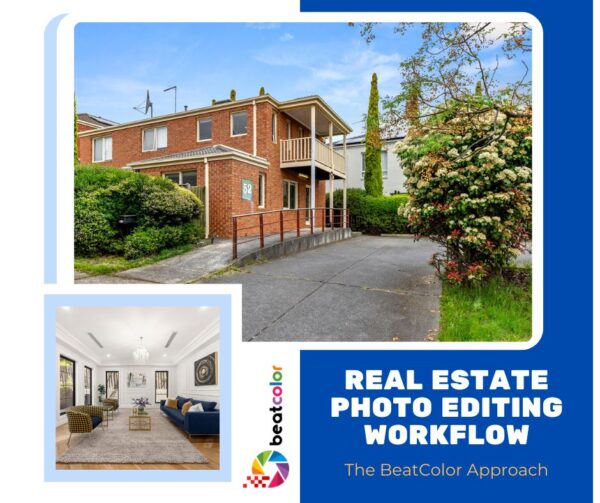
A listing needs more than accurate information. It also needs strong visual presentation. Professional photography remains central to modern property marketing.
NAR reports that 52% of REALTORS® use drone photography or video. Meanwhile, AI-powered editing is expanding what agents can accomplish with property imagery.
Current tools can support virtual staging, object removal, lighting improvements, and other presentation tasks. However, visual editing should remain realistic.
Misleading modifications can damage buyer trust. Therefore, the objective should be better presentation without misrepresenting the property. Agents can also repurpose listing photography across social media, email, websites, and advertisements. That increases the marketing value of every property shoot.
4. Capture Interest Before It Disappears
Visibility means little without lead capture. A potential client might discover your Instagram post today. However, they may not contact you immediately.
A dedicated website, landing page, or lead form gives interested prospects another conversion path. Tools such as HubSpot can combine forms, contact management, email, and CRM functions.
Meanwhile, website platforms such as WordPress provide flexibility for long-term content marketing. The important point is simple. Do not make prospects search for the next step. Every campaign should provide a clear action. That action could be requesting a valuation, booking a consultation, or viewing available properties.
5. Turn Leads Into Relationships With a CRM
Lead generation creates opportunities. Follow-up turns those opportunities into relationships. A CRM helps agents organize contacts, conversations, reminders, and prospects. NAR’s 2025 survey ranked CRM technology as the second-highest source of quality leads.
That finding highlights an important distinction. A CRM does not simply store contact information. It creates a system for consistent follow-up.
For example, an agent can separate first-time buyers from sellers and past clients. Each group can then receive more relevant communication. This is far more effective than sending identical messages to everyone.
6. Real Estate Marketing: Use Email to Stay Relevant Between Transactions
Real estate relationships often last longer than individual transactions. Therefore, email marketing can keep your brand visible between major decisions. Tools such as Mailchimp support newsletters, audience segmentation, and automated campaigns.
However, successful email marketing requires useful content. Send local market insights, property opportunities, homeowner tips, or relevant educational content. Avoid filling inboxes with constant sales messages. The goal is to become useful before the client becomes ready to transact. That approach also supports repeat business and referrals.
7. Measure Leads Instead of Likes
Real estate marketing creates plenty of surface-level metrics. Views, likes, shares, and followers can look impressive. However, they do not always indicate business value.
Instead, track actions closer to revenue. Measure website inquiries, qualified leads, consultations, appointments, and closed transactions. Then compare those outcomes across marketing channels. For example, one video might generate 20,000 views.
Another might generate 2,000 views and three qualified seller inquiries. The second result may be significantly more valuable. Therefore, marketing decisions should follow business outcomes.
The 2026 Rule: Connect the Tools
The strongest marketing stack is not necessarily the biggest one. It is the one where every tool has a job. Social media creates discovery. Content tools increase production speed. Visual marketing creates stronger listing presentation.
Websites and forms capture interest. CRMs organize follow-up. Email keeps relationships active. Analytics identifies what deserves more investment. This connected approach also reflects where the industry is heading. NAR’s 2025 research found that 66% of REALTORS® adopt new technology primarily to save time.
Therefore, technology should simplify the workflow rather than create additional work.
Real Estate Marketing: The Best Stack Depends on Your Business
A solo agent does not need the same system as a large brokerage. A new agent may prioritize social media, design, CRM, and email. An established agent may need stronger automation and analytics. A brokerage may require centralized content, lead routing, reporting, and team collaboration.
So, there is no universal “best” real estate marketing tool. There is only the best tool for a specific marketing problem. That distinction can save money and improve adoption.
Final Takeaway
Real estate marketing is becoming more digital, visual, automated, and competitive. However, adding more technology is not the answer. The better strategy is building a connected system around the customer journey.
Use social media to attract attention. Use strong visuals to earn it. Use landing pages to capture interest. Use CRM and email to nurture relationships. Then, use analytics to determine what actually works.
AI can accelerate this process, but human expertise still matters. NAR’s latest research shows strong technology adoption across the profession. Google’s current guidance also favors useful, original, people-first content over commodity information.
For agents and brokers, that creates a clear opportunity. Do not simply use more tools. Build a smarter real estate marketing system around what clients actually need.
Read more:
Why Professional Real Estate Editing Still Matters in the AI Era
Case Study: Day-to-Dusk Editing That Increased Listing Engagement
Case Study: Editing 500 Property Photos for a Texas Photographer